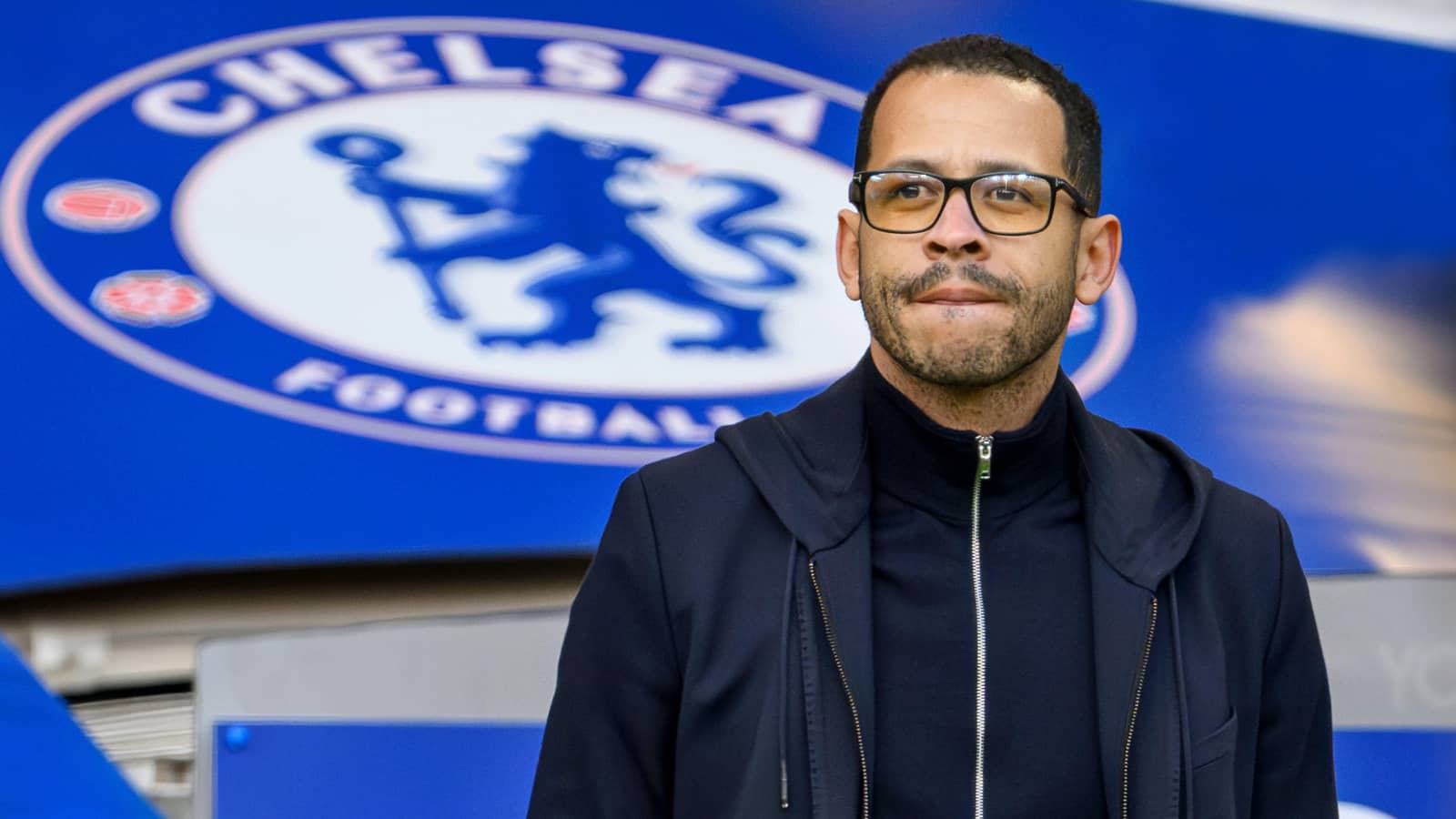
The Death of the Rosenior Project
The Liam Rosenior era at Stamford Bridge is over. We probably should have seen this coming.
You cannot attempt to build a patient, slow-burn possession system while operating within the permanent chaos of the Clearlake Capital regime. The results had stagnated over the last month. More alarmingly, the underlying metrics had completely fallen off a cliff since late February.
Chelsea's pass completion in the final third dropped to 72 percent over their last five matches. Opponents figured out that if you pressed Chelsea's double pivot, the entire build-up structure would collapse. Rosenior tried to adjust. He inverted his full-backs. He pushed Enzo Fernández higher up the pitch.
None of it worked. The football became slow, predictable, and remarkably easy to defend against.
Now, as Sky Sports reported, the shortlist to replace him features three men. Andoni Iraola, Marco Silva, and Xabi Alonso are the primary targets.
On paper, this looks like a competent list of highly regarded managers. In reality, it exposes a massive failure in Chelsea's recruitment strategy.
A Shortlist Without a Philosophy
These three men do not share a tactical philosophy.
If you are interviewing all three, you aren't looking for a specific system to suit your squad. You are simply looking at overachievers and hoping one of them can fix the mess. It is scouting by league table.
This is the exact same mistake the board made when pivoting from Thomas Tuchel's rigid structure to Graham Potter's fluid experimentation. It is the same mistake they made shifting from Mauricio Pochettino's transition-heavy football to Rosenior's methodical possession.
The profile of the manager swings wildly every six to eight months. As a result, the squad looks like a mismatched puzzle built from five different tactical blueprints.
Andoni Iraola: The Heavy Metal Risk
Let's look at Andoni Iraola first. He turned Bournemouth into one of the most aggressive pressing machines in Europe.
His system relies on fierce man-to-man marking in the opposition's build-up phase. He demands absolute verticality the moment the ball is won. He does not want thirty passes to break down a block. He wants three passes, played at maximum velocity, straight toward the penalty area.
At Chelsea, this would represent a massive stylistic whiplash. Imagine Fernández trying to cover the ground required in an Iraola midfield trap. It is a recipe for transition disasters. Enzo is a brilliant orchestrator, but he does not possess the recovery pace to anchor a high-pressing system.
Look at how Bournemouth dismantled Manchester United earlier this season. They didn't dominate the ball. They dominated the spaces where United wanted to play the ball. They funneled passes into central traps, won the duel, and flooded the box within four seconds.
Can you picture Chelsea doing that? Nicolas Jackson certainly has the physical profile to press from the front. He is a willing runner who thrives on chaos. But the midfield behind him is the problem.
Romeo Lavia, if he ever strings together ten consecutive starts, might possess the tactical intelligence to screen that high line. But relying on Lavia's fitness right now is a dangerous game. Without a dedicated, athletic destroyer, Iraola's system leaves the center-backs horribly exposed. We saw it at Rayo Vallecano, and we saw it early in his Bournemouth tenure before he adjusted.
Iraola’s system would absolutely unlock Cole Palmer. Palmer thrives when the game becomes stretched and fragmented. Iraola forces the game to stretch.
The wingers under Iraola are instructed to stay narrow, completely vacating the flanks for overlapping full-backs. Reece James, assuming he can stay on the pitch, would find endless joy charging into those vacant wide areas.
But there is a fatal flaw here. Iraola’s defensive line is terrifyingly high. Chelsea's current center-back options, particularly Axel Disasi, simply lack the recovery pace to manage a high line without a sweeper-keeper bailing them out. It would be incredibly entertaining. It would also bleed goals against top opposition.
Marco Silva: The Pragmatic Floor-Raiser
Marco Silva is the safe choice. That is not an insult.
Fulham under Silva have been a masterpiece of structural resilience. They defend in a compact, disciplined 4-4-2 mid-block. They deny space between the lines brilliantly.
Silva does not reinvent the wheel. He identifies the strengths of his squad and builds a robust, sensible framework around them. He revived Willian's career. He built a system that maximized Aleksandar Mitrovic, and then seamlessly rebuilt it when he left. He knows how to raise the floor of a team.
When Silva arrived at Craven Cottage, they were a yo-yo club without an identity. He turned them into a Premier League fixture. He did it by teaching his wingers to track back relentlessly and by ensuring his double pivot never vacated the central zones.
Consider how Chelsea currently defend transitions. It is a terrifying sprint back toward their own goal, usually with wide open spaces between the full-backs and the center-backs. Silva would kill that dead. He would drop the defensive line ten yards deeper. He would force opponents to play through a dense, organized block.
For Chelsea right now, a high floor is desperately needed. Silva would immediately fix the massive spacing issues in midfield.
Moises Caicedo would essentially play the João Palhinha role. He would operate as a singular wrecking ball ahead of the back four, snapping into tackles and disrupting counters. This would free up the attacking quartet to operate with significantly less defensive anxiety.
Yet, you have to question Silva's tactical ceiling. His Fulham side often struggles to break down deep defensive blocks. They rely heavily on set-pieces and wide overloads. At Stamford Bridge, opponents arrive intending to sit deep. Silva's lack of complex central combination play could easily lead to long stretches of sterile, frustrated possession.
Modern elite clubs don't just want to survive games. They want to dictate them. When Silva's teams are forced to break down a low block, the ideas run dry. They start funneling the ball wide and firing endless, hopeful crosses into the box.
Xabi Alonso: The Impossible Dream
Then there is Xabi Alonso.
The inclusion of his name feels like a deliberate public relations exercise by the Chelsea hierarchy. Why on earth would Alonso leave the immaculate structure he built at Bayer Leverkusen for the notorious instability of West London?
But if we pretend it is a realistic possibility, Alonso's 3-4-2-1 would require yet another massive tactical overhaul.
Leverkusen's system dictates play through central overloads. They use twin number tens operating strictly in the half-spaces. The wing-backs are tasked with providing all the width. They pass the opponent into submission before accelerating the tempo in the final third.
We saw Leverkusen absolutely dismantle Bayern Munich last year by manipulating those half-spaces. They dragged Bayern's center-backs out of position with clever third-man runs. It was a masterclass in positional rotation.
Doing that requires players who understand the geometry of the pitch instinctively. Chelsea's attackers are instinctual dribblers. Noni Madueke wants to isolate his fullback. Mykhailo Mudryk wants a footrace. Neither of them wants to engage in intricate, rapid-fire wall passes in crowded central areas.
Chelsea actually have the defensive personnel for this specific shape. Levi Colwill is tailor-made for the left-sided center-back role in a back three. Malo Gusto has the relentless engine required to play right wing-back. Palmer and Christopher Nkunku could operate beautifully as the twin tens, buzzing behind a central striker.
But Alonso's system requires immaculate passing under severe pressure. Granit Xhaka was the heartbeat of his Leverkusen side. He dictated the tempo perfectly.
Chelsea's current midfield is built on athleticism, raw potential, and ball-carrying. It is not built on seasoned, metronomic tempo-setting. You cannot just paste Alonso's intricate playbook onto this squad and expect an instant title challenge.
Hiring Alonso would mean telling half the current attacking roster that their style of play is completely obsolete.
The Tactical Fallout
This brings us back to the core issue at Stamford Bridge.
Iraola wants chaos. Silva wants control. Alonso wants orchestrated domination. The fact that all three are on the same shortlist proves that the sporting directors have no clear vision for how they want Chelsea to play.
They are interviewing the managers, hoping one of them has a magic wand. They are not interviewing to find a tactical fit for a squad that has cost over a billion pounds to assemble.
Whoever walks through the doors at Cobham next will inherit a profoundly unbalanced roster. They will have seven wingers, no elite ball-playing goalkeeper, and a midfield that cannot decide if it wants to control possession or run in transition.
Prediction
Chelsea have a brutal run of fixtures coming up, and an interim setup will have to navigate a tricky end to the season. The players look lost. The tactical identity is completely non-existent.
Alonso will politely decline the interview. He is far too smart to step into a burning building.
Silva will likely be the backup option. If things get truly desperate, they will turn to his pragmatism.
That leaves Andoni Iraola. It feels exactly like the kind of appointment this ownership group would make. They will look at his pressing metrics at Bournemouth, fall in love with the high-intensity statistics, and completely ignore the fact that the current squad is unsuited to his extreme demands.
Expect Iraola to be standing in the Stamford Bridge dugout by August. Expect a thrilling, chaotic start to his tenure. And expect us to be having this exact same conversation about another managerial shortlist this time next year.