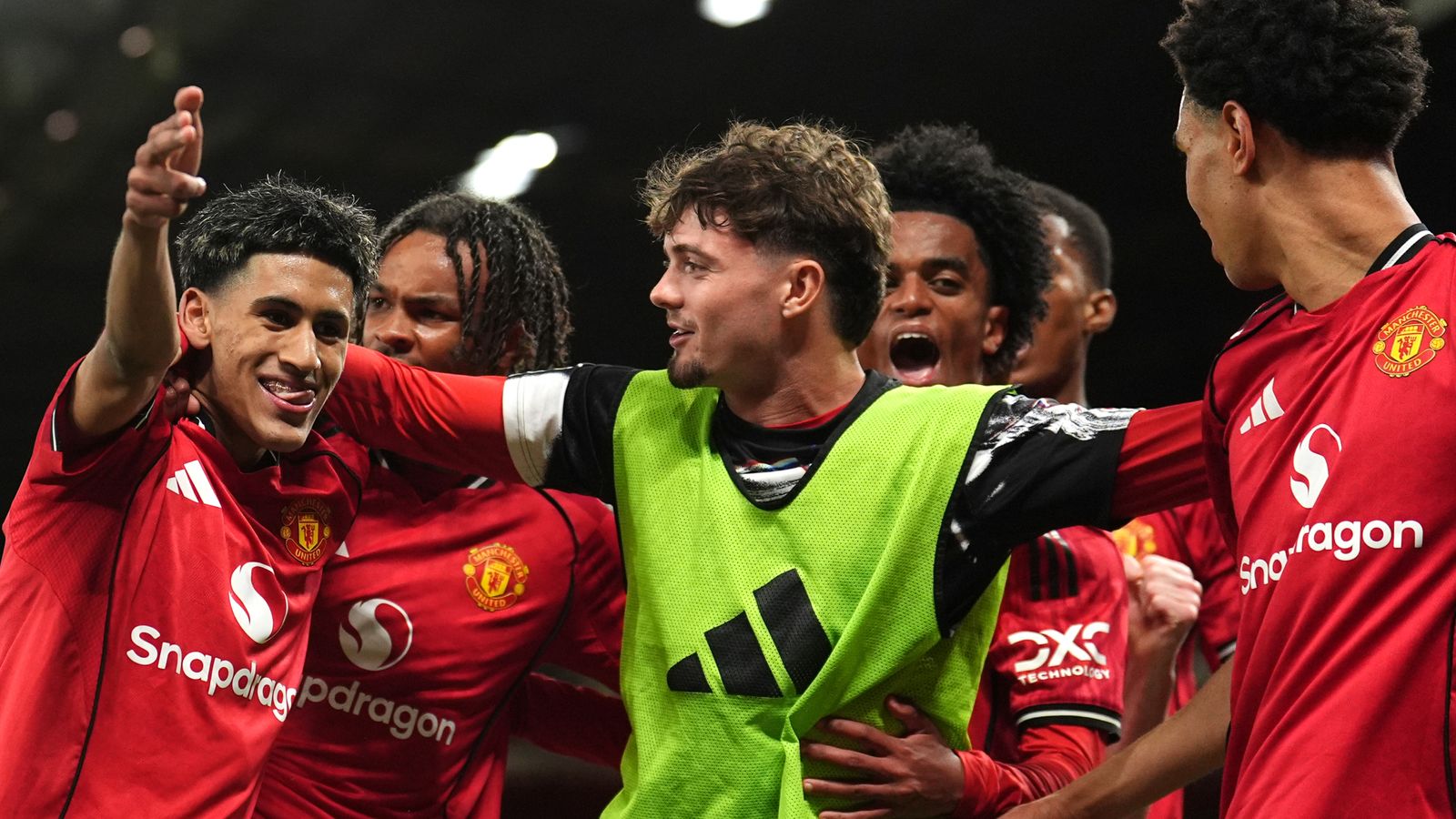
The FA Youth Cup final is rarely just about the boys on the pitch. It is a referendum on the health of a football club. It is a look under the hood at the machinery driving the first team. When Manchester City and Manchester United meet in this fixture, the stakes multiply. It stops being a development exercise. It becomes a blood feud.
City emerged victorious. The scoreline read 2-1. The decisive moment arrived exactly when United thought they had survived the storm.
An 87th-minute winner. That is the kind of goal that snaps a team’s spine. You defend for your life, you cramp up, you watch the clock, and then the net bulges.
Reigan Heskey delivered the killing blow. Yes, that Heskey. The son of former Premier League stalwart Emile Heskey. But this finish was not about genetics or inherited goodwill. It was a product of lethal, modern academy conditioning.
Heskey found the space. He took the chance. He ended the argument.
City have now won the FA Youth Cup five times. This is not a scrappy underdog story. This is the Death Star firing its primary weapon.
The Blue Machine
The City Football Academy is a terrifying operation. They hoard talent. They polish it. They drill these teenagers until they process space and time exactly like Pep Guardiola’s senior squad.
Watching City’s youth teams can sometimes feel clinical. It is highly sanitized, highly effective football. They strangle opponents with possession. They wait for the mistake.
Against United, they had to grind. Derbies ignore tactical blueprints. Derbies demand suffering. City suffered, but they did not break.
When the game stretched in the final ten minutes, City had the sharper edge. They possessed the physical reserves. That is the hallmark of their youth system. They do not just produce technically gifted players. They produce athletes capable of surviving the brutal transition to elite senior football.
The dying moments are when conditioning pays off. United dropped a yard deeper. City stepped a yard higher. The gap appeared. Heskey exploited it.
A Bitter Pill for Carrington
For Manchester United, this is a devastating result. Losing a cup final is bad. Losing it to City is worse. Losing it in the dying moments is a disaster.
United’s identity is entirely wrapped up in their youth system. It is their safety blanket. When the senior team collapses, the fans point to Carrington. They point to the Class of 92. They point to Alejandro Garnacho and Kobbie Mainoo.
But this final exposed a flaw. United’s youth teams often rely on individual brilliance to bail them out of structural issues. They have match-winners, but they do not always look like a cohesive, ruthless machine.
City looked like a machine. United looked like a group of talented individuals who eventually ran out of steam.
This is the critical failure in United’s current developmental phase. They are producing good players, but are they producing a winning culture? When the pressure hit the red line, they cracked.
The Heskey Factor
We need to talk about Reigan Heskey. The pressure of a famous name usually crushes young players. The stands are filled with scouts whispering about whether the son is half as good as the father.
Emile Heskey was a battering ram. He was selfless, physical, and tactically vital for Leicester, Liverpool, and England. Reigan is a different profile. The modern academy system demands total technical proficiency. You cannot just be big. You cannot just be fast. You must be able to control a football in a phone booth.
Reigan proved he has ice in his veins. The FA Youth Cup final is the biggest stage these boys have ever seen. There are thousands of fans. There are cameras. There is the weight of the badge.
To find a winner with three minutes of normal time remaining requires serious composure. As The Mirror reported, it was the defining action of a grueling tie. He didn't snatch at the shot. He executed it.
This goal will define his youth career. But it also paints a target on his back.
The Brutal Pathway
Winning the FA Youth Cup is a monumental achievement. It is also completely meaningless the moment they wake up the next morning.
That is the harsh reality of elite football. A medal at this level guarantees absolutely nothing.
For City’s boys, the path to the first team is almost totally blocked. They just won a massive trophy, but how many of them will ever play a meaningful Premier League minute for Guardiola? The answer is statistically depressing.
City will buy a £60 million player before they promote a teenager, unless that teenager is a generational anomaly like Phil Foden. The victory is sweet, but the future is likely a series of loans. A stint in the Championship. A year in the Eredivisie. A permanent move to Southampton or Leicester.
They are playing for their careers, but not necessarily their careers at Manchester City.
For United, the pathway is actually clearer. The first team is flawed. There are gaps. A standout performance in a final—even in defeat—can catch the eye of the senior management.
But that does not erase the sting of this loss. City own Manchester at the senior level. Now, they have hammered a flag into the ground at the academy level.
The blue half of the city continues to operate with ruthless efficiency. The red half is left licking its wounds and wondering how to close the gap.
The Tactical Reality of Under-18 Football
Youth football is often misunderstood by the casual observer. It is not just a slower version of the Premier League. It is a completely different tactical environment. Mistakes are frequent. Emotional swings are wild. Momentum shifts dramatically within minutes.
Managing a game of this magnitude requires a coach to be half tactician, half psychologist. When United conceded late, there was no time for a tactical pivot. It was pure emotional collapse.
You could see it in the body language. Shoulders slumped. Heads dropped. The realization that months of preparation, of gruelling winter training sessions, of navigating the earlier rounds of the cup, had all evaporated in a single sequence of play.
City’s reaction was the inverse. Pure adrenaline. The realization of a dream. But the celebration must quickly give way to cold, hard reality.
The jump from Under-18 football to senior football is the widest chasm in sports. It swallows careers whole.
Consider the history of the FA Youth Cup. For every Paul Pogba who uses it as a springboard, there are dozens of players whose names become trivia answers. They lift the trophy, they sign a modest professional contract, and they slowly slide down the football pyramid.
The City Football Group is aware of this attrition rate. They have built an entire global network of clubs specifically to manage it. Girona, Troyes, Palermo. These are not just investments; they are landing spots for the players who cannot breach Guardiola’s inner circle.
Reigan Heskey’s name will be splashed across the papers tomorrow. He will be hailed as the next big thing. But the real work begins on Monday morning.
Can he replicate that instinct in a muddy League One penalty area in November? Can he hold off a 32-year-old center-back fighting for his mortgage? That is the true test of a prospect.
United’s players face a different sort of pressure. They must prove that this defeat was a learning experience, not a psychological scar.
The Carrington academy has been under immense scrutiny in recent years. While they continue to produce individual talents, the overall win rate in crucial youth matches has dipped. The structural overhaul initiated by INEOS at the senior level must eventually trickle down to the academy.
They need to instill the kind of ruthless, clinical game-management that City displayed. You cannot rely on last-minute heroics to win tournaments. You have to control the narrative of the match.
For the United staff on the touchline, the autopsy of this match will be grim. You cannot script a worse conclusion to a final. They will review the tape. They will highlight the failure to track the runner. They will point to the spaces that opened up in the defensive third. But tactical analysis cannot fix shattered morale. That is the immediate challenge for the Carrington coaches. They have to rebuild the confidence of a squad that just suffered the most painful defeat of their young lives.
City controlled the narrative. They absorbed the emotion of the derby, neutralized United’s transitional threats, and executed their game plan flawlessly in the dying moments.
It was a clinical victory. It was a deserved victory. It was a stark reminder of the power dynamic in Manchester.