Let’s be entirely honest for a second. If you’ve spent more than five minutes scrolling through football Twitter or r/soccer this week, you know the vibe around the Seleção is less 'Joga Bonito' and more 'existential dread disguised as a samba band.' We are nineteen days away from the kickoff of the 2026 World Cup, and Brazil is entering Group C looking like a luxury sports car held together by duct tape and Carlo Ancelotti’s sheer willpower.
This is the most volatile, head-scratching, and utterly chaotic Brazilian team in a generation. And yet, the CBF in their infinite, galaxy-brain wisdom decided to hand Don Carlo a contract extension through 2030 earlier this month. Because nothing says 'we have a clear plan' like locking down a manager who has won exactly half of his first ten games in charge.
Let's talk about that record. Since taking the reins in May 2025, Ancelotti has managed ten games. He has recorded five wins, two draws, and three losses. For any normal country, that's fine. For Brazil, that is an absolute crisis.
The Don Carlo Experiment
Tactical Vibes vs. International Rigor
We all know the Carlo Ancelotti formula by now. You get a squad of absolute superstars, you chew some gum, you raise an eyebrow, and you let the vibes carry you to a Champions League trophy. It works beautifully at Real Madrid when you have a billion-dollar midfield that could coach themselves. But international football is a completely different beast.
In the international arena, you don't have three months of pre-season to build chemistry. You don't have Florentino Pérez’s checkbook to solve your tactical deficiencies. Ancelotti is the first foreign manager to lead Brazil in a century, and the early returns are deeply concerning. His tactical setup has looked disjointed, flat, and weirdly passive.
Without the daily training sessions of club football, his famous man-management looks less like tactical genius and more like a substitute teacher letting the kids run wild. He has tried to implement a fluid system that relies on individual brilliance, but the problem is that half of his brilliant individuals are currently in the hospital. If Brazil gets overrun in midfield during the group stage, the Carlo experiment could blow up before the knockouts even start.
The Extension Controversy
The timing of the CBF's contract extension is mind-boggling. Committing to a manager through the 2030 World Cup before he has even coached a single tournament match is peak CBF incompetence. It smells of desperation, an attempt to project stability when the house is actively on fire.
If Brazil struggles in the group stage against disciplined defensive units, the media pressure will be unbearable. Ancelotti has never experienced the unique, suffocating pressure of the Brazilian press when things go south. By locking him in, the CBF has painted themselves into a corner before the ball is even kicked in New Jersey.
The Missing Pieces and the Nostalgia Trap
Neymar at 34: Vibe-Check or Actual Footballer?
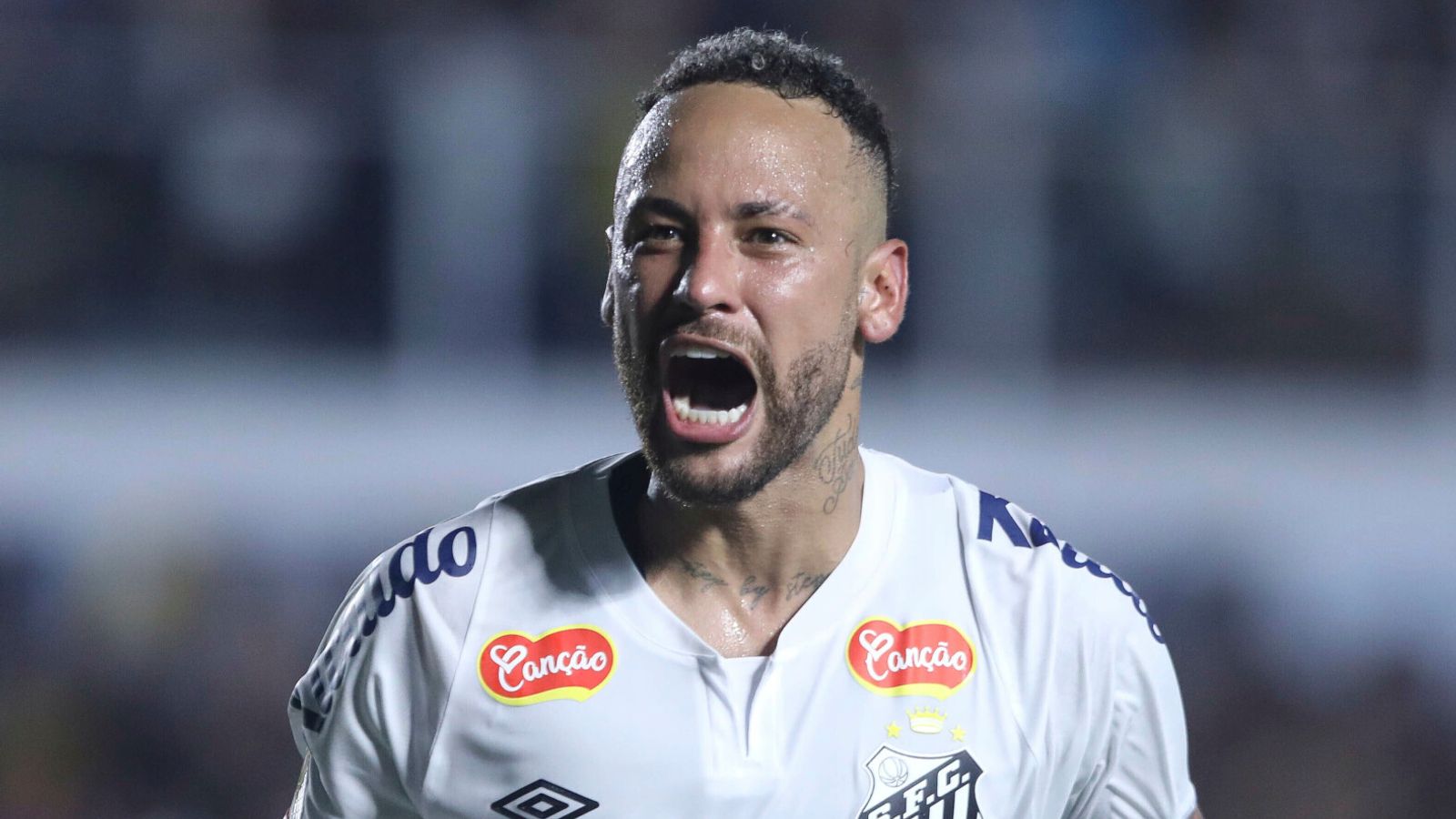
When the 26-man squad was announced on May 18 in Rio de Janeiro, one name dominated the headlines. Neymar Jr. is back. The man is 34 years old, has spent the last year collecting massive paychecks in Saudi Arabia, and is recovering from yet another devastating knee injury. Calling him up is either a stroke of nostalgic genius or a complete tactical disaster.
Let's look at the cold, hard facts. Modern football is a young man's game defined by relentless pressing, counter-pressing, and physical intensity. Neymar at his peak was a cheat code. Neymar at 34, with reconstructed knees and zero defensive work rate, is a tactical luxury that this fragile Brazilian team simply cannot afford.
If Neymar plays as a classic number ten, who is doing the running behind him? Bruno Guimarães and Lucas Paquetá are going to have to cover double the ground just to make up for his defensive absence. We've seen this movie before with Brazil, where they sacrifice tactical balance to accommodate an aging superstar, only to get sliced apart by the first European team that knows how to counter-attack.
The Injury Ward: Rodrygo and Estêvão
If you want to know why Brazil fans are sweating, look no further than the medical reports. The football gods have been downright cruel to the Seleção this spring. First, Rodrygo Goes suffered a season-ending injury in early March during a La Liga match against Getafe. The diagnosis was a ruptured anterior cruciate ligament and a torn lateral meniscus in his right knee, immediately ending his World Cup dreams.
Losing Rodrygo was a massive blow, but then the injury curse struck again in mid-April. Estêvão Willian, the sensational Chelsea-bound winger who was supposed to be Brazil’s secret weapon, went down against Manchester United. He suffered a grade four hamstring tear, ruling him out of the tournament and robbing the world of a breakout superstar.
With both Rodrygo and Estêvão out, Ancelotti’s squad looks alarmingly thin on the wings. Yes, we still have Vinícius Júnior, who is arguably the best left winger on the planet. But on the right, the options are suddenly terrifyingly thin. Relying on Raphinha’s erratic crossing or forcing young Endrick into a wider role is a recipe for frustration against defensive teams.
The Group C Banana Skins
The Moroccan MetLife Trap
Morocco is waiting for them in New Jersey for the opening match of Group C on June 13. If Brazil thinks they can just walk onto the pitch at MetLife Stadium and stroll to three points, they are in for a very rude awakening. Morocco did not reach the semi-finals of the 2022 World Cup by accident.
The Moroccans are a defensive machine. They possess a midfield led by Sofyan Amrabat that will happily kick Vinícius Júnior into the stands if he tries to show off. They have Achraf Hakimi bombing down the right flank to exploit whatever space Brazil’s left-back leaves behind.
This match is a tactical nightmare for Ancelotti. If he starts Neymar alongside Vinícius and Endrick, Brazil will have a front three that offers virtually zero defensive coverage. Morocco will happily sit in a compact low block, wait for Brazil to turn the ball over in the final third, and then launch devastating counter-attacks. Ancelotti needs to be pragmatically defensive, but pragmatism has never been his strong suit when the vibes are flowing.
Scotland's Low Block in the Miami Heat
After dealing with Morocco and a likely comfortable win against Haiti, Brazil has to face Scotland in Miami on June 24. Hard Rock Stadium in late June is essentially a swamp. The humidity will be pushing ninety percent, the air will be thick, and Scotland will be playing with eleven men behind the ball.
Scotland under Steve Clarke is not a team that cares about aesthetic football. They will happily defend their penalty area for ninety minutes, utilizing John McGinn's backside to shield the ball and Scott McTominay's late runs to steal a goal from a corner. Brazil historically struggles against teams that refuse to come out and play.
If the match is scoreless at halftime, the frustration will start to set in. We've seen Vinícius Júnior lose his temper when frustrated by physical, defensive tactics. We've seen Brazilian players start trying to win the game individually instead of sticking to a system. In the sweltering Miami heat, Scotland's low block is a massive banana skin that could cost Brazil the top spot in Group C.
This is not the Brazil of 1970 or 2002. This is a deeply flawed, injury-ravaged squad led by a manager who is still trying to figure out how international football works. If they don't treat Morocco and Scotland with the respect they deserve, the five-star champions might find themselves booking an early flight back to Rio.
Read Next
- Ancelotti and Brazil are walking straight into a Group C trap
- Pep Guardiola's control freakery is a disease, and Real Madrid is the cure
- The World Cup's new Round of 32 is a tactical nightmare waiting to happen
- FIFA is about to ruin the best knockout round in World Cup history
- 🇧🇷 Brazil World Cup 2026 — A Seleção Hub