Midfield geometry and the pressure on England
England enters the upcoming clash with Croatia nursing a long-standing tactical hangover. Gareth Southgate has spent eighteen months preaching a transition-heavy approach, yet the personnel selection suggests a continued reliance on safe, side-to-side ball retention. In their last three competitive outings, England averaged 62% possession but managed a meager 0.8 xG per game.
The central issue remains the pairing in the double pivot. By fielding two defensive-minded midfielders, the team effectively shrinks the space for creative transitions. When the ball moves through the center, it hits a wall of compact high-pressing units. This creates a disconnect between the build-up phase and the final third, forcing the wide forwards to drop deep just to engage with play.
The precision of a penalty specialist
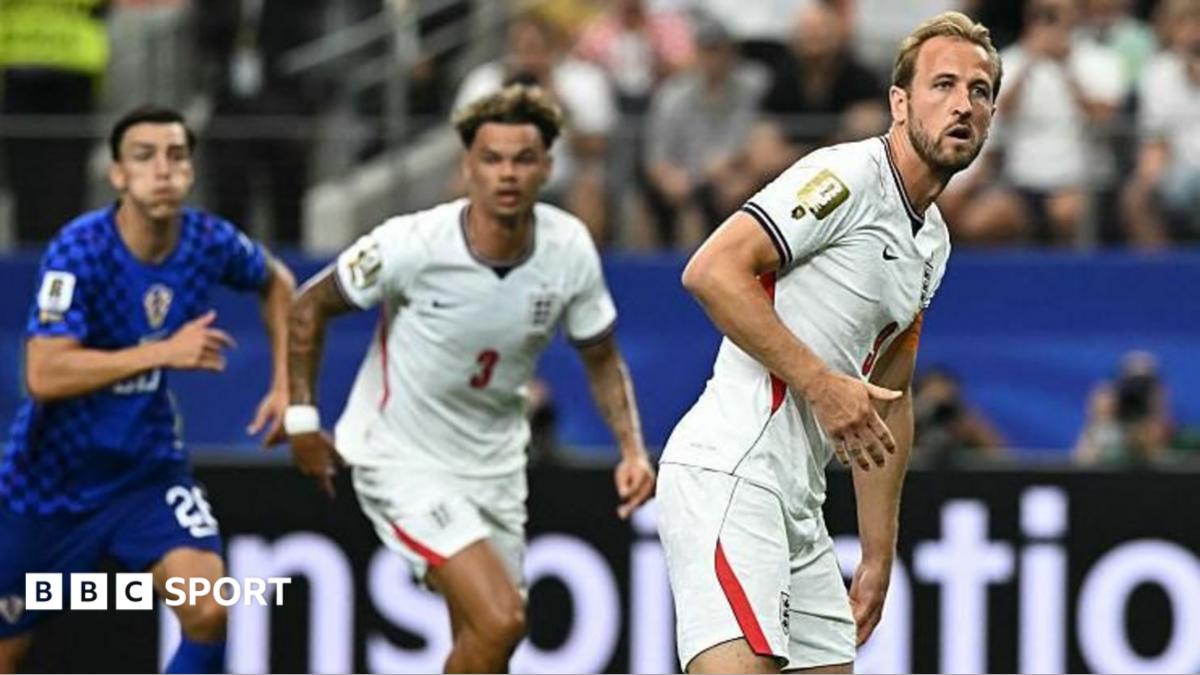
Harry Kane standing over the penalty spot is a sequence that has become the most predictable yet chilling element of modern international football. When he stepped up against Croatia previously, the silence in the stadium was not born of anticipation but of an assumed outcome. He doesn't gamble on the keeper guessing incorrectly; he treats the penalty as an exercise in biomechanical execution.
Even when the primary attempt failed to find the net, the structure surrounding his movement ensured England benefited from the chaotic secondary phase. As the BBC reported, the intervention of the video assistant referee allowed for a retake, highlighting a lack of composure in the defensive line when pressure is applied.
Defensive vulnerabilities under the microscope
The retake incident exposed a flaw in the defensive positioning during dead-ball situations. When the initial penalty occurred, the retreating blockers were caught in a narrow cluster, failing to track runners entering the box from the blind side. If Croatia opts to exploit that half-space again, the England backline looks susceptible to simple through-balls.
The lack of aggressive ball-winning in the defensive third is another cause for concern. Attempting to sit behind the ball for long periods invites sustained pressure from Luka Modric, who exploits the gaps left by drifting, fatigued midfielders. If Southgate persists with this narrow shape, the match will inevitably pivot on one singular moment of individual error rather than any collective tactical advantage.
Prediction: England will struggle to break down a low-block, resulting in a 1-1 draw that leaves qualification calculations looking messy for both sides. The reliance on individual pieces of brilliance will once again mask the lack of a coherent creative rhythm.
Read Next
- Harry Kane is playing a different game entirely
- Thomas Tuchel's England gamble is struggling against a technically superior Croatia
- England vs Croatia: The math behind Tuchel's Texas opener
- England's reliance on Kane is a ticking tactical time bomb
- 🏴 England World Cup 2026 — Three Lions Hub
- 🇭🇷 Croatia World Cup 2026 — Modrić's Farewell