Thomas Tuchel's England gamble is struggling against a technically superior Croatia
The pragmatic trap England walked into in Dallas
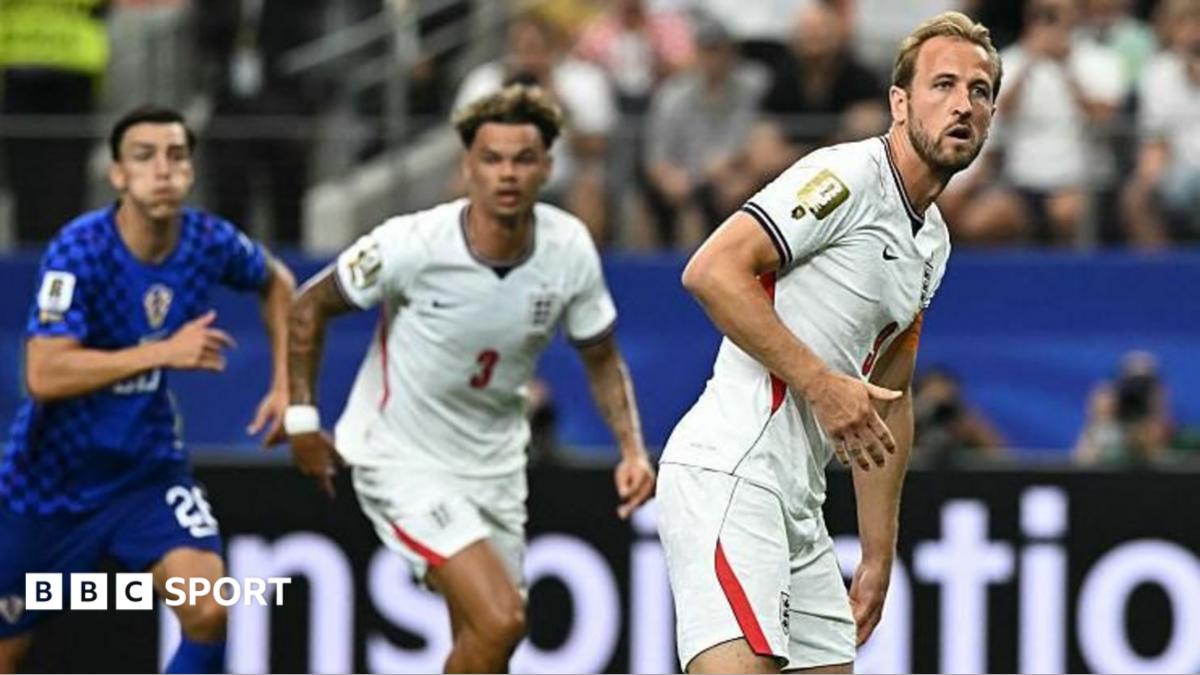
Thomas Tuchel’s debut tournament match against Croatia is exposing a fundamental rift between his conservative selection and the demands of modern international football. The reported starting lineup favored deep-block stability over the dynamic transitions that defined the Gareth Southgate era. By the 30th minute, it became clear that experience is a poor substitute for recovery pace.
Croatia’s midfield, anchored by the rhythmic ball circulation of Martin Baturina and Luka Modric, has systematically dismantled England’s defensive structure. The central duo of Declan Rice and his partner have struggled to track vertical runners through the half-spaces. We are seeing a 4-2-3-1 that looks more like a 4-4-2 out of possession, creating a vacuum that Baturina exploited to fire his side level.
As Sky Sports is reporting in their live blog, the tactical rigidity is hurting England. The horizontal spacing is inconsistent. When the fullbacks push to provide width, the backtracking is labored. It is a classic case of a manager prioritizing defensive shape, only to find that the lack of pressure on the ball carrier ruins that very defensive shape.
Midfield isolation and the cost of caution
The breakdown of the England press
Tuchel’s decision to opt for tournament experience has manifested in a distinct lack of urgency. The English press is currently firing in disconnected waves. Jordan Pickford has been forced into three separate long-ball clearances because his outlets are static, standing behind their Croatian markers rather than finding pockets of space.
This stagnation is exactly what happens when you prioritize rigid positions over fluidity. Against a technical side like Croatia, you cannot rely on mid-block geometry alone. Unless the intensity from the front line spikes in the next 15 minutes, England will continue to concede possession at an unsustainable rate. Croatia’s xG is already climbing, and the lack of a turnover-focused pivot is hurting the team.
The defensive risk of Tuchel's pragmatic approach
Perhaps the most concerning aspect is the inability to transition quickly when the ball is won. England looks like a side coached to fear the counter-attack rather than one designed to execute it. In the 38th minute, a crucial chance was wasted when the ball was recycled backward instead of driving at the Croatian central defenders. That level of hesitation is infectious.
It is not just about the individuals; it is about the instruction. If the instruction is to prevent a goal at all costs, the team loses the ability to score when the opportunity arises. We are watching a side play at 80 percent capacity, hoping that discipline will overcome technical fluidity. Based on the 1-1 scoreline, that gamble is currently failing.
The defensive stability Tuchel wanted is absent, and the attacking threat has been suffocated by his own tactical constraints. Unless the second half features a pivot toward more aggressive verticality, England will remain trapped in this game of attrition. Pragmatism without production is merely a slow descent into a draw, or worse, leaving the door open for a late Croatian winner.
Read Next
- England vs Croatia: The math behind Tuchel's Texas opener
- Tuchel's England gamble against Croatia is pure pragmatism
- Gareth Southgate's tactical rigidity is suffocating the Three Lions
- Thomas Tuchel doubles down on England identity before Croatia opener
- 🏴 England World Cup 2026 — Three Lions Hub
- 🇭🇷 Croatia World Cup 2026 — Modrić's Farewell
The Soccer 100: The Story of the Greatest Players in History
The ultimate GOAT debate settler from The Athletic.
Frequently Asked Questions
What tactical approach did Thomas Tuchel take against Croatia?
Why is England struggling against Croatia's midfield?
How is Tuchel's reliance on experience impacting England's performance?
What issues are affecting England's ability to clear the ball?
What prevents England from executing successful counter-attacks?
More Coverage
England faces an identity crisis against Croatia
an hour agoEngland's reliance on Kane is a ticking tactical time bomb
an hour agoEngland's tactical rigidness faces the ultimate test against Croatia
an hour agoHarry Kane is playing a different game entirely
an hour ago
Tuchel just nuked the England squad and nobody is safe
2 hours ago
Tuchel's England gamble against Croatia is pure pragmatism
2 hours agoMore Analysis

England vs Croatia: The math behind Tuchel's Texas opener
6 hours ago
Tuchel's England gamble against Croatia is pure pragmatism
2 hours ago
Thomas Tuchel's England gamble is missing a defensive identity
1 week, 3 days ago
Thomas Tuchel faces an immediate Croatia reality check
3 days, 10 hours agoGareth Southgate's tactical rigidity is suffocating the Three Lions
3 hours ago