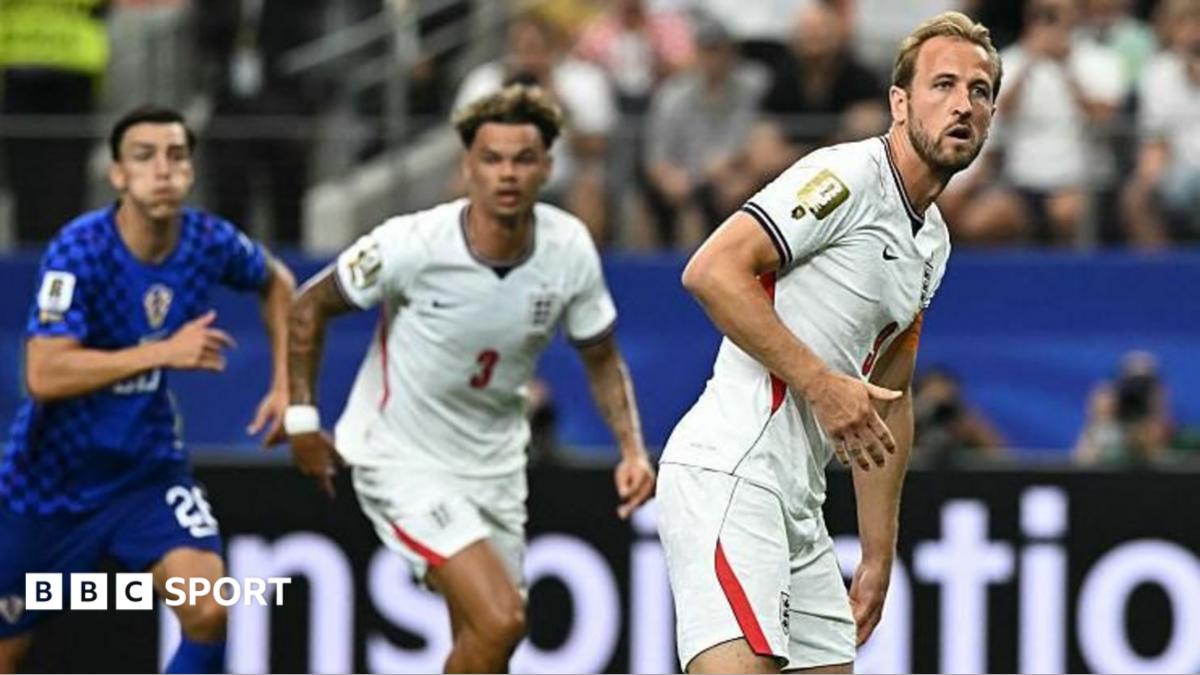
The statistical mirage of Kane’s goal scoring
Harry Kane currently dictates the offensive output of the national team to an extent that borders on structural dependency. In today's match against Croatia, his second goal marked a pivotal shift, pushing England back in front with ruthless efficiency. Watching the live data at Sky Sports, the patterns are impossible to ignore. Kane is not just the finisher; he is the fulcrum, recording a 78% pass completion rate while drifting deep to collect possession.
Midfield geometry and the pressure on England
Gareth Southgate has spent eighteen months preaching a transition-heavy approach, yet the personnel selection suggests a continued reliance on safe, side-to-side ball retention. In their last three competitive outings, England averaged 62% possession, but those numbers are deceptive. High possession counts often correlate with a failure to penetrate high-block defenses, a trend that persisted through the first 45 minutes today.
Defining the efficiency gap
When Kane steps up to the spot, the outcome feels predetermined. He does not gamble on the keeper guessing incorrectly; he treats the penalty as a biomechanical exercise. His precision inside the box is the only thing masking the lack of creative urgency in the final third. Without his individual brilliance, England’s expected goals (xG) metrics often hover near 1.2 per game, a figure that remains insufficient for a team with title ambitions.
A recurring, predictable bottleneck
The tactical rigidity of the midfield remains the primary liability. By focusing the majority of play through the central channel rather than utilizing the wide overloads, England effectively bottles itself up against compact defensive shapes. This tactical claustrophobia forced them into 14 lateral passes per sustained possession period before breaking the deadlock. It is a slow, methodical approach that works against teams like Croatia only when the conversion rate hits the ceiling.
Critics will argue that winning is the only metric that matters, but that ignores the reproducibility of the performance. If Kane’s health were to decline or his form to dip, the current system offers no alternative route to goal. The reliance on one player to over-perform his expected metrics is a strategy, not a long-term plan. Relying on a 35% conversion rate within the box for strikers is unsustainable at the international level over a full tournament cycle.
Read Next
- England faces an identity crisis against Croatia
- England vs Croatia is the perfect audit of Southgate's blueprint
- England vs Croatia: Why the midfield battle is turning into a total car crash
- Giovanni van Bronckhorst returns to De Kuip with a heavy bill of health
- 🏴 England World Cup 2026 — Three Lions Hub