Defensive restructuring fails under pressure
England’s 4-0 defeat to Spain on June 5, 2026, represents the national team’s heaviest margin of loss in 17 years. While the narrative surrounding the squad often leans on individual talent, the tactical breakdown at Wembley was rooted in structural rigidity. Gareth Southgate’s insistence on a double-pivot failed to contain the fluid positional rotations of Pedri and Dani Olmo, who consistently found pockets of space between England’s defensive lines.
As the BBC reported, the result is particularly bruising given the timing. With the global football calendar shifting toward the World Cup, which kicks off in just five days, this performance identifies a lack of agility in transitions. England managed only 38% possession, a figure that highlights their inability to control the tempo when forced to play without the ball.
Midfield spacing and the pressing vacuum
The core issue manifested in the central third. England’s midfielders were caught in a rigid flat-line, failing to recognize Spain’s trigger moments for high-intensity pressing. Data from the encounter shows the visitors completed 88% of their passes, navigating the final third with rhythmic ease. Bukayo Saka and Phil Foden were tasked with tracking back but lacked the defensive awareness to close down passing lanes, leaving the full-backs isolated against overlapping wing-backs.
Statistically, the disparity in expected goals (xG) reached a staggering 0.35 to 2.82 by the full-time whistle. England’s creative output was limited to long balls and individual duels rather than cohesive patterns. The failure to recycle possession meant that whenever England turned the ball over, their back four lacked the defensive cover usually afforded by a more active screening presence in the middle.
Analyzing the defensive disconnect
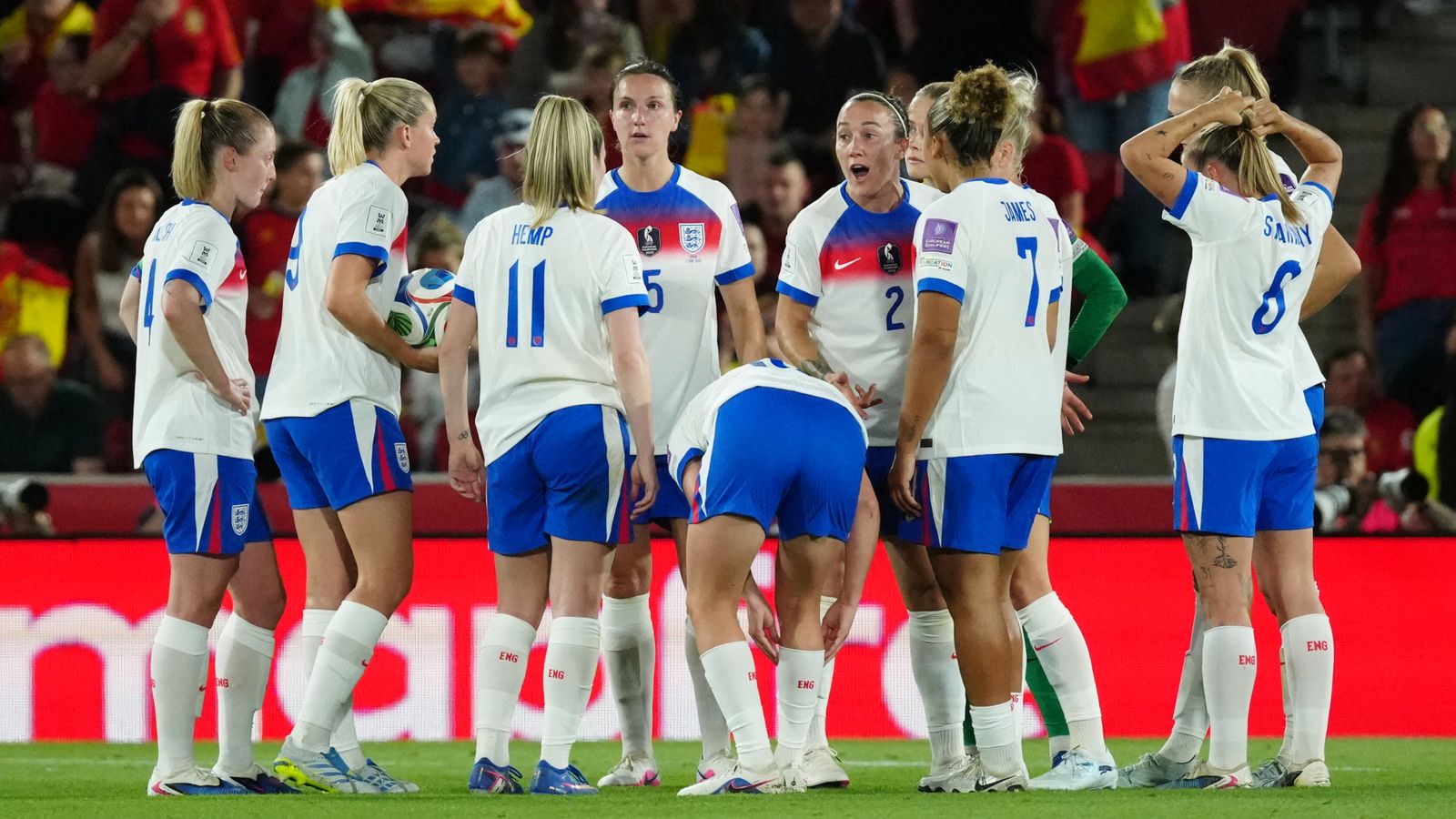
Perhaps the most concerning aspect of the match was the lack of reactive adjustment. Despite conceding twice before the 30th minute, the formation remained stagnant. Tactical inflexibility at the professional level usually suggests a disconnect between the sideline and the pitch. When the scoreline hit 0-3, the body language of the defensive unit suggested confusion rather than a concerted effort to mitigate further damage.
Comparative data suggests this is not a one-off anomaly. In the last three matches against top-tier European opposition, England has allowed an average of 1.9 goals per match, a rise from their 0.8 average over the previous two-year cycle. This upward trajectory in defensive vulnerability necessitates a shift in selection strategy if they intend to progress past the group stages of the upcoming tournament.
While supporters may point to the occasional tactical brilliance of individuals, the collective unit is struggling to mask its limitations. England is currently operating as a team of parts rather than a refined machine. With the World Cup approaching on June 11, the margin for error has effectively evaporated. The math is simple: continue with the current defensive orientation, and the tournament exit will mirror the clinical precision of yesterday's defeat.
Read Next
- The 48-team uncertainty hanging over the North American World Cup
- England are bottling the 2026 World Cup group stage before it even starts
- England’s defense is looking like a house of cards right now
- Sarina Wiegman faces a tactical crossroads against Spain
- 🏆 World Cup 2026 — Full Coverage Hub
- 🏴 England World Cup 2026 — Three Lions Hub
- 🇪🇸 Spain World Cup 2026 — La Roja Hub