The Asymmetrical Flaw in Dyche’s System
Sean Dyche has a very strict blueprint for wide players. They need to run. They need to track back. They need to understand defensive shape and sacrifice their own attacking instincts for the rigid structure of a low block.
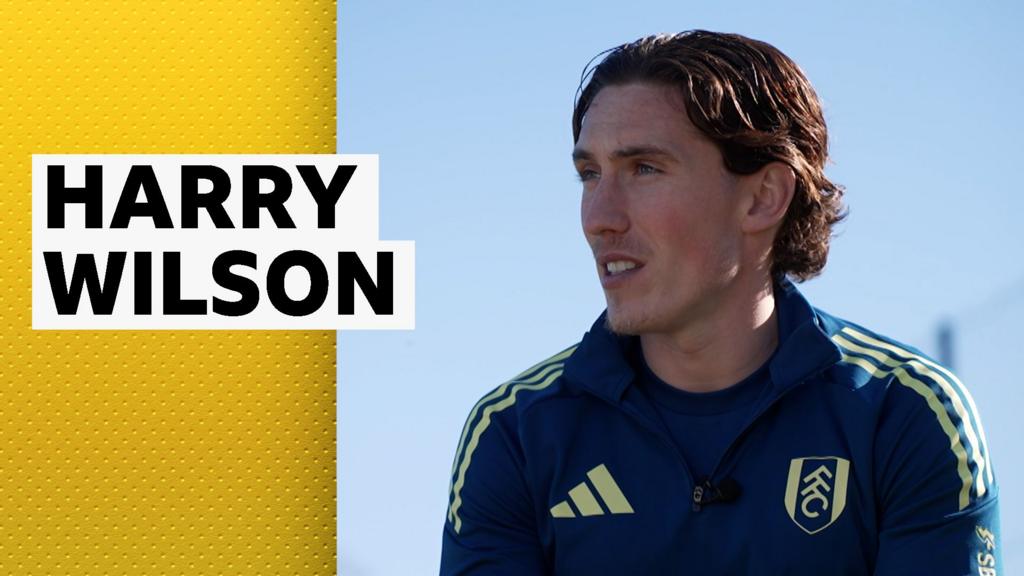
And yet, the links to Harry Wilson refuse to die.
According to Sky Sports, Everton still retain interest in the Fulham winger. It is a rumor that has surfaced before, disappeared, and now re-emerged as we approach the summer transfer window.
On the surface, it feels like a slight contradiction. Wilson is not a traditional Dyche winger. He is not a physical powerhouse who will relentlessly overlap, win aerial duels, and smash into tackles near his own corner flag.
But dig into the tactical reality of Everton's current squad, and the obsession makes perfect sense. Everton have a glaring, asymmetrical flaw in their attacking structure. They are painfully predictable.
Let's look at how they build play. The majority of their progression comes down the left flank. Dwight McNeil drops deep, receives, and looks for early crosses. He is highly effective at what he does, but opposing managers have figured it out. They tilt their defensive blocks to the right, knowing Everton lack the personnel to punish them on the opposite side.
The right flank is often functional rather than threatening. Players like Jack Harrison or Ashley Young offer industry, but they do not force the opposition to alter their defensive structure. They hug the touchline, look to recycle possession, and rarely threaten the goal themselves. They are facilitators, not finishers.
Changing the Geometry
Harry Wilson alters that pitch geometry entirely.
He is a left-footed player operating on the right. When he receives the ball, his first touch almost always takes him inside. This immediately creates a dilemma for the opposing left-back. Do they step up and follow him into the half-space, or pass him off to a holding midfielder?
If the fullback follows him, space opens up on the outside for the Everton right-back to overlap into acres of green grass. If the fullback stays wide to protect the flank, Wilson has the time to scan, set his feet, and shoot.
We saw this repeatedly during his best spells at Fulham under Marco Silva. He doesn't need to beat his man with raw pace. He isn't going to knock the ball past a defender and win a footrace. Instead, he uses intelligent body shape and quick passing combinations to create shooting angles. He plays the game in his head half a second faster than the defenders closing him down.
His ball-striking is absolutely elite. Give him a yard of space on the edge of the box, and he will punish you. Everton desperately lack players capable of scoring from outside the penalty area. They rely heavily on scrappy goals, second balls, and set-pieces to survive. When a team drops deep against them, Everton often run out of ideas, lacking a player who can pick a lock from twenty yards out.
The Set-Piece Weapon
Which brings us to the most vital point of this potential transfer: dead-ball situations.
Everton under Sean Dyche treat corners and free-kicks as premium scoring opportunities. They load the box with massive center-backs. James Tarkowski and Jarrad Branthwaite are constant aerial threats, attacking the ball with terrifying aggression.
But a set-piece is only as good as the delivery. McNeil provides excellent service from the right side, swinging the ball in with his left foot. But from the left side, or from central areas, Everton's delivery drops off significantly. The angles change, and the threat diminishes.
Wilson possesses a wand of a left foot for set-pieces. Putting him over dead balls gives Everton a dual-threat capability they have lacked since the days of Leighton Baines. He can shoot directly from free-kicks around the box, forcing goalkeepers to cheat toward the near post. The moment the keeper takes that half-step, Wilson can whip a cross to the back post for Tarkowski to attack.
The Defensive Compromise
The criticism, of course, is obvious.
Wilson is not a defensive stopper. When Fulham played without the ball against high-possession opposition, he often looked isolated and defensively frail. He can be bypassed in transition. If Everton are pinned back in a 4-5-1 formation, asking Wilson to defend his own penalty box for forty-five minutes is a recipe for disaster.
He lacks the physical strength to win fifty-fifty duels in the middle third. Opposing teams will absolutely target his side, knowing they can double up on the fullback if Wilson fails to track the overlapping run of an energetic left-back. We saw this when Fulham played Arsenal; the left side of Arsenal's attack found too much joy when Wilson was slow to recover his defensive position.
This is the tactical compromise Dyche has to weigh. Is the added creativity and set-piece threat worth the structural vulnerability on the right flank? Can Dyche coach enough defensive discipline into Wilson to make him a net positive?
The answer likely depends on the fee. Fulham are not desperate to sell. Marco Silva values his squad depth, and Wilson has been a reliable contributor. But Wilson is not always an undisputed starter at Craven Cottage. He rotates heavily depending on the tactical matchup. At his age, he likely wants guaranteed minutes as a primary creative outlet.
Everton cannot spend massive sums. They have to find market inefficiencies. A player who is highly effective in specific tactical scenarios, but perhaps undervalued because he lacks blistering pace or elite defensive work rate, fits the Everton recruitment model perfectly. They cannot afford perfect players. They have to buy flawed players and hide their weaknesses within a tactical system.
The Final Verdict
The persistent interest reported by Sky Sports suggests Everton’s analytics department sees something highly specific in Wilson’s underlying numbers. The interest goes beyond raw assists. It stems from his expected threat (xT) from the right half-space.
When Wilson cuts inside, he frequently plays reverse passes into the penalty area. This is a pass Everton almost never attempt. Their current wingers prefer floating crosses to the back post, hoping for a knockdown. Wilson plays the ball on the floor, sliding it between the center-back and the fullback.
Dominic Calvert-Lewin thrives on those exact runs. He wants the ball played into his stride across the face of the six-yard box. He wants to attack the near post. He rarely gets that specific type of service from the right side of the pitch.
If you map Everton's shot assists from the past season, there is a massive void on the right edge of the penalty area. It is a dead zone. Teams know they can compress the pitch, overload the center, and force Everton to play out wide to the left.
Signing Wilson forces defenses to stretch horizontally. You cannot leave a player with his ball-striking ability in space on his strong foot. You have to press him. And the moment you press him, spaces open up elsewhere. A holding midfielder has to vacate the central zone to close him down, which suddenly gives Abdoulaye Doucoure room to make his trademark late runs into the box.
It is a subtle shift, but one that could add six to eight goals to Everton's season tally simply through better spatial distribution and set-piece efficiency. Football at the bottom half of the Premier League is entirely about margins. A single brilliant free-kick can be the difference between three points and zero. A single moment of quality from the right half-space can break a deadlock in a miserable nil-nil draw against a relegation rival.
Everton need players who can create something out of nothing. They have enough hard workers. They have enough players who will run themselves into the ground. They need a technician. They need a player who sees the picture differently.
Prediction: Everton will drag this saga out until late July, attempting to lower the asking price as much as humanly possible. Fulham will play hardball. Ultimately, the tactical fit makes too much sense for both parties. Expect Wilson to line up in royal blue by August, instantly becoming their primary set-piece taker. He will drive Dyche crazy with his defensive positioning at times, but he will also win them three matches on his own with his left foot.