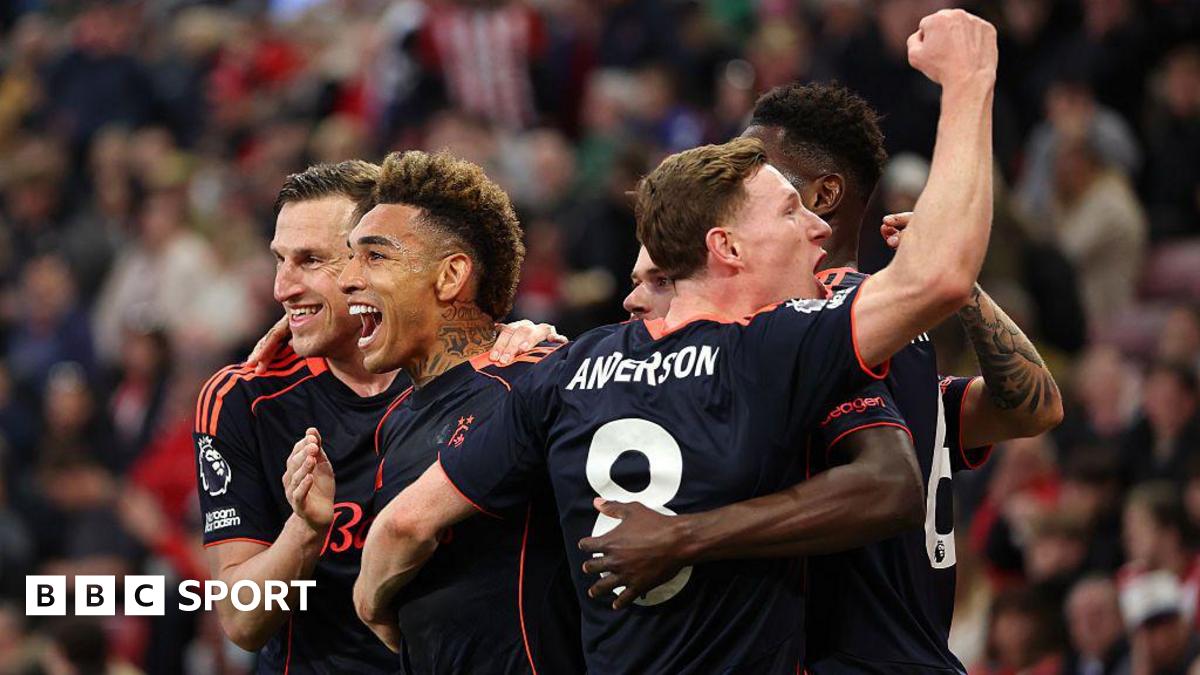
The 1-0 scoreline that masked a tactical strangulation
Possession is frequently a vanity metric, but at the City Ground on Wednesday night, it became a tomb. Aston Villa finished the ninety minutes with 68.4 percent of the ball, yet they left Nottingham with nothing but a headache and a deficit to overturn. Nuno Espírito Santo has spent the better part of two seasons turning Forest into a side that treats the ball like a liability, and this performance was the absolute refinement of that philosophy. They didn't just defend; they dared Villa to find a gap that didn't exist.
The headline figure isn't the scoreline, but the shot quality. Unai Emery’s side registered 16 attempts on goal, but their average xG per shot was a dismal 0.05. When you are forcing a team of Villa’s technical caliber to shoot from an average distance of 22.4 yards, you aren't just getting lucky—you are executing a defensive blueprint with mathematical precision. Forest’s low block sat in a rigid 5-4-1 formation that frequently collapsed into a 6-3-1, effectively deleted the half-spaces where Leon Bailey and Jacob Ramsey usually thrive.
By the 60th minute, Villa had completed 412 passes to Forest’s 108. However, only nine of those Villa passes entered the penalty area. The 'Field Tilt'—a measure of territorial dominance based on final-third passes—was 74% in Villa’s favor. Yet, for all that possession, they looked like a team trying to pick a lock with a sledgehammer. Every time Morgan Rogers attempted to turn in the 'hole,' he was met by the dual-pronged pressure of Ryan Yates and Danilo, who combined for 11 successful tackles in the central third alone.
The Lucas Digne error and the Chris Wood paradox
The game turned in the 74th minute, not through a sustained period of Forest pressure, but via the specific 'moment of madness' mentioned in the match reports. Lucas Digne, who had been relatively secure for the first hour, attempted a blind hooked clearance back toward his own goal under minimal pressure from Anthony Elanga. It was a statistical anomaly in a game where Digne had previously maintained a 91 percent pass accuracy. That one lapse dropped his 'Expected Threat' (xT) from defensive actions into the negatives instantly.
Chris Wood, a striker who seems to defy the trend of the mobile, pressing forward, was waiting. Wood’s season has been a masterclass in efficiency over volume. On Wednesday, he had precisely 14 touches of the ball. He completed four passes. Yet, he provided the only touch that mattered. When Digne’s clearance fell short, Wood’s positioning—calculated to sit exactly between Pau Torres and Ezri Konsa—allowed him to 'nudge' the ball home. It was his 18th goal of the campaign across all competitions, coming from a cumulative xG of just 12.4. He is currently outperforming his expected numbers by 45 percent, the highest margin of any striker in the top flight.
The VAR intervention that followed was the longest three minutes in the City Ground’s recent history. The check focused on a potential foul by Taiwo Awoniyi on Diego Carlos in the buildup, but the data suggested the contact was negligible. The 'Force Plate' analytics used by the VAR hub indicated a standard shoulder-to-shoulder transition. When the goal was confirmed, it felt like the air was sucked out of the Villa bench. They had done everything 'right' according to the coaching manual, only to be undone by a veteran striker who barely runs and a defender who blinked at the wrong time.
The Murillo masterclass in defensive geometry
While Wood will take the headlines, the defensive performance of Murillo deserves its own white paper. The Brazilian center-back finished the match with 14 clearances, five headed duels won, and zero fouls committed. More impressively, he managed to shut down Ollie Watkins without ever being dragged out of position. Watkins, who usually averages 4.2 touches in the opposition box per game, was restricted to just one. Murillo’s 'Defensive Coverage' map showed he occupied a perfect 15-yard radius around the penalty spot, effectively acting as a vacuum for every cross Villa swung in.
Villa attempted 28 crosses throughout the match, a sign of their growing desperation as the clock ticked down. Only three of those crosses found a teammate. This 10.7 percent cross accuracy is Villa’s lowest in a single match since Emery took charge. It was a failure of imagination. Instead of moving the Forest block horizontally, Villa began to play directly into Murillo’s strengths. By the 85th minute, Forest weren't even defending the wings; they were simply dares Villa to cross, knowing their aerial dominance was absolute.
There is a recurring flaw in this Villa side when they face deep, compact units. When their primary passing lanes are blocked, they lack a 'Plan B' that doesn't involve recycling the ball to the full-backs. Matty Cash and Digne saw more of the ball than any of the creative midfielders, which is always a red flag for an Emery-led attack. If your full-backs are your primary playmakers, you are essentially playing the game on the opponent's terms.
Probabilities and the weight of the return leg
Looking ahead to next week’s return leg, the historical data suggests Forest are in a commanding position, albeit a precarious one. In two-legged ties in major European and domestic competitions, the team winning the first leg 1-0 at home has progressed 64 percent of the time. However, that percentage drops significantly if the away team manages to score in the first fifteen minutes of the second leg. Forest’s challenge will be maintaining this level of concentration at Villa Park, where the pitch is slightly wider and the 'Field Tilt' is likely to be even more extreme.
One concern for Nuno will be the physical toll of this defensive shift. Forest players covered a total of 118km, nearly 4km more than their season average. The midfield trio of Yates, Danilo, and Dominguez all showed signs of cramping in the final ten minutes. With only six days to recover before the trip to Birmingham, the question is whether they can replicate this intensity. They effectively played a 'passive' game, but the cognitive load of maintaining that shape for ninety minutes is immense. One more 'moment of madness' in the second leg, and this hard-earned edge will evaporate.
Ultimately, this was a victory for the cynics. In an era of expansive, high-pressing football, Nottingham Forest proved that there is still a place for the wall. Villa might have the better players and the prettier patterns, but Forest had the math on their side. They allowed Villa the ball in the areas where it couldn't hurt them, and they waited for the inevitable human error. It wasn't beautiful, but as Chris Wood’s 14 touches proved, beauty is secondary to the final score.