The 48-Team Bloat and the Real Tournament
We are exactly 24 days away from the biggest, most bloated FIFA World Cup in history. Forty-eight teams. 104 matches spread across a continent. The group stage is going to be a fascinating, chaotic mess of mismatches and bizarre tiebreakers. But let's be entirely honest with ourselves. The real tournament doesn't start until the Round of 16.
That is when the training wheels come off. The new format means we are going to see some third-place teams scrape through by parking the bus for 270 minutes, hoping for a fortunate penalty or a set-piece goal. By the time we hit the knockout phase, the pretenders will be filtered out, and the tactical heavyweights will finally have to show their hands.
International football is usually a few years behind the club game tactically. Managers simply do not have the time to drill complex positional play into a squad that trains together for a few weeks a year. But 2026 feels different. The top nations are bringing some of the most intricate tactical setups we have ever seen at a major international tournament. The era of just throwing eleven good players on the pitch and hoping for the best is dead.
The European Heavyweights: Pragmatism vs. Chaos
Let's talk about England. For years, the complaint was that Gareth Southgate had a Ferrari and insisted on driving it like a Fiat. Enter Thomas Tuchel. When the FA handed the keys to the German tactician, the expectation was heavy metal football. The reality over the last year has been something far more calculating.
Tuchel has realized what every successful international manager eventually figures out: you win knockout tournaments with a rock-solid defense and clinical transitions. He hasn't turned England into Bayern Munich or Chelsea. Instead, he's built a structure that maximizes Jude Bellingham's late runs into the box while protecting a backline that still has question marks.
Expect England to line up in a hybrid 3-4-2-1 in possession, morphing into a suffocating 5-2-3 without the ball. Declan Rice is being asked to do the running of two men, allowing Phil Foden and Bukayo Saka to operate in the half-spaces. It is not always pretty. Sometimes it is incredibly frustrating to watch. But if they run into a possession-heavy team like Spain in the Round of 16, Tuchel's setup is perfectly designed to absorb pressure and kill them on the counter. The real question is whether Harry Kane, approaching 33, still has the legs to press the way Tuchel demands.
If England are playing it safe, Germany are doing the exact opposite. Julian Nagelsmann is treating international football like a Bundesliga title race. It is high-wire, high-risk, and absolutely thrilling to watch. Since taking over, he has leaned heavily into the talent factory of Florian Wirtz and Jamal Musiala.
Germany's tactical setup is essentially a 4-2-2-2 that relies on overwhelming the central areas. They don't really bother with traditional wingers. Instead, they pack the middle of the pitch with technical monsters and rely on the fullbacks to provide the width. It is a nightmare to defend against if you try to match them man-for-man.
However, there is a glaring weakness, and it is exactly what we will be looking for in the knockouts. When Germany loses the ball, their transition defense can look like a sieve. If they draw a team with genuine pace on the wings — think France with Kylian Mbappe or Brazil with Vinicius Junior — it could get ugly very quickly. Nagelsmann is betting that his attack is potent enough to outscore anyone. In a one-off Round of 16 tie, that is a terrifying gamble.
The Americas: Home Advantage and Last Dances
You cannot talk about World Cup predictions without looking at Argentina and Brazil, but both arrive in North America with completely different vibes.
Argentina is navigating the trickiest phase in football: the twilight of a god. Lionel Messi will be 39 by the time the tournament ends. Lionel Scaloni has done a masterful job of slowly reducing the team's reliance on him, building an incredibly robust midfield trio of Enzo Fernandez, Alexis Mac Allister, and Rodrigo De Paul. They are a team of pitbulls designed to win the ball back instantly. They don't need to dominate the ball; they just need to control the tempo. If they make the knockouts, no European team will want to draw them. They drag you into a street fight and beat you with experience.
Brazil, on the other hand, is still trying to find the right balance under Dorival Junior. The attacking talent is absurd. You have Vinicius Junior, Rodrygo, and Endrick ready to terrorize defenses. But the midfield remains a chaotic mess. They lack a true orchestrator who can dictate play against high-pressing European sides. If they face a well-drilled mid-block in the Round of 16, they might end up relying entirely on moments of individual brilliance. It is the classic Brazilian dilemma, amplified by the sheer pressure of ending their 24-year drought.
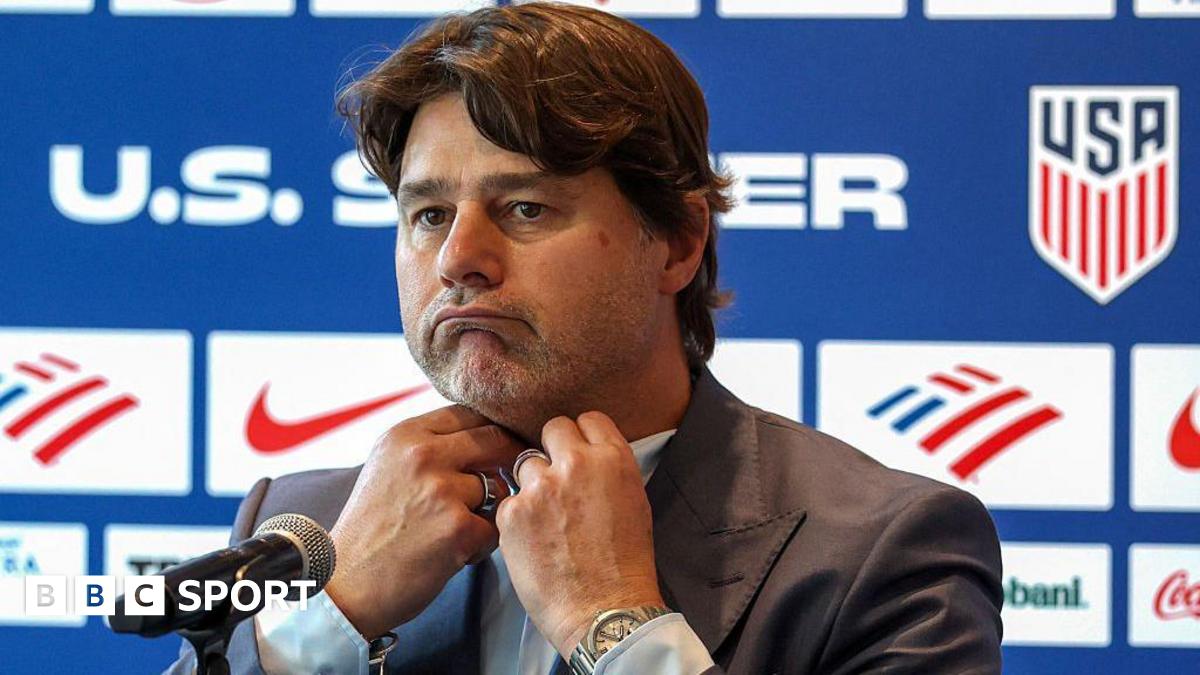
Then we have the United States. Mauricio Pochettino taking the USMNT job was a coup, and he has completely changed the intensity of this squad. Gone is the passive buildup play. Pochettino has implemented his trademark high-intensity pressing system. They hunt in packs.
The problem? The summer heat in North America. Pressing like prime Tottenham for 90 minutes in a 95-degree afternoon game in Houston or Miami is physical suicide. We are likely to see the USMNT utilize targeted pressing triggers rather than a relentless blanket press. Pochettino will have to rely heavily on a core group of players to execute this transition-heavy style in the sweltering heat:
- Christian Pulisic operating as the primary outlet on the left flank.
- Tim Weah stretching defenses vertically to create space in behind.
- Tyler Adams attempting to cover an inhumane amount of ground in the center of the park.
These pieces fit together nicely on paper, but the central defense remains a glaring issue.
If the USMNT escapes their group, their Round of 16 ceiling will depend entirely on who they draw. Give them a slow, ponderous European team, and they might just run them off the pitch. Give them a defensively disciplined South American squad, and they will struggle to break them down. The home crowd will provide a massive boost, but emotion only gets you so far against elite tactical setups.
The French Formula and First Knockout Predictions
We have ignored France so far, and that is a mistake. Didier Deschamps is still at the wheel, and his philosophy hasn't changed. He views football as a game of risk management. Why play beautiful, expansive football when you can just be physically superior to everyone else and let Kylian Mbappe win the game on his own?
France is perfectly built for knockout football. They have the deepest squad in the world. They can replace a world-class center-back with another world-class center-back without missing a beat. They will sit in a mid-block, invite you to try and break them down, and then launch devastating counter-attacks. It is cynical, it is effective, and it is incredibly boring to watch for 85 minutes. But it wins tournaments.
So, how does the Round of 16 actually play out? The expanded format means we are going to get at least two massive upsets. A team like Uruguay, operating under Marcelo Bielsa's maniacal high press, is primed to ambush a traditional giant. Bielsa's football is exhausting, but over a short tournament span, it can overwhelm opponents completely unprepared for that level of intensity.
Spain remains the wildcard. Luis de la Fuente has them playing a more direct version of their traditional possession game, utilizing Lamine Yamal and Nico Williams on the flanks. They are no longer just passing teams to death; they have genuine thrust. If they get their midfield clicking, they are the best team in Europe.
Don't discount the Netherlands, either. Ronald Koeman has quietly assembled a defensive unit featuring Virgil van Dijk, Nathan Ake, and Micky van de Ven that simply refuses to concede cheap goals. They lack a world-class finisher, but their defensive solidity makes them a nightmare draw in a single-elimination scenario.
Ultimately, the teams that survive the Round of 16 will be the ones that master game-state management. The 48-team format will lead to injuries, fatigue, and rotation issues. The squads with depth, pragmatic managers, and a clear defensive structure will advance. Expect France, England, and Argentina to navigate the chaos safely.
We are just 24 days away from the madness. When the knockout brackets are finally set, the tactical warfare is going to be spectacular.