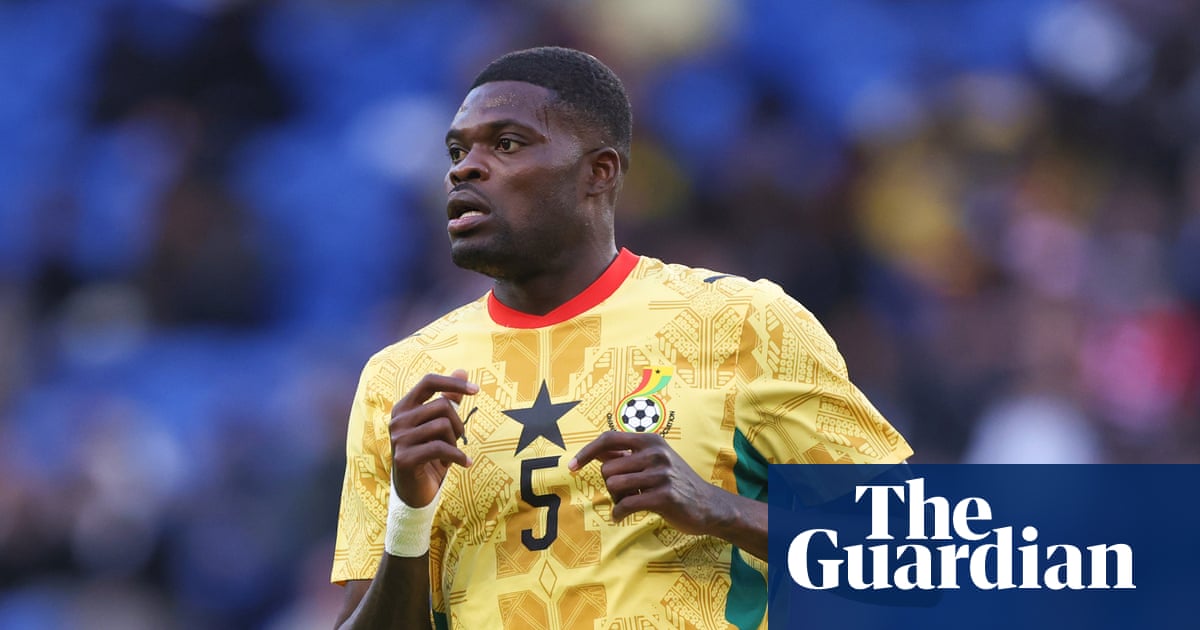
The midfield vacuum in Toronto
Ghana enters tomorrow’s World Cup opening fixture against Panama at BMO Field facing a problem that transcends simple squad rotation. With the news yesterday that Justice Roger Lafreniere rejected Thomas Partey’s visa appeal, manager Carlos Queiroz loses the heartbeat of his tactical structure. As reported by The Guardian, the decision stems from a failure to declare specific legal disclosures, leaving the Black Stars without their primary pivot for this tournament opener.
Partey is not just a ball-winner; he is the transition specialist who dictates the tempo of the defensive third. Losing him forces Queiroz to reconsider a midfield configuration that, according to recent reports, was designed to stabilize years of erratic form. Without his screening presence, the center of the pitch becomes a liability against a disciplined Panama side.
Tactical adjustments for the Black Stars
The coaching staff must decide if they prioritize a double-pivot or persist with a lone holding midfielder. A double-pivot offers safety, but it restricts the forward movement of the fullbacks, effectively neutralizing Ghana’s width. If they opt for a lone anchor, they gamble on transition defense—a massive risk if their replacement lacks the positional discipline Partey provides.
The defensive failure of previous years has often been traced back to transitions allowed by a disjointed middle sector. In the match against Panama, the lack of cover for the center-backs could prove fatal if the team fails to apply an immediate press after losing possession. The margin for error in tournament play is zero, and the squad’s recovery speed will be tested early.
The psychological toll of uncertainty
Beyond the technical analysis, institutional stability is at an all-time low. The Black Stars have spent decades struggling to reconcile their status as a regional powerhouse with their disjointed performance on the global stage. Relying on the diaspora to fill the emotional and tactical gaps is a makeshift solution for a team that historically peaked in the 1970s.
This is not a squad built to handle chaos during the opening week of a tournament. While Panama might lack individual star power, they possess a coherent system that has been refined through steady qualification cycles. If Ghana starts the game frantic or unsettled by the logistical fallout, the match will drift away within the first 20 minutes.
Tactically, the absence of a designated leader in the middle usually results in erratic long-ball cycles. Watch for the frequency of these passes in the opening quarter. If Ghana abandons the ground game early, it is a clear indicator that the midfield is failing to rotate into passing lanes.
The outlook
My prediction for Wednesday is a grim result for West African supporters. Panama’s tactical adherence to a compact defensive structure will frustrate a Ghanaian side that now lacks its primary engine. I expect Panama to secure a 1-0 victory by exploiting a disorganized transition in the second half. Ghana’s lack of preparation time to adjust after the June 16th court ruling makes this an uphill battle they are unlikely to win.
Read Next
- Ghana are at a tactical crossroads without Thomas Partey
- Austria vs Jordan: Why possession stats are lying to you
- Mbappe is the only reason to watch France right now
- Austria need more than Schmid's brilliance to survive the group stage
- 🏆 World Cup 2026 — Full Coverage Hub
- 🇬🇭 Ghana World Cup 2026 — Black Stars Hub