The anatomy of a psychological collapse
It is the oldest trope in the modern Premier League. Arsenal get close, the pressure mounts, and the structure fractures. Following the crushing blow dealt by Manchester City to their title hopes, the air around London Colney is thick with familiar anxieties. We are back in the territory of bottling claims.
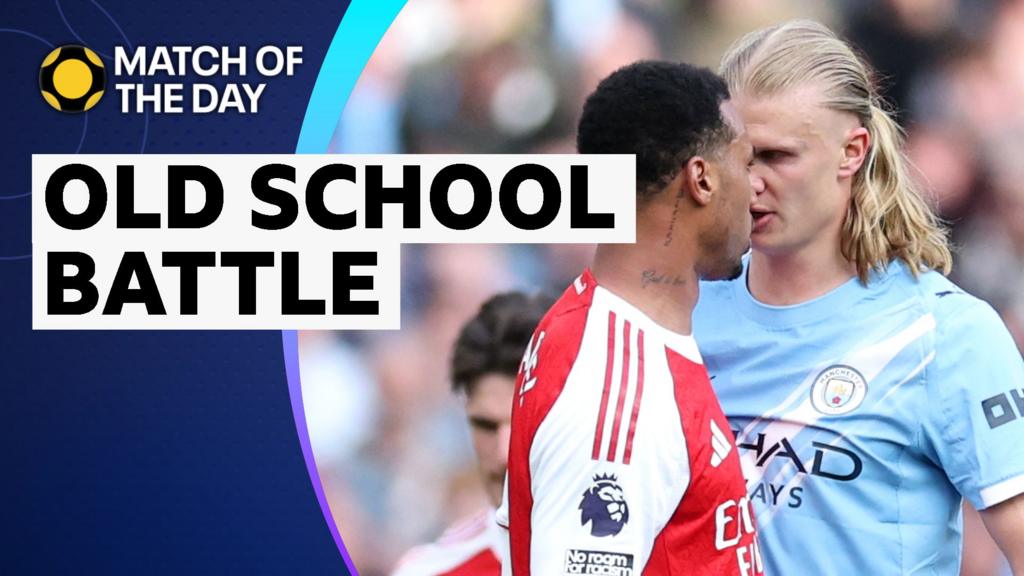
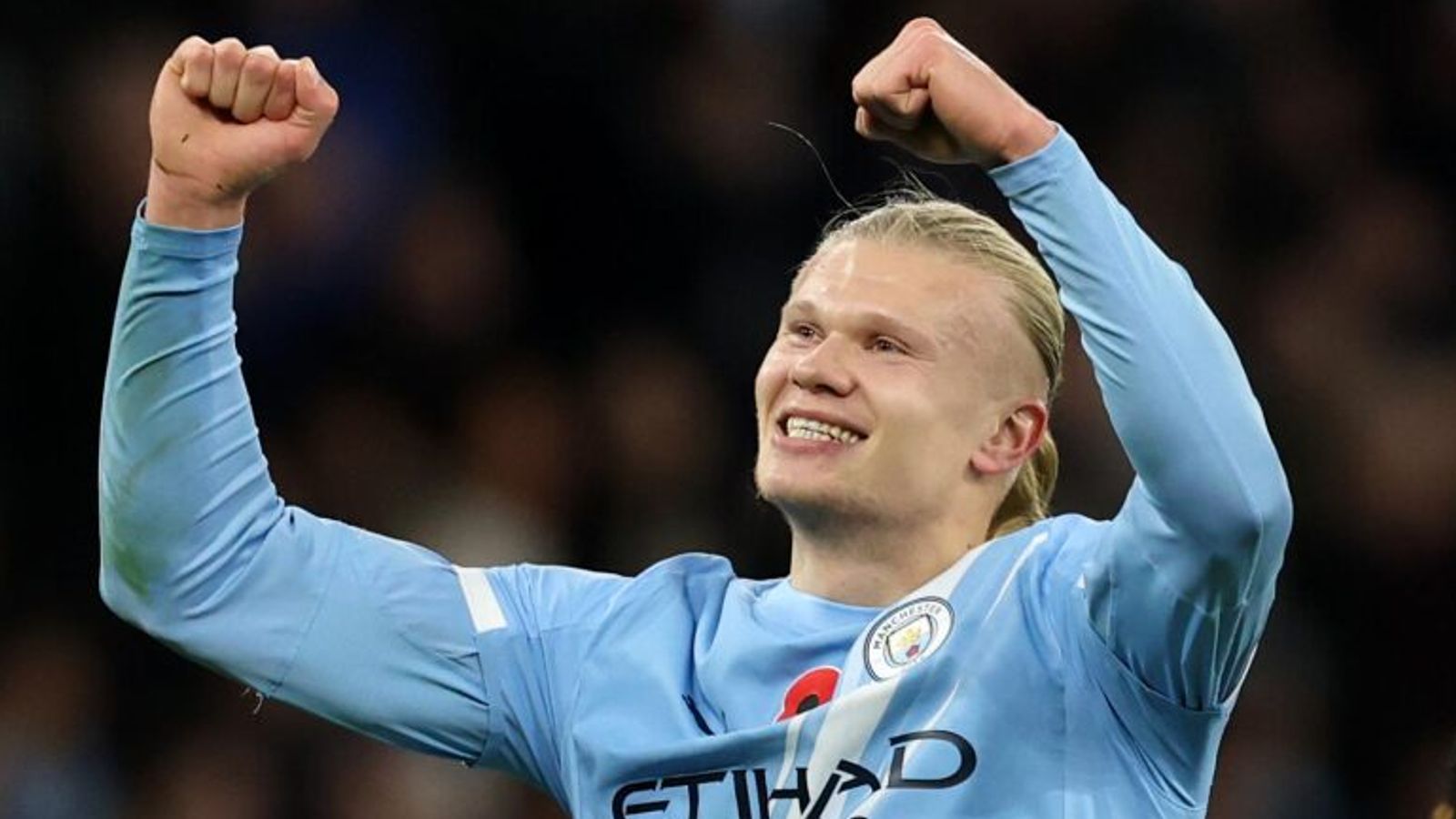
This discourse is amplified by the very deliberate mind games being waged by Erling Haaland. He knows exactly what he is doing.
But narrative is cheap. What actually matters is what happens on the pitch when the mental weight becomes a tactical anchor. When Arsenal drop points in the run-in, it rarely looks like a dramatic capitulation. It looks like a slow strangulation of their established passing networks.
The distances between Declan Rice and Martin Ødegaard increase by two or three yards. The pressing triggers become staggered.
The first man goes. The second man hesitates. That hesitation is where elite opponents kill you.
This is exactly what City exposed, and it is exactly what Haaland is preying on right now. Arsenal did not lose their nerve; they lost their compactness. They allowed the game to stretch. Against a team managed by Pep Guardiola, stretching the pitch is tactical suicide.
Haaland's calculated theater
When Erling Haaland speaks, it is rarely accidental. His recent comments are less about bravado and more about planting seeds of doubt. He knows that William Saliba and Gabriel Magalhães are arguably the best central defensive partnership in Europe when the game is in front of them.
If Arsenal are set in a block, Gabriel is aggressive on the front foot. Saliba sweeps behind him with terrifying recovery pace. They are a wall.
But Haaland is not testing their physical attributes. He is testing their concentration. Notice how, in the recent encounters, he has stopped making the immediate early run in behind. Instead, he lingers on the blindside of the left-sided center-back.
He waits for the exact moment the midfield line breaks its shape. He is daring them to step out. If Gabriel steps out to cover a dropping Kevin De Bruyne, Haaland is gone. The psychological warfare in the press is simply an extension of his off-the-ball movement. He wants to make Arsenal second-guess their instincts. He wants them to overthink.
Where the system broke down
The crushing blow wasn't just a loss of points. It was a breakdown of Mikel Arteta's meticulously designed control. Arsenal's entire defensive philosophy is predicated on compressing space in the middle third. They squeeze the pitch, relying on Bukayo Saka and Gabriel Martinelli to tuck in and block the half-spaces.
Against City, that compression failed spectacularly.
Rodri was allowed to receive the ball facing forward in the 41st minute. That is a cardinal sin in the Arteta playbook. When Rodri faces forward without immediate pressure, the entire defensive block has to drop three yards deeper than they want to.
That sudden retreat creates a vacuum at the top of the box. City exploited that vacuum repeatedly.
It was not a lack of effort. It was a micro-failure of spatial awareness under intense pressure. When Arsenal are confident, they jump on those loose touches. When the title pressure weighs on them, they take a half-step backward instead of a full step forward.
That half-step is the difference between a high turnover and conceding a goal. The 4-4-2 defensive shape also looked unusually ragged. Kai Havertz and Ødegaard usually dictate the pressing angles perfectly. Yet against City, they were bypassed with single, line-breaking passes from John Stones. Once the first line was breached, Rice was left covering an impossible amount of ground.
The left-side paralysis
We need to talk about the left flank. For much of the season, the left-sided triangle has been a rotating cast. Martinelli, Leandro Trossard, Declan Rice, and Jakub Kiwior or Oleksandr Zinchenko.
Unlike the telepathic understanding between Saka, Ben White, and Ødegaard on the right, the left side often looks improvised.
When Arsenal are chasing a game, this improvisation turns into a massive liability. Martinelli is an elite transition threat. When he has space to run into, he is devastating. But when teams sit in a low block, he struggles to combine in tight areas. Trossard offers better combination play, but he lacks the sheer pace to pin a full-back deep.
City identified this weakness perfectly. They overloaded Arsenal's right side, forcing the ball to be switched to the left. Once the ball reached Martinelli, City immediately pressed with an aggressive trap, using Kyle Walker's recovery pace as an insurance policy. Arsenal's left flank was completely paralyzed.
Arteta has to find a consistent rhythm on that side of the pitch. Zinchenko's inversions into midfield are brilliant for controlling possession, but they leave vast tracts of space behind him.
If Zinchenko starts, Arsenal control the ball but look vulnerable in transition. If Kiwior starts, the defense is solid but the build-up is stodgy. It is a tactical dilemma that Arteta has yet to solve, and it is costing them dearly in the highest-leverage moments.
The offensive disintegration
The defensive issues are only half the story. The anxiety leaks into Arsenal's possession game. Look at the pass completion rates in the final third during the last twenty minutes of high-leverage matches.
Ødegaard, normally a metronome of disguised passes, starts forcing the issue. He attempts low-percentage through balls rather than recycling possession to sustain the attack. The team stops trusting the slow, methodical build-up that got them to the top of the table. They start playing with frantic desperation.
That frantic energy is precisely what elite opponents feed on. Guardiola’s side thrives on the transition moments created by Arsenal's forced errors. When Arsenal lose patience, they lose their shape. When they lose their shape, they are highly vulnerable to the counter-attack.
Furthermore, Saka has looked incredibly isolated recently. He frequently receives the ball with two men immediately collapsing on him. Arsenal need White to make overlapping runs not just as a decoy, but as a genuine passing option to manipulate the opposition full-back.
The triangles on the right flank have become far too predictable. Opponents have figured out that if you double up on Saka and force him outside, the Arsenal attack stalls. They need to introduce third-man runs from deep. Someone needs to violently break the line.
Addressing the noise
The term "bottling" is reductive. It lacks tactical nuance, but it has stuck to this squad like tar. Arteta has been forced to address these claims directly. He is trying to reframe the narrative as an essential learning curve rather than an inherent character flaw.
But the evidence on the pitch suggests there is a structural vulnerability when the stakes hit a certain threshold. Mental fatigue translates directly into physical sluggishness.
You can see it in the body language. The forced smiles in press conferences. The subtle hesitations in the defensive third. Haaland is circling because he smells blood in the water. He knows that this Arsenal team, for all its immense talent and tactical sophistication, still carries the heavy scars of previous campaigns.
They remember throwing away leads. They remember the feeling of the chasing pack breathing down their necks. Arteta can talk about mentality all he wants, but the only way to banish the ghosts is to win ugly when the system isn't working flawlessly.
Tactical fixes for the run-in
If Arsenal are to salvage their title hopes and reverse this terminal narrative, the adjustments cannot be purely emotional. Working harder is a myth in elite football; everyone works hard. The fix has to be structural.
First, they must address the isolation of their holding midfielder when the press is bypassed. When opponents beat the first line of pressure, Arsenal's midfield structure tends to flatten into a rigid line of four. They need a designated stagger.
If Rice steps, Jorginho or Thomas Partey must immediately drop to cover the pivot space. Without that stagger, teams are given a free runway to attack the center-backs in isolation.
Secondly, Gabriel Jesus might need to be reintroduced to the starting lineup. Havertz has been excellent as a focal point, but Jesus brings a chaotic dribbling element that disrupts set defenses. When the structured passing breaks down, you need a player who can beat a man one-on-one and scramble the defensive assignments. Jesus provides that pure unpredictability.
Thirdly, Arteta needs to trust his bench earlier. Waiting until the 75th minute to make a substitution when the midfield is clearly exhausted is a recurring flaw in his management. He has to read the game state faster.
The verdict
The psychological damage of the recent City blow is severe. Arsenal are wounded. They are heading into their next fixture knowing that any dropped points will effectively end their title aspirations. The pressure is completely suffocating.
Will they bottle it again? The structural flaws exposed by City will be ruthlessly targeted by every remaining opponent. The blueprint is out there. Compact the middle, double Saka, bypass the first press, and attack the space behind Rice.
My prediction is grim for the red side of North London. Arsenal will likely win their next fixture out of pure anger, but the defensive fragility will cost them before the season concludes. The title is slipping away, not because they are weak-willed, but because they have momentarily lost the tactical coldness required to see out a championship.
Expect a narrow, unconvincing 2-1 victory this weekend, but the underlying metrics will not look pretty. City have broken the spell. The rest of the league is taking notes, and Haaland is waiting to deliver the final blow.
Read Next
- Man City just reminded everyone why the Premier League is their playground
- Jamie Carragher is right about Martinelli and Roy Keane needs a recovery day
- Haaland and Gabriel are turning the title race into a street fight
- Erling Haaland is tired of being the only honest man in the box
- 🇳🇴 Norway World Cup 2026 — Can Haaland Lead the Vikings?
- ⭐ UCL 2026 — Champions League Quarter-Finals Hub