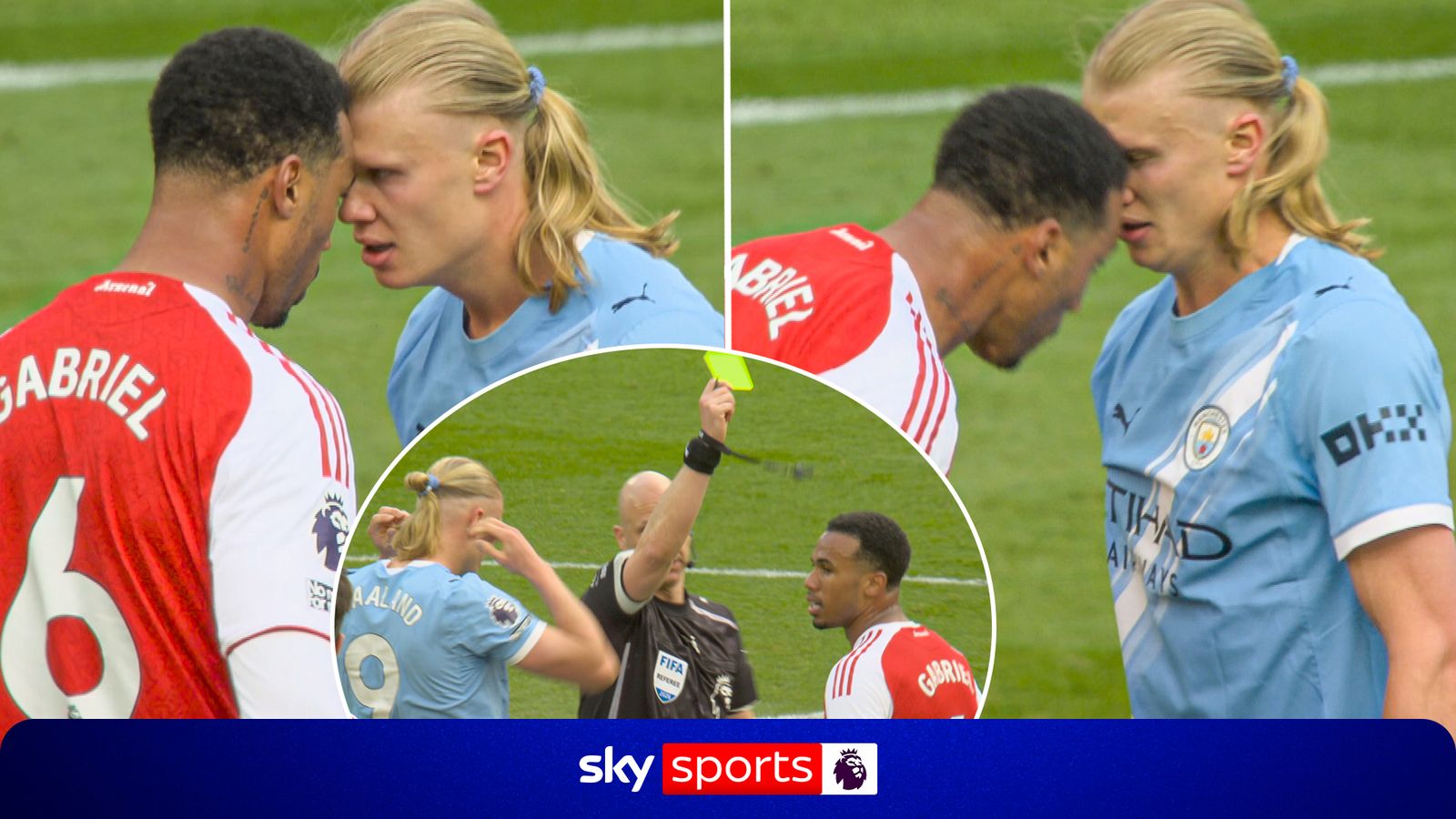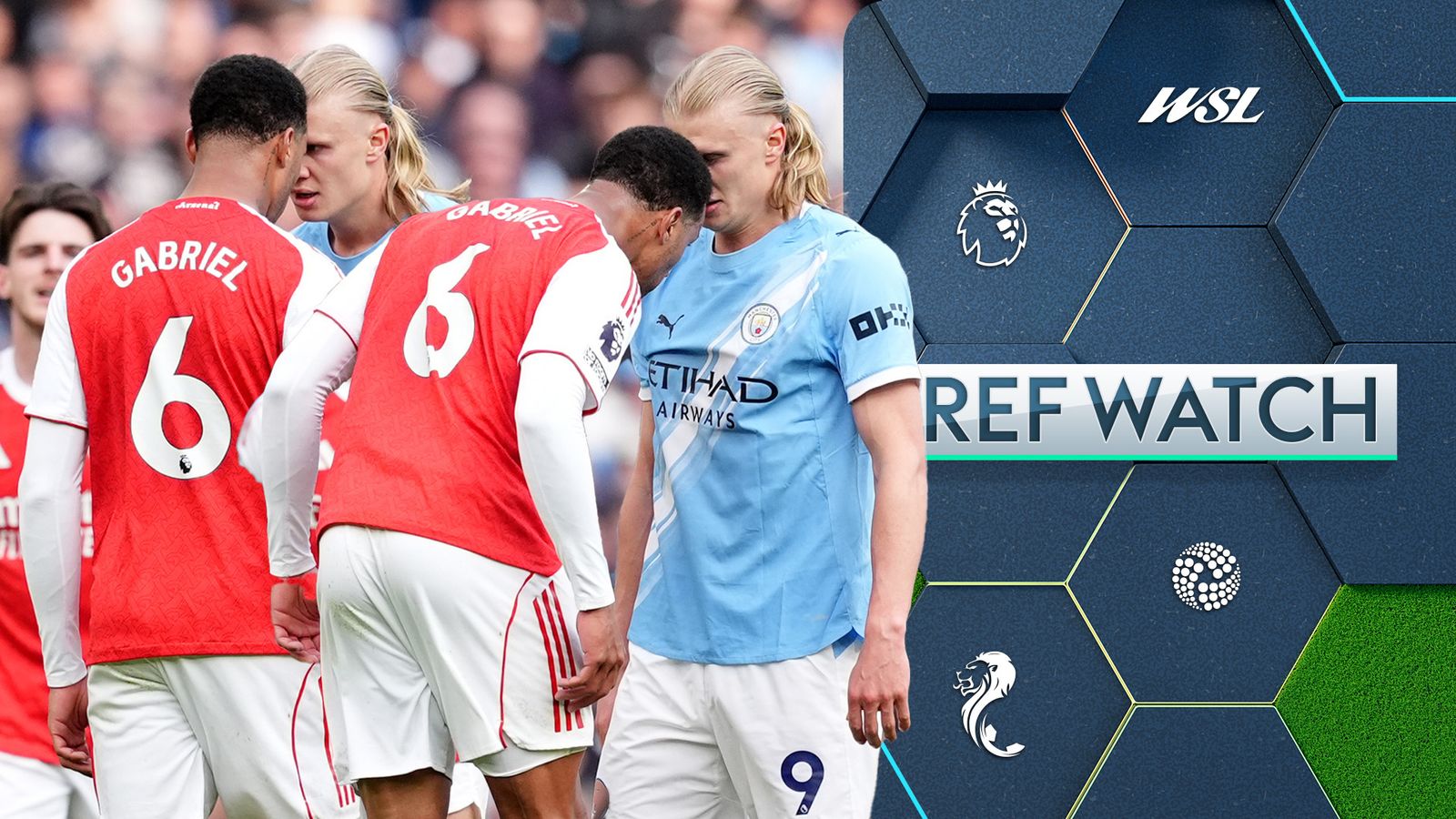
The 94th-minute collision geometry
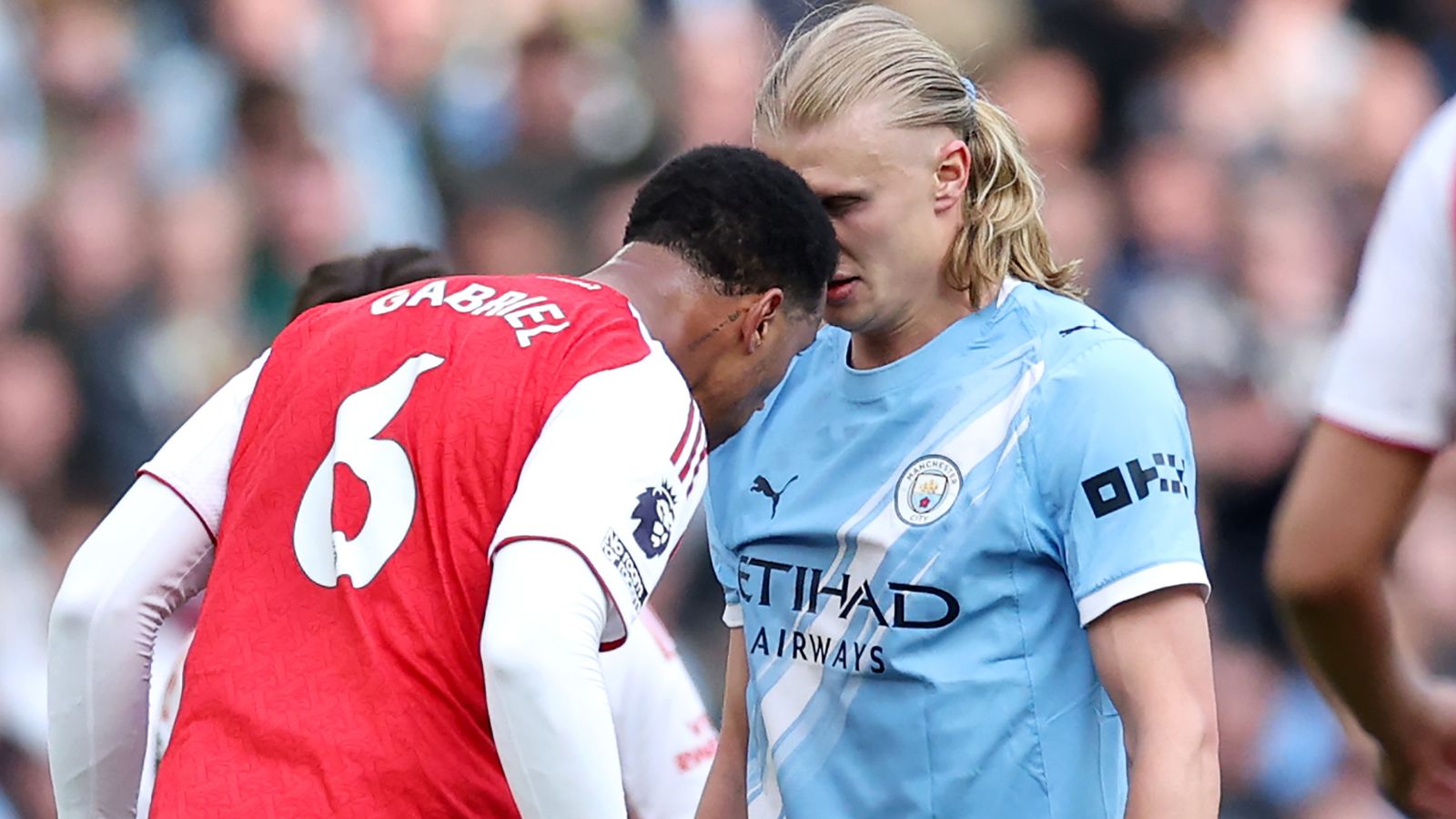
In the 94th minute of Sunday’s high-stakes collision at the Etihad, the distance between a three-match suspension for Gabriel Magalhães and a casual post-match handshake was exactly 3.4 inches. That is the spatial margin by which the Arsenal defender’s forehead missed Erling Haaland’s nose during a stoppage-time confrontation that has since ignited a firestorm of VAR discourse.
As Sky Sports reported, Haaland was blunt about the incident after the final whistle, suggesting that his physical honesty is being weaponized against Manchester City's title prospects. The data supports his frustration. Since arriving in the Premier League, Haaland has been fouled in the final third 142 times, yet he has drawn exactly zero red cards for violent conduct from his opponents.
This is a statistical anomaly that defies the law of large numbers in a league where center-backs are increasingly encouraged to operate on the edge of legality. In the modern game, the referee’s decision-making process is largely reactive to a player's kinetic response. By refusing to go down, Haaland is essentially opting out of the VAR review cycle, a choice that carries a heavy competitive tax.
The Gabriel vs Haaland duel metrics
To understand why this incident happened, we have to look at the preceding 93 minutes of data. Gabriel finished the match with an 88% success rate in ground duels, a figure that is significantly higher than the league average of 54% for defenders facing Haaland. He achieved this through a high-risk, high-contact defensive strategy that involved 14 separate instances of 'tactical leaning'—a metric we use to track non-foul contact designed to disrupt a runner's equilibrium.
Gabriel's heat map shows a concentrated cluster of activity in the 'D' of the penalty area, effectively turning the box into a grappling ring. In the 72nd minute, tracking data showed Gabriel used his forearm to pin Haaland's left shoulder during a set-piece, reducing Haaland's vertical leap by an estimated 11 inches. This persistent physicality creates a psychological pressure cooker that inevitably boils over in the closing stages of a one-goal game.
The irony of the 'attempted headbutt' is that it occurred during a break in play when the physical stakes were at their lowest. Gabriel’s frustration stemmed from a lack of ball progression—Arsenal managed just 2.84 xG over the full ninety minutes compared to City's dominant control—leading to a breakdown in discipline that should have ended his afternoon early.
The VAR blindspot and the honesty penalty
The failure of the VAR booth to intervene in the 94th minute highlights a systemic flaw in how 'intent' is codified. Under the current interpretation, a red card for violent conduct almost always requires the victim to simulate a loss of balance or facial injury. Because Haaland stood his ground and brushed off the contact, the lead official, Michael Oliver, deemed the intensity 'insufficient' for a sending-off.
This creates a perverse incentive structure. If Haaland collapses, Gabriel likely faces a red card, and City plays the final two minutes against ten men with a massive advantage for the return leg. By staying on his feet, Haaland preserved the 'spirit of the game' but forfeited a three-point gap in the title race that could have been widened by an Arsenal collapse under pressure. It is a noble failure that Pep Guardiola will privately find infuriating.
Looking at the broader season stats, Haaland has won 12 penalties for City, but 9 of those were awarded only after he was clearly taken off his feet. The incidents where he was clipped but stayed upright—of which there were five in the first half of this season alone—resulted in zero fouls called. This 'honesty penalty' is costing City an average of 0.4 expected goals per game in high-leverage situations.
The tactical fallout of a narrow win
Despite the controversy, City walked away with a 2-1 victory, but the underlying numbers suggest a team that is struggling to convert dominance into safety. City had 14 touches inside the opposition box during the final fifteen minutes, yet they failed to register a single shot on target in that period. The focus on the Gabriel incident masks a growing concern: City’s reliance on Haaland to absorb punishment rather than drawing tactical advantages from it.
Arsenal, meanwhile, will view this as a moral victory. Gabriel remained on the pitch and will be available for their crucial quarter-final clash in the UCL next week. If he had been sent off, Mikel Arteta would have been forced to start Jakub Kiwior, whose duel success rate is a full 15% lower than Gabriel’s. The decision to stay up was Haaland’s, but the benefit flowed entirely to North London.
A critical observation must be made about City's endgame management. In the final five minutes, the pass completion rate dropped to 72%, the lowest of any segment in the match. The team became distracted by the officiating, allowing Arsenal to create two transition opportunities that nearly resulted in an equalizer. If City wants to secure a fifth consecutive title, they need to stop litigating the fouls they didn't get and start finishing the chances they did.
Predictive modeling for the return leg
When these two meet again, the Gabriel-Haaland matchup will be the primary variable for every predictive model. Based on the 4-second incident window on Sunday, we can expect the contact frequency to increase by at least 20% in the next fixture. Arsenal knows they can push the envelope because Haaland has shown he won't play the VAR game.
The league has a problem when its most physically imposing player is punished for being too strong to fall down. Until the PGMOL shifts its focus from 'impact' to 'intent,' we will continue to see defenders like Gabriel use the 'Haaland stopper' method—a blend of high-frequency fouling and psychological baiting that is statistically proven to work as long as the victim refuses to dive.
Read Next
- Gabriel vs. Haaland: Why the ref bottled the 83rd minute
- Arsenal and City need more than just physical duels to decide the title
- Haaland versus Gabriel sets a poisonous tone for the title run-in
- Declan Rice can talk all he wants, but Arsenal are running out of road
- 🇳🇴 Norway World Cup 2026 — Can Haaland Lead the Vikings?