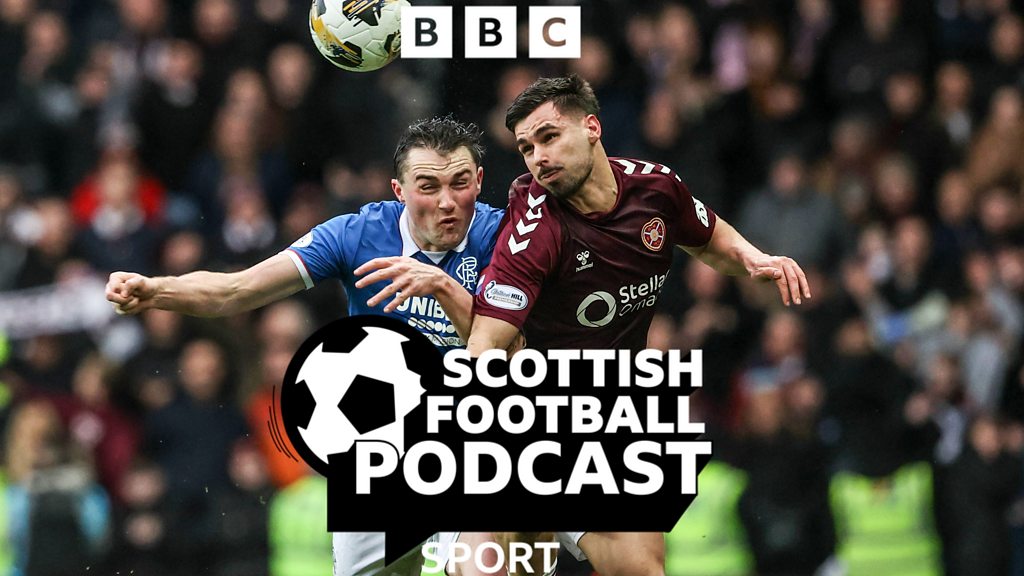
Hearts are finding Tynecastle frustration a familiar foe against Dundee

The Gorgie Grind
Tynecastle Park on a Saturday afternoon is rarely a place for the faint-hearted. The proximity of the stands to the touchline creates a pressure cooker that can either propel the home side or stifle them. Today, it was undeniably the latter as Hearts found themselves entangled in a web of their own making against a Dundee side that arrived with a clear, stubborn blueprint.
Neil Critchley’s side dominated the ball for vast periods, but possession without penetration is merely a statistical vanity project. The home crowd grew restless as early as the fifteen-minute mark. Every backward pass from Kye Rowles or Frankie Kent was met with a low-frequency rumble of discontent from the Wheatfield Stand. It is a sound Hearts players know all too well when the breakthrough remains elusive.
Dundee, for their part, were perfectly content to play the role of the antagonist. Tony Docherty has forged a squad that embraces the dark arts of defensive discipline. They didn't just park the bus; they welded it to the goalposts. This wasn't a fluke result or a smash-and-grab attempt. It was a calculated neutralization of a Hearts attack that currently looks more like a collection of individuals than a cohesive unit.
The Tactical Deadlock
A Low Block Masterclass
Dundee operated in a rigid 5-4-1 formation that squeezed the life out of the central areas. Lyall Cameron and Mohammad Sylla were excellent in the middle of the park, ensuring that Blair Spittal and Yan Dhanda had no room to turn. Every time a Hearts midfielder received the ball, there was a navy blue shirt within a yard. It was suffocating, professional, and entirely predictable.
Hearts attempted to bypass this by shifting the ball wide to Gerald Taylor and James Penrice. The plan was obvious: overload the flanks and whip crosses into Lawrence Shankland. However, the quality of delivery was consistently poor. Too many balls were overhit, sailing harmlessly toward the Roseburn Stand, or were easily gathered by Jon McCracken. According to the Sky Sports live coverage, Hearts managed to sustain pressure but failed to test the keeper nearly enough.
The lack of variety in Hearts' build-up play was alarming. There was no attempt to drag the Dundee center-backs out of position with third-man runs or quick combinations. Instead, it was a repetitive cycle of sideways passing followed by a hopeful, high ball. Against a defense featuring the height of Joe Shaughnessy and Juan Portales, that strategy was never going to yield results. It felt like watching a team try to open a locked door by repeatedly hitting it with their shoulder rather than looking for a key.
The Shankland Paradox
Lawrence Shankland remains the focal point of everything Hearts do, but the talismanic striker looks isolated and increasingly frustrated. He spent much of the first half dropping deep to find the ball, which left a void at the top of the pitch. When he was in the box, the service was abysmal. When he dropped out, there was nobody to fill the space. It is a tactical riddle that Critchley needs to solve quickly.
There was a moment in the **22nd minute** where Shankland finally got a clear sight of goal. A rare zipped pass from Cammy Devlin found him on the edge of the area. He turned his man with the grace of a player who scored thirty goals last season, but his snapshot rattled the crossbar. It was the closest Hearts would come all afternoon. The collective groan that followed was the sound of a stadium that sensed the goal might never come.
Critchley’s decision to keep Kenneth Vargas on the bench until the final twenty minutes felt like a missed opportunity. Vargas offers a directness and a raw pace that could have stretched the Dundee backline earlier in the game. By the time he was introduced, Dundee had retreated so deep that there was no space behind for him to exploit. It was a reactive substitution when a proactive one was required.
A War of Attrition
The second half began much like the first, with Hearts monopolizing the ball. However, the intensity was lacking. The tempo was slow, allowing Dundee to reset their defensive shape with ease. There was a distinct lack of urgency in the Hearts midfield. Malachi Boateng kept things tidy, but tidiness isn't what wins games against a parked bus. You need a disruptor, someone willing to take a risk and play a pass that might not come off.
Dundee almost snatched the lead on the counter-attack just before the hour mark. Simon Murray, a constant nuisance for the Hearts defenders, broke clear on the right. His low cross found Lyall Cameron, whose first-time effort was brilliantly blocked by Frankie Kent. It was a reminder that for all of Hearts' possession, Dundee remained a threat. The visitors finished the match with only **42 per cent** of the ball, but they had the clearer chances on the break.
As the clock ticked toward the final whistle, the game descended into a scrappy affair. Fouls were frequent, and the flow of the game was constantly interrupted. This suited Dundee perfectly. Every goal kick took a few seconds longer; every throw-in was a leisurely affair. It frustrated the home side and, more importantly, it frustrated the fans. The referee’s whistle for full-time was almost a mercy for those in attendance.
Critical Observations
The most damning indictment of Hearts' performance was their inability to adapt. When the crossing game failed, there was no pivot to a different style. The recruitment of several creative players in the summer was supposed to prevent these exact scenarios. Instead, the team looked devoid of ideas. Yan Dhanda, who was signed for his vision, was largely anonymous before being replaced. Blair Spittal struggled to find pockets of space between the lines.
Defensively, Hearts were solid enough, but they were rarely tested. The real issue lies in the transition from defense to attack. The ball moves too slowly through the thirds, allowing opponents to get organized. There is no snap to the passing, no zip to the movement. If Hearts are to maintain their status as the third force in Scottish football, they cannot continue to drop points in this fashion at home.
Dundee deserve immense credit for their organization. Tony Docherty has them playing with a spirit that belies their modest budget. They are a team that knows exactly what they are and plays to their strengths. In contrast, Hearts currently look like a team struggling with an identity crisis. Are they a possession-based side, or a team built to feed a poacher like Shankland? At the moment, they are doing neither effectively.
The Statistical Reality
Hearts finished the match with **18 shots**, but only three of those were on target. That level of wastefulness is unsustainable. You cannot expect to win matches in a league as competitive as the Premiership when your shot conversion rate is that low. Dundee, meanwhile, were clinical in their defensive duties, making twenty clearances and winning the majority of their aerial duels in the box.
The attendance of nearly 19,000 deserved better than a stalemate that felt predestined from the half-hour mark. The gap between the top two and the rest of the league is already cavernous, and performances like this only serve to widen it. Hearts are now in a position where they are looking over their shoulder rather than chasing the leaders. It is a sobering reality for a club that spent significantly in the off-season.
Looking at the broader context of the season, this result highlights the parity in the middle of the table. There are no easy games, especially when a team arrives with the defensive resolve Dundee showed today. The challenge for Neil Critchley is to find a way to break these blocks. If he doesn't, the atmosphere at Tynecastle will only get more toxic as the winter months approach.
Final Thoughts
This wasn't a classic by any stretch of the imagination. It was a grueling, frustrating ninety minutes that exposed the flaws in the current Hearts setup. The reliance on individual brilliance from Shankland is a dangerous game to play. When he isn't firing, the team seems to lose its sense of purpose. The supporting cast needs to step up and take responsibility for the goal-scoring burden.
Dundee will head back up the road feeling like they’ve won. A point at Tynecastle is a great result for any team outside the Old Firm. They showed the grit and determination that will likely see them finish in the top half of the table this year. For Hearts, the post-match post-mortem will be uncomfortable. There is plenty of talent in that squad, but it is currently being wasted in a tactical system that is too easy to defend against.
The fans at the final whistle made their feelings known. A chorus of boos rang out, directed more at the lack of ambition than the scoreline itself. In Edinburgh, second best is often tolerated, but a lack of effort and creativity never is. Hearts have two weeks to stew on this performance before their next outing. They will need to use that time wisely if they want to get their season back on track.
adidas FIFA World Cup 2026 Trionda Competition Soccer Ball
The official match-day feel for the 2026 North American tournament.
Frequently Asked Questions
Why did Hearts fail to break down Dundee's defense at Tynecastle?
What tactics did Dundee use against Hearts at Tynecastle?
How did Lawrence Shankland perform against Dundee?
Who were Dundee's key midfield performers against Hearts?
Why was Hearts' crossing strategy unsuccessful against Dundee?
More Coverage

VAR consistency concerns mount as Scottish Premiership season hits final stretch
5 hours ago
Aberdeen is cooking with this triple-signing spree
1 day, 8 hours ago
Curtis faces contract limbo amid Rangers injury recovery
1 day, 16 hours ago
Why Barcelona’s pursuit of Anthony Gordon feels like a tactical misfire
2 days, 9 hours ago
Hearts swing for the fences with Kamson-Kamara signing
2 days, 9 hours ago
Lawrence Shankland's move to Rangers is the ultimate vanity project
2 days, 11 hours agoMore Match Reports

Ten-man Hearts grit out a massive win over Dundee at Tynecastle
2 months, 1 week ago
Derek McInnes is clinging to a narrative that barely holds water
1 month, 3 weeks ago
Hearts keep the pace but Tynecastle fans are sweating
2 months, 1 week ago
Hearts are surviving the pressure, but the stats warn of a late collapse
1 month, 1 week agoLivingston and Hearts are locked in a tactical stalemate
1 month, 3 weeks ago