The Prague Post-Mortem
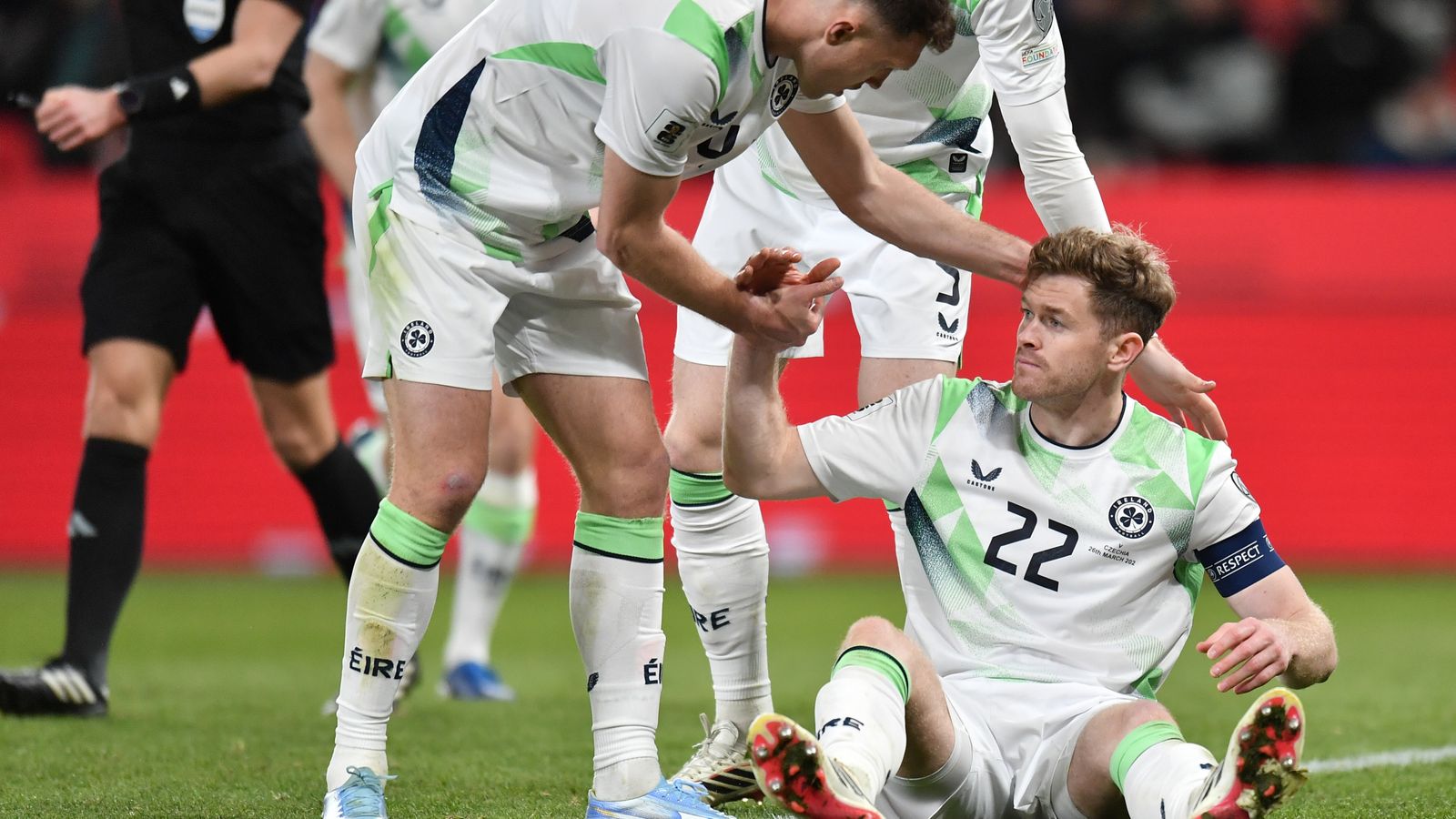
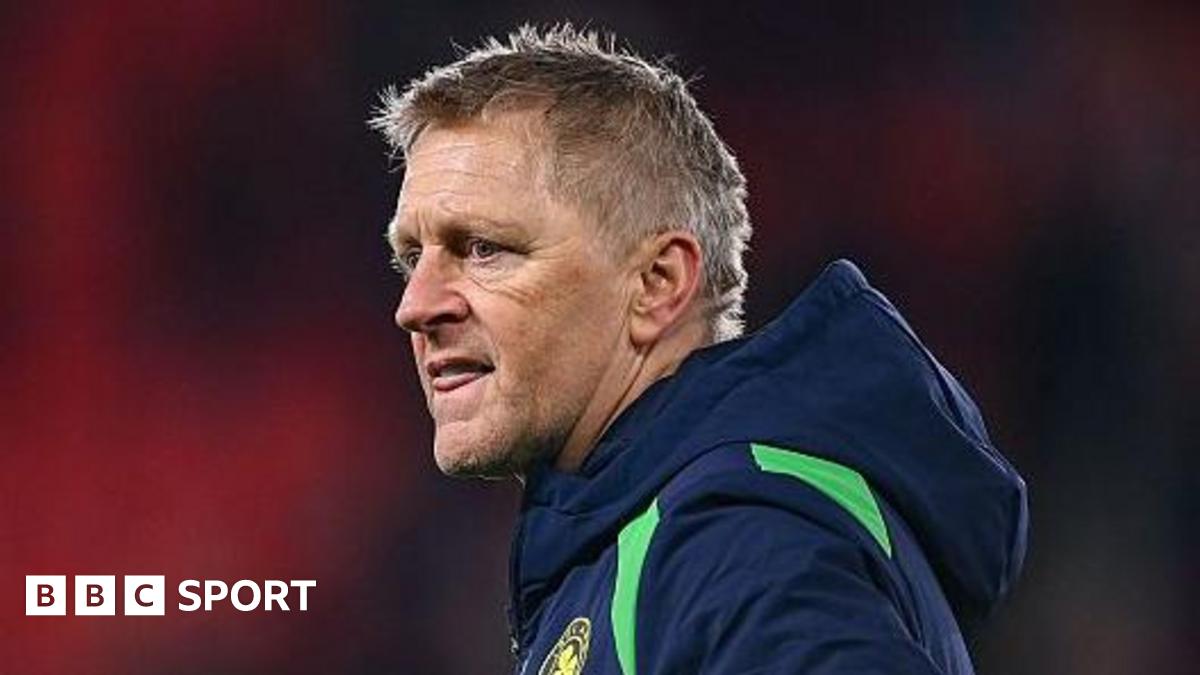
Heimir Hallgrimsson looked like a man who had seen a ghost in the bowels of the Stadion Letna. After the Republic of Ireland crashed out of the World Cup playoffs on penalties, the manager admitted that 'pain' was the overriding emotion for his squad. It is a sentiment shared by a fanbase that has watched this team regress into a defensive shell that offers plenty of structural integrity but zero offensive imagination.
We have to be honest about what happened in Prague. Ireland finished the 120 minutes with a miserable 0.34 xG. They spent the better part of two hours sitting in a narrow 5-4-1 mid-block, praying for a set-piece delivery that never arrived. It was tactical cowardice masquerading as pragmatism, and in the modern international game, that approach is a death sentence.
The Czechs weren't even particularly good. They cycled possession with a pedestrian tempo, yet Ireland refused to trigger a press even when the opposition center-backs carried the ball into the final third. Hallgrimsson’s plan was to reach the 120th minute at 0-0 and gamble on the lottery of spot-kicks. When you play for a coin flip, you can't complain when it comes up tails.
The Death of the Low-Block Specialist
This result is part of a broader trend we are seeing as we approach the 2026 World Cup kickoff on June 11. The days of the 'Greek 2004' style of tournament run are over. FIFA's expanded 48-team format means the group stages will reward teams that can actually break down a parked bus. Ireland's failure to adapt their technical profile over the last two years has left them stranded while the rest of Europe evolves.
Look at the statistical profile of the teams that have already qualified. The average PPDA (Passes Per Defensive Action) for the top ten seeds is under 9.5. Ireland, by contrast, clocked in at a staggering 16.2 in Prague. They weren't just defending; they were spectating. Hallgrimsson’s reliance on 'spirit' and 'grit' is a tactical anachronism in an era where data-driven positional play is the baseline requirement for entry.
The critical failure in the Irish setup remains the lack of a progressive link in the half-spaces. In Prague, the gap between the double pivot and the isolated striker was often 35 meters or more. You cannot sustain pressure when your primary outlet is a long ball into a channel that is occupied by three recovery defenders. It was a tactical suicide note written in slow motion.
Why France are the Only Logical 2026 Favorites
With Ireland and several other 'pragmatic' mid-tier nations now officially out of the picture, the focus shifts to the heavyweights. If the Prague disaster taught us anything, it’s that technical depth is the only currency that matters in tournament football. This is exactly why France will lift the trophy in New Jersey come July.
While England continues to struggle with the structural balance of their midfield and Brazil looks disjointed under their current leadership, Didier Deschamps has quietly overseen the most ruthless transition in international history. France isn't just a collection of stars anymore; they are a tactical chameleon capable of playing three different systems in a single half.
The emergence of Warren Zaire-Emery as the primary tempo-setter has fixed the one flaw France had in 2024. They no longer rely solely on transition goals. In their last three competitive outings, Les Bleus have averaged 68% possession and recorded an average of 22 entries into the opposition penalty area. They are suffocating teams with high-value possession rather than just waiting for a mistake.
The Mbappe Factor as a Veteran
Kylian Mbappe is no longer the explosive kid chasing long balls. In the 2026 version of this French side, he has evolved into a creative gravity well. By drifting into the left half-space and drawing two markers, he creates the 'overload-to-isolate' scenario that allows Theo Hernandez to bomb forward unchecked. It is a simple tactical pattern, but one that is nearly impossible to defend for 90 minutes.
Contrast this with Ireland’s attacking patterns. In Prague, Ireland attempted 14 crosses; exactly zero reached an Irish head. They were static, predictable, and physically overmatched. France, meanwhile, recorded 4.2 goals per game during their qualifying campaign. They are a juggernaut that has finally learned how to play with the handbrake off.
The Midfield Engine Room
The duo of Eduardo Camavinga and Aurelien Tchouameni is the best defensive screen in the world. They aren't just ball-winners; they are press-resistant pivots who can bypass an entire midfield line with a single vertical pass. In the Prague playoff, the Czechs were able to recycle play because Ireland had no one capable of intercepting a line-breaking ball. France won't have that problem.
Their defensive transition is equally terrifying. When France lose the ball, their 'five-second rule' is the most disciplined in the international game. They recover the ball in the middle third at a rate of 12.4 times per match. It’s a relentless cycle of pressure that eventually breaks even the most disciplined low blocks. This is the level Ireland should have been aiming for, yet they seem content to remain in the 1990s.
One Glaring Weakness in the French Armor
It would be lazy to suggest France is perfect. The one negative observation I have from their recent friendly against Germany was the lack of aerial dominance at the back when Ibrahima Konate isn't in the lineup. They looked vulnerable to high-arcing deliveries toward the back post. If a team like Sweden or Denmark can exploit that specific weakness, they might catch the favorites out.
However, that’s a small crack in a very large dam. Most teams won't get enough territory to even attempt those crosses. France’s ability to control the zone 14 area makes it incredibly difficult for opponents to sustain any kind of offensive momentum. They don't just win games; they erase the opposition's identity.
The Final Verdict
Ireland’s exit is a tragedy for the fans who traveled to Prague, but it is a necessary wake-up call for the FAI. You cannot win in 2026 by playing the football of 2006. The game has moved on, and the divide between the elite innovators and the defensive laggards has never been wider. France represents the pinnacle of that innovation.
My prediction for the 2026 World Cup is a French masterclass. They have the best squad, the most experienced coach, and a tactical system that is finally optimized for their talent. They will cruise through the group stages and dismantle whoever meets them in the knockout rounds. The odds currently sit at 4.50 for a French victory, and frankly, that feels like a bargain.
Ireland will watch from home, reflecting on 'pain' and missed opportunities. But the real pain is the realization that they were never really in the race to begin with. The World Cup is for the bold, the technical, and the tactically fluid. France is all three. Ireland was none.