The Medical Breakdown: Inside Lolley's Ankle Reconstruction
The Mechanics of the High Ankle Sprain
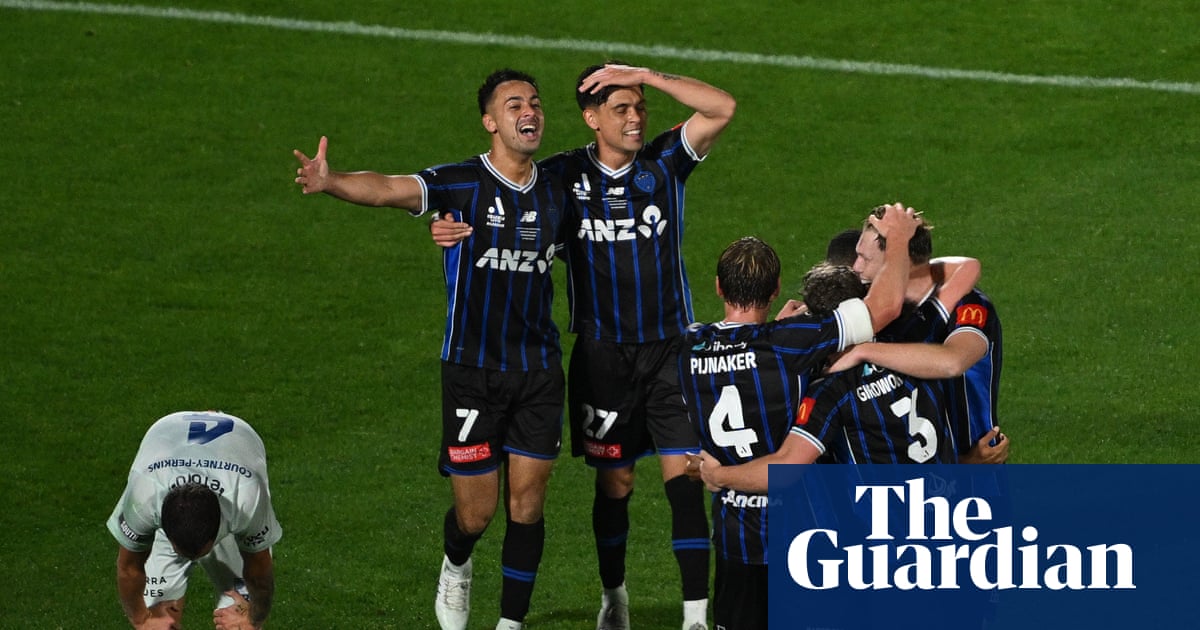
The gamble failed. Sydney FC threw a half-fit Joe Lolley into the fire on Saturday night, but the Englishman's repaired ankle had nothing left to give. His 26-minute cameo off the bench could not prevent Auckland FC from lifting their historic first A-League Men championship at Go Media Stadium.
The medical reality is brutal. Winger Joe Lolley underwent surgery in early March 2026 to repair a ruptured syndesmosis in his right ankle. The injury occurred during a 1-0 victory over Wellington Phoenix on March 1, when a hard tackle from defender Isaac Hughes tore the ligaments connecting his tibia and fibula.
The force of the challenge drove Lolley's foot into extreme external rotation and dorsiflexion, shearing the anterior inferior tibiofibular ligament and the interosseous membrane. Surgeons at Sydney's Mater Hospital opted for a tightrope fixation to stabilize the joint. This procedure uses high-strength fiberwire buttons rather than rigid steel screws to hold the bones in alignment.
While the tightrope allows for natural micro-motion of the ankle and speeds up early rehabilitation, it cannot bypass the biological timeline required for ligament tissue to mature. Rushing a player back before the syndesmosis is fully healed is a high-stakes gamble that rarely pays off in professional sport. The joint must absorb up to eight times a player's body weight during high-speed cutting maneuvers, making even a five percent deficit in joint stability a fatal flaw.
The Recovery: A Timeline of the Rushed Comeback
The Nine-Week Rehabilitation Timeline
The initial medical diagnosis projected a four-to-six-week absence for the English winger. That timeline was wildly optimistic and failed to account for the severe shearing forces involved in elite professional football. In the end, Lolley was sidelined for nearly nine weeks of full team activity, missing key fixtures that ultimately derailed Sydney's league campaign.
Here is how the recovery timeline unfolded for Sydney's star winger:
- March 1, 2026: Lolley suffers a syndesmosis tear in the 57th minute against Wellington Phoenix.
- March 3, 2026: Successful surgical stabilization of the distal tibiofibular joint using a double tightrope technique.
- April 26, 2026: Cleared for light contact training after missing seven matches during the regular season.
- May 2, 2026: Named as an unused substitute in the elimination-final victory over Melbourne Victory.
Sydney's attack stalled completely during his absence. In March and April, the Sky Blues went through a dismal run where they struggled to break down defensive blocks. They drew with Melbourne Victory (2-2), lost to Melbourne City (0-1), fell to the Newcastle Jets (1-2), and played out drab stalemates against Brisbane Roar (0-0) and Perth Glory (0-0).
In total, Sydney scored just six goals in the seven regular-season matches Lolley missed, highlighting their complete reliance on his creative output. His absence also caused a catastrophic drop in the team's progressive carries and expected assists. Sydney's medical staff had no choice but to accelerate his return-to-play protocol to save their season.
The Grand Final: Go Media Stadium Exposure
Talay's Tactical Errors and Auckland's Triumph
Auckland FC, coached by former Sky Blues boss Steve Corica, knew exactly how to exploit Sydney's physical limitations on Saturday night. In front of a raucous crowd of 28,374 fans, the home side set up a compact defensive block that choked the space in the final third. As detailed by the Daily Mail, the raucous New Zealand crowd created an intimidating atmosphere that put intense pressure on Sydney's fragile attack.
Sydney's starting lineup featured a massive tactical error by manager Ufuk Talay, who chose to start 17-year-old Akol Akon on the right wing. The teenager looked completely out of his depth against Auckland's physical defense and failed to register a single successful dribble in the first half. Talay's decision to trust an inexperienced youth player in the biggest match of the year, while holding a half-fit Lolley on the bench, backfired spectacularly.
The decisive blow landed in the 60th minute when Cameron Howieson capitalised on a defensive breakdown. Auckland launched a long throw-in that Sydney's center-backs completely misjudged, allowing Howieson to fire home a scrappy finish. As The Guardian reported, the goal sealed a deserved victory for the Black Knights, who controlled the tempo throughout the match.
In the 64th minute, Talay hooked Akon and sent Lolley onto the pitch. The winger showed brief flashes of quality, including an 88th-minute cross that Rhyan Grant headed wide, but his restricted lateral movement prevented him from beating his marker. As tracked in The Guardian's live coverage, Auckland held firm for a 1-0 triumph that exposed Sydney's squad depth.
The Medical Legacy: The High Cost of Rushing Back
Historical Precedents and Long-Term Risks
History is littered with teams rushing star players back from ankle surgery for major finals with devastating results. In 2019, Tottenham rushed Harry Kane back from a major ankle injury for the Champions League final, only for the striker to look completely anonymous as Liverpool cruised to victory. Sydney FC repeated this mistake, hoping a legendary name could mask a massive fitness deficit.
Rushing a syndesmosis recovery carries immense long-term risks, forcing players to alter their running mechanics when returning before the ligaments fully mature. Full clinical resolution and the restoration of pre-injury elastic power typically takes six to nine months, placing Lolley's return to peak fitness around September 2026. This mechanical compensation frequently triggers secondary soft-tissue injuries like hamstring strains, which can be career-ending for a 33-year-old winger.
The strategic implications for Sydney's front office are damning. Roster construction is fundamentally flawed when a single ankle joint determines the competitive ceiling of the entire squad. Failing to secure creative cover in January left Sydney entirely dependent on a veteran's medical chart.
Sydney FC must now rebuild their attacking depth. Auckland's historic triumph has completely shifted the A-League's balance of power. If the Sky Blues want to challenge their new rivals across the Tasman next season, they must build a squad that can survive a major injury without losing its identity.
Read Next
- Struijk and Stach facing fitness races ahead of final-day relegation scramble
- Struijk and Stach injury statuses headline final-day Premier League scramble
- Bruno Fernandes won Player of the Season, and your Arsenal tears are delicious
- Neil Lennon knows Celtic are fallible, but O'Neill has the Hampden pedigree