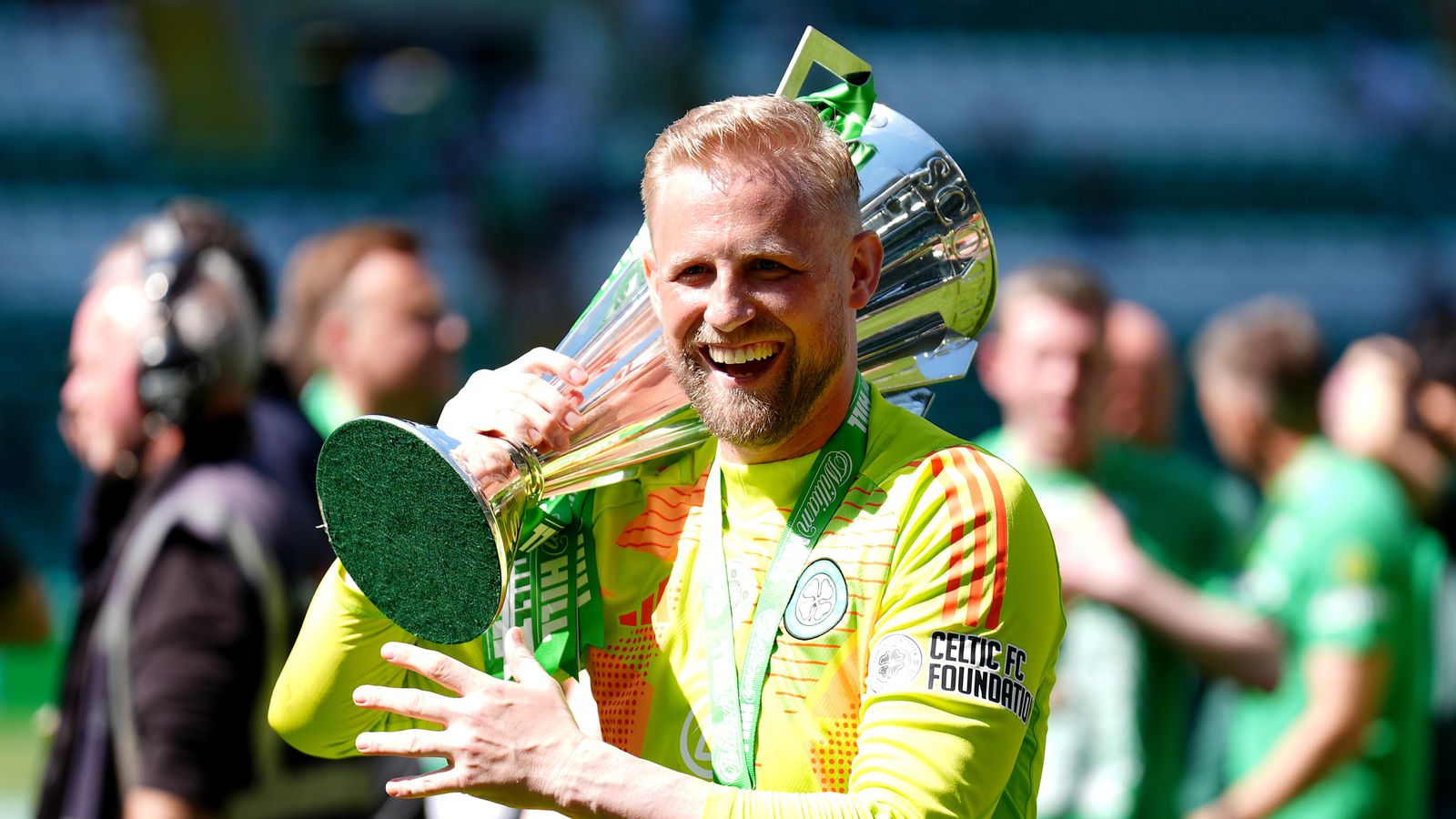
The Great Dane hangs up the gloves
Look, we all knew this day was coming, but that doesn't make it any less of a gut punch for the footballing world. Kasper Schmeichel, the man who made a career out of defying physics and silencing doubters, has officially called it curtains at 39 after a brutal shoulder injury made the effort of putting his socks on a chore, let alone stopping 90mph screamers. You don't have to be a Leicester City fan to appreciate the sheer absurdity of his career trajectory, which went from struggling for relevance in the lower leagues to hoisting the most unlikely trophy in sporting history.
Schmeichel wasn't just a goalkeeper; he was a one-man psychological operation. When you played against him, you weren't just battling a guy between the sticks, you were wrestling with the immense weight of his legacy and that thousand-yard stare that could turn a center-forward’s blood to ice. He played like he was fueled by nothing but spite and double espressos, which is exactly the kind of energy you want in a keeper who has to organize back fours that occasionally forget how to form a straight line.
The shadow of greatness and the 2016 miracle
Let’s be real for a second: growing up as Peter Schmeichel’s son was a death sentence for any normal athlete’s ambition. He spent his early twenties being unfairly graded against the greatest keeper of the Premier League era, which is like trying to start a garage band when your dad is the lead singer of The Rolling Stones. But Kasper carved his own path, finding his footing at Leicester City, a club that spent most of his tenure oscillating between absolute madness and pure, unfiltered glory.
That 2015-16 season is the gold standard for sporting fairytales, and Schmeichel was the foundation of the house that Claudio Ranieri built. Forget the Riyad Mahrez dribbles or the Jamie Vardy bangers—look at the defensive discipline. Schmeichel recorded 15 clean sheets that campaign. In a league where giants expect to win every weekend, he kept his head while the rest of the world caught fire. That isn't luck; it's a cold, hard focus that few players, regardless of their position, ever truly master.
The grit behind the glory
Of course, no career is without the odd clanger, and god knows he had a few nights where the ball seemed to be magnetized to his shins instead of his gloves. Critics will point to his late-career mobility issues or the occasional erratic distribution that left managers tearing their hair out on the touchline. Anyone who watched him closely knows that toward the end, his reaction time wasn't the lightning strike it used to be. But who cares?
You trade a few spills for his level of command any day of the week. While the Liverpool managerial saga continues to act like a total car crash for everyone involved, Schmeichel’s exit feels like a quiet, dignified nod to the reality of the sport. His shoulder injury might have accelerated the timeline, but he leaves on his own terms rather than fading away as a backup keeper collecting easy checks at a mid-table side. There is something profoundly poetic about a keeper who built his reputation on physicality—diving into boots, crashing into posts, and screaming orders until he was blue in the face—finally being forced out by the very body he pushed to the limit.
Football is currently undergoing a massive overhaul, with clubs swinging for the fences like Hearts signing MJ Kamson-Kamara to stave off early-season collapses. In this era of tactical obsession and data-driven signings, we don't often stop to appreciate the pure, unadulterated grit of the old guard. Schmeichel belonged to a breed that understood that keeping the ball out of the net was an art form defined by chaos management. He was the conductor of a high-stakes orchestra where the sheet music was being shredded in real-time, and he usually ended the night with the baton still in his hand.
We can talk about the fancy techniques of the modern sweeper-keeper, or how every goalie now has to be able to hit a 40-yard diagonal pass into the stride of a winger. But when you’re down by a goal with 10 minutes left in a cup final, you don't want a playmaker; you want a guy with the temperament of a Viking who refuses to let the ball cross the line. Kasper was that guy. Even with his final injury, he proved his commitment to the craft by stepping away rather than dragging everyone through a hollow finish. That is a legendary attitude for a goalkeeper of his standing.
So, the gloves are off. The Premier League loses a bit of its color, and perhaps a bit of its bite, today. We won't see many more like him—someone who wore his heart on his sleeve and wasn't afraid to scream at his own teammates if they strayed from the plan. It was a hell of a run, and despite the shoulder finally throwing in the towel, he walks away with a legacy that is 100% immune to the revisionist history that hits so many players of his generation. Cheers to the Great Dane, and good luck to whatever poor, unsuspecting striker has to face the next generation of Schmeichels.