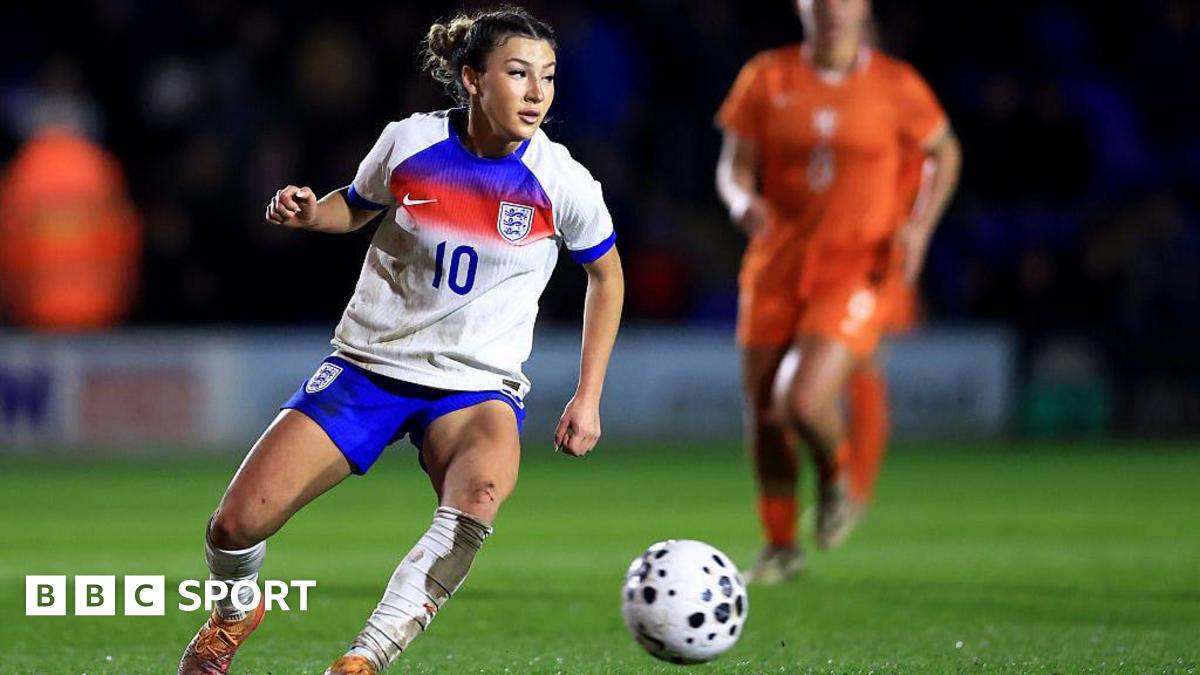
The Captain is Back
Sarina Wiegman has ended the speculation. As the Lionesses prepared to take the pitch against Iceland on Saturday evening, the team sheet confirmed what fans have been waiting months to see: Leah Williamson is back in the heart of the defense. After a stop-start period defined more by the treatment room than the pitch, the Arsenal center-back has been handed the captain’s armband and a starting spot in a move that signals England is shifting back into tournament mode.
This isn't just about fitness; it’s about a specific tactical void that England has struggled to fill during her absence. While the likes of Alex Greenwood and Millie Bright have held the fort with varying degrees of success, neither possesses the unique distribution range that Williamson offers from a deep-lying position. Against a physical, well-drilled Iceland side, Wiegman is clearly looking for that quarterback-style passing to bypass a congested midfield. The message from the camp is clear: the experimental phase is over, and the established hierarchy is returning just in time for the heavy lifting of the 2026 calendar.
However, the decision comes with its own set of risks. Williamson’s recent history is littered with minor setbacks that have prevented her from finding a consistent rhythm. Throwing her into the high-intensity environment of an international match against a team known for their robust pressing is a gamble. If she’s even five percent off the pace, Iceland’s transition game—led by the ever-dangerous Sveindis Jane Jonsdottir—will exploit the space behind the England high line. Wiegman is betting on Williamson's reading of the game to compensate for any lingering rustiness.
Tactical Evolution and the Distribution Gap
During the pre-match briefings, the focus wasn't just on who starts, but how England intends to evolve. For much of the last six months, the Lionesses have looked uncharacteristically static in possession. The build-up has often felt predictable, relying too heavily on the wide players to create magic from nothing. With Williamson back, the focal point of the build-up shifts back to the center of the pitch. Her ability to find a vertical pass into the feet of the attacking midfielders—or even a 40-yard diagonal to the wingers—is something England has lacked during their recent draws against lower-ranked opposition.
Wiegman addressed the media with her usual stoicism, but there was an undercurrent of relief in her tone when discussing the defensive stability. The manager noted that having a leader who understands the tactical triggers of the press allows the rest of the team to push five yards higher. This territorial dominance is exactly what England needs to break down an Iceland block that is expected to sit in a compact 4-5-1. The return of the Williamson-Bright partnership, provided Bright remains the designated enforcer, allows the full-backs to join the attack with far more license than we’ve seen in recent friendlies.
But we shouldn't overlook the negative implications for those currently on the fringe. Maya Le Tissier and others who have been vying for that spot will see this as a glass ceiling. Wiegman’s loyalty to her 'Euro 22' core is well-documented, but at some point, the succession plan needs to be more than just a theory. By reverting to Williamson the moment she is fit, Wiegman risks stagnating the development of the next generation of ball-playing defenders who need these high-stakes minutes to grow.
Navigating the Iceland Threat
Iceland remains one of the most underrated hurdles in European football. They don't play for aesthetics; they play for efficiency. Their set-piece delivery is arguably the best in the continent, and they will be licking their chops at the prospect of testing an England defense that has looked shaky under the high ball recently. Mary Earps will need to be at her most vocal to organize a backline that hasn't played together as a unit in this specific configuration for quite some time.
The physical battle in the middle of the park will be the deciding factor. If England’s midfield—likely anchored by Keira Walsh—can provide the screen that allows Williamson time on the ball, the Lionesses should cruise. But Iceland’s game plan will involve harrying Walsh and forcing Williamson to make hurried decisions. We have seen Williamson struggle under heavy pressure in the past, and if she hasn't regained her sharp turning circle, she could be caught in possession in dangerous areas. It is a calculated risk, but one that Wiegman feels is necessary to restore the team's identity.
Critically, the timing of this match is interesting. With WrestleMania 41 kicking off in Las Vegas tomorrow, the sports world’s eyes are partially diverted, but for the Lionesses, this is the only thing that matters. There is a sense that the team is still searching for that 'spark' that carried them to silverware in previous years. A convincing win today, orchestrated by their returning captain, would go a long way in silencing the critics who suggest the Wiegman era has peaked. Anything less than a dominant defensive display will only heighten the scrutiny on the manager's refusal to move on from her favored veterans.
The Road to the Summer
Looking at the broader picture, today’s lineup is a dress rehearsal for the major tournaments on the horizon. England cannot afford to be a team that only functions when their primary XI is available. The reliance on Williamson is a compliment to her quality but a condemnation of the squad's depth in that specific role. If she were to go down again, the drop-off in build-up quality is stark, and that is a problem Wiegman hasn't solved in three years of tenure.
The match also serves as a fitness test for several other key players who are balancing heavy club schedules in the Champions League. With the UCL semi-finals just 10 days away, there were rumors that some managers were asking for limited minutes for their stars. Wiegman has ignored those pleas, starting a full-strength side that suggests she views this Iceland fixture as more than just a friendly. It’s a message to the clubs: the national team comes first, regardless of the domestic trophy hunt.
England fans will be watching the 90 minutes with bated breath, less concerned with the final score and more focused on the movement of number six. If Williamson comes through unscathed and demonstrates her trademark composure, the narrative around the Lionesses will shift from 'transition' back to 'contenders.' If she struggles, the questions about Wiegman’s lack of a Plan B will become deafening. The margin for error is razor-thin, and as the whistle approaches, the pressure is firmly on the returning captain to prove she is still the indispensable heart of this team.
The atmosphere at the stadium is one of cautious optimism, but the reality is that England has won only two of their last five matches. That is not the form of a world-beating side. The lack of clinical finishing has been paired with uncharacteristic lapses at the back. Today is the first step in proving those lapses were a personnel issue, not a structural one. If the defense holds firm and the transition is fluid, Wiegman will feel vindicated. If Iceland finds a way through, the post-match press conference will be a very different, and much darker, affair.
Read Next