
Liam Rosenior's Chelsea honeymoon ends abruptly in Everton collapse

Reality Bites for Rosenior
The honeymoon phase is officially over. Liam Rosenior watched his Chelsea side crumble, surrendering points in a manner that felt all too familiar to the traveling supporters. The defeat against Everton wasn't just a loss; it was a clinic in self-sabotage.
Chelsea manager Liam Rosenior says he is disappointed in his side's performance against Everton after they "gifted goals" to the opposition.
When Rosenior told reporters it was "not good enough", he was dealing in understatements. The defensive fragility that has plagued Stamford Bridge for the better part of two seasons reared its ugly head once more, undoing weeks of tactical progress.
Chelsea didn't just lose this match. They handed it over, wrapped in a bow. Everton, fighting for their own ambitions, gladly accepted the gifts. The home side didn't need to produce spellbinding football; they only had to wait for the inevitable blue blunders.
A Comedy of Errors
The match began with promise. Enzo Fernández dictated the tempo early on, finding pockets of space and pulling the strings. For the opening 20 minutes, Chelsea looked like a team fully aligned with Rosenior's possession-heavy philosophy.
But possession without penetration is a dangerous game. And when the mistakes began, they cascaded. The first goal came from a routine back-pass that was woefully under-hit. It allowed Everton's front line to pounce, forcing a scrambled clearance that ultimately landed at the feet of an unmarked attacker.
It was a sequence that defined the afternoon. Chelsea's backline, usually marshaled with more authority, looked disorganized and jittery. The communication breakdown was glaring. Two players went for the same aerial ball, leaving massive gaps behind them.
Everton exploited this ruthlessly. Sean Dyche's men, or whoever is currently organizing the Toffees' setup, know exactly how to punish high lines and hesitant center-backs. They bypassed the midfield entirely, launching precise long balls that exposed the lack of pace in Chelsea's transition defense.
Rosenior stood on the touchline, hands in his pockets, watching the plan disintegrate. He has built his early reputation at Chelsea on defensive solidity, making this collapse all the more jarring.
The Midfield Mismatch
While the defense will take the brunt of the criticism, the midfield battle was arguably where the game was truly lost. Chelsea's engine room was overrun. Moises Caicedo, normally a destructive force, found himself chasing shadows for long stretches.
Everton flooded the central areas, outnumbering Chelsea and winning the physical duels. Second balls consistently fell to blue shirts, but not the Chelsea ones. The tenacity that Rosenior demands from his players was noticeably absent.
This is a glaring flaw in the current tactical setup. When pressed aggressively, Chelsea struggle to play through the lines. The midfield trio often found themselves too flat, failing to offer varied passing angles. It resulted in forced, hopeful balls forward that were easily intercepted.
The lack of a true ball-carrier in the middle third stifled any attacking rhythm. Without someone willing to drive past their marker, Everton's block remained comfortable and compact. It was pedestrian, predictable, and remarkably easy to defend against.
Attacking Woes Continue
Up front, the story wasn't much better. Chelsea's attacking unit was isolated and largely ineffective. The wingers hugged the touchline but rarely threatened in behind. Crosses were floated harmlessly into the box, dealt with comfortably by Everton's imposing center-halves.
Nicolas Jackson made runs, but the service was either too late or poorly executed. The timing between the midfield creators and the forward line was completely off. It looked like a team that hadn't trained together all week.
When the rare chances did arrive, the finishing was wasteful. A golden opportunity in the 42nd minute was skewed wide, a moment that could have entirely changed the complexion of the second half. Instead, it served as another frustrating footnote in a miserable performance.
Rosenior's post-match comments hit the nail on the head. They "gifted goals" to Everton. But they also failed to pose any serious questions of their own. It was a toothless display that highlights the sheer scale of the rebuilding job still required at Stamford Bridge.
The Road Ahead
This defeat serves as a harsh reality check. The optimism that surrounded Rosenior's appointment will now be tested. The manager has to find solutions, and quickly, before this blip turns into a genuine crisis.
The upcoming fixtures offer no respite. The Premier League is unforgiving, and opponents will have watched this Everton blueprint with keen interest. If you press Chelsea high and force errors, they will crack. That is the narrative Rosenior must now dismantle.
He needs his senior players to step up. The leadership void on the pitch was alarming. When things started going wrong, heads dropped. There was no one grabbing the game by the scruff of the neck, demanding better from those around them.
Tactical tweaks are inevitable. Perhaps a shift in formation to provide more midfield solidity, or a change in personnel at the back to inject some much-needed pace. Whatever the solution, the current approach was brutally exposed at Goodison Park.
Chelsea fans demand success, but they also demand fight. The latter was glaringly absent against Everton. Rosenior has the backing of the board for now, but in west London, patience is a notoriously rare commodity.
Analyzing the Defensive Breakdown
Let's dissect the defensive frailties further. The spacing between the center-backs and the full-backs was constantly exploited. Everton's wingers stayed wide, stretching the Chelsea backline and creating channels for the midfielders to run into.
The lack of tracking back from Chelsea's own wide players left their full-backs isolated in two-on-one situations. It was a tactical mismatch that Everton recognized early and abused relentlessly. The cross that led to the second goal came from a completely unchallenged position.
This isn't just a personnel issue; it's a structural failure. The defensive line was caught in two minds—whether to push up and compress the space or drop deep to protect the goal. This indecision resulted in a disjointed line that played Everton attackers onside repeatedly.
Rosenior must drill this defense until the movements become automatic. The current hesitancy is fatal at this level. The Premier League punishes indecision with goals, and Everton handed out a harsh lesson in efficiency.
The Weight of Expectation
Managing Chelsea comes with a unique pressure cooker environment. Every dropped point is analyzed under a microscope. Rosenior knew this when he took the job, but experiencing it firsthand is an entirely different beast.
The media scrutiny will intensify. Questions will be asked about his tactical acumen and his ability to motivate a squad built on exorbitant transfer fees. The "not good enough" assessment is accurate, but it's only the starting point for the necessary inquest.
He has to rebuild fragile confidence while simultaneously demanding higher standards. It's a delicate balancing act. Go too hard on the players, and you risk losing the dressing room. Go too soft, and the complacency will spread like a virus.
The next few training sessions at Cobham will be telling. The reaction to this defeat will define the next phase of Rosenior's tenure. Will the players respond with renewed fire, or will the familiar apathy settle in?
Conclusion
Everton deserved their victory. They executed a simple but highly effective game plan, preying on Chelsea's insecurities. They were organized, physical, and clinical when the opportunities arose.
For Chelsea, the autopsy will be uncomfortable. The "gifted goals" are a symptom of a deeper malaise. A lack of concentration, poor communication, and tactical rigidity combined to produce a dismal display.
Liam Rosenior has a massive job on his hands. The honeymoon is over. The real work begins now. He must find a way to stop the individual errors and instill a collective resilience that this squad desperately lacks.
If he can't, the cycle of managerial changes at Stamford Bridge will inevitably continue. This was a bad day at the office, but in the unforgiving world of Premier League football, too many bad days lead to a swift exit.
The response against their next opponents will speak volumes. Chelsea must show teeth. They must show that this defeat hurt. If they don't, the "not good enough" label will become a permanent fixture of their season.
A Deeper Dive into the Tactics
Looking at the passing network, the isolation of the forwards becomes painfully obvious. The main distributors, Enzo and Caicedo, were forced backward more often than they progressed the ball forward. This lateral predictability played right into Everton’s defensive shape.
When the ball did find the wide areas, the expected overloads never materialized. The full-backs, perhaps overly cautious of the counter-attack, hesitated to commit forward. This left the wingers stranded against double-teams, resulting in dispossessions and immediate transition threats from the home side.
The transition game is where modern football is decided, and Chelsea were woefully slow. The moment possession was lost, the counter-press was disjointed. Players pressed individually rather than as a cohesive unit, opening up passing lanes that Everton exploited with alarming ease.
It's a stark contrast to the slick, fast-paced football the fans were promised. The lethargy on the ball was matched only by the lethargy off it. Moving forward, Rosenior has to address the physical conditioning or the mental application, because one of them is severely lacking.
One bright spark, if you can call it that, was the brief cameo of a youthful substitute late in the game. His willingness to take his man on showed a fearlessness that the senior players lacked. But relying on teenagers to salvage points is not a sustainable strategy for a club with Champions League aspirations.
The expected goals (xG) tell a grim story. Chelsea barely registered a threat worthy of the metric until the dying embers of the match. Everton, conversely, consistently generated high-quality chances. The 3-1 scoreline flatters the visitors, if anything. It could have been much worse.
This leads to the uncomfortable question regarding the recruitment strategy. Hundreds of millions spent, yet the squad looks unbalanced. There's a surplus of players in certain positions and a gaping void in others. The lack of a dominant, aerially supreme center-back was glaringly obvious as Everton peppered the box with crosses.
Rosenior can't buy new players today, so he must manufacture a system that hides these flaws. The high line with slow defenders is suicidal. Dropping deeper might invite pressure, but it would at least stop the hemorrhage of goals from simple balls over the top.
The set-piece defending was another area of massive concern. Zonal marking only works if players aggressively attack the ball in their zone. Chelsea players were caught flat-footed, ball-watching as Everton attackers ran off their blind sides to win the initial headers.
Every time a corner was awarded, panic seemed to ripple through the blue ranks. The goalkeeper, hesitant to command his box, compounded the anxiety. A dominant keeper relieves pressure; a timid one magnifies it. This is a crucial area that requires immediate intervention on the training ground.
Offensively, set-pieces were equally poor. Floating corners into areas heavily populated by towering Everton defenders is an exercise in futility. Short routines or driven balls to the near post might have offered better odds, but the delivery lacked variation and precision.
It all points to a lack of detailed preparation. The fine margins in the Premier League are decided by these specific moments. Everton were prepared; Chelsea were not. Rosenior’s admission that they "gifted goals" is true, but they also gifted the entire tactical advantage before a ball was even kicked.
The coming weeks will define the season. The January window is too far away to provide immediate relief. The answers must come from within the current squad. The manager needs to find his most trusted eleven and stick with them, building chemistry and understanding through repetition.
Rotation for the sake of rotation breeds instability. Right now, Chelsea are the definition of unstable. They need a solid foundation, a reliable core that can grind out results when the flowing football isn't clicking. Grit, determination, and basic defensive competence must be the priority.
As the final whistle blew, the boos from the away end were loud and clear. The supporters are tired of false dawns and empty promises. They want to see a team that fights for the shirt. Against Everton, they saw a team that surrendered at the first sign of adversity.
Liam Rosenior has a mountain to climb. The good will is evaporating. He needs a statement performance, and he needs it fast. The clock is ticking, and in modern football, time is the one commodity managers are rarely afforded.
The Psychological Hurdle
Beyond the tactical missteps and individual blunders, there's a psychological fragility surrounding this Chelsea squad. It’s visible in the body language the moment they concede. Shoulders slump, heads drop, and the blame game begins. There is no collective defiance.
Winning mentality isn't something you can buy in the transfer market; it has to be cultivated. Currently, the culture at the club seems to tolerate failure as long as the effort was supposedly there. But against Everton, even the effort was questionable.
Consider the second goal. A simple giveaway in midfield, and rather than a desperate sprint to recover, several blue shirts jogged back, assuming someone else would fix the problem. That lack of accountability is fatal. It screams of a divided dressing room or, at the very least, a disconnected one.
Rosenior needs to instill a sense of shared responsibility. When one player makes a mistake, the nearest teammate must bust a gut to cover him. That’s the hallmark of a successful team. Chelsea look like a collection of talented individuals waiting for someone else to take the lead.
The captaincy is a heavy burden, and right now, it looks too heavy for the current leadership group. A captain doesn't just wear the armband; they set the tempo, enforce the standards, and drag the team through difficult periods. That presence was entirely missing at Goodison Park.
Everton, by contrast, fought for every inch. They won the 50-50 tackles, they contested every header, and they celebrated defensive clearances like goals. They understood the assignment. They recognized Chelsea's vulnerability and fed off the nervous energy radiating from the visitors.
This stark difference in desire is what stings the most for the supporters. Tactics can be tweaked, but application should be non-negotiable. If players aren't willing to match the physical intensity of their opponents, no formation in the world will save them.
The path forward requires brutal honesty. Video sessions at Cobham this week should be uncomfortable. Players need to be shown their lack of tracking back, their passive defending, and their wasteful distribution. Sweeping it under the rug will only guarantee a repeat performance.
It's easy to blame the manager when things go wrong, but the players must take their share of the responsibility. Rosenior can set up the structure, but he can't execute the passes or win the tackles for them. The individual errors that led to the "gifted goals" were unforced and entirely avoidable.
There is a dangerous complacency that has seeped into the club. A belief that their inherent quality will eventually shine through. But the Premier League doesn't respect reputations; it respects results. And right now, Chelsea are returning empty-handed.
If there's any silver lining, it’s that the flaws are glaringly obvious. There's no mystery to this defeat. The problems are clearly defined: defensive fragility, midfield passivity, and attacking impotence. The diagnosis is easy; the cure is the hard part.
Rosenior must become ruthless. If players are not executing the game plan or are failing to show the required intensity, they must be benched, regardless of their price tag or reputation. A meritocracy is the only way to rebuild a winning culture.
The next match isn't just about three points; it's about making a statement. It's about showing that this defeat was an anomaly, not the new standard. Chelsea must arrive with bad intentions, ready to impose their will on the opposition.
If they produce another performance like this one, the pressure on Rosenior will become suffocating. The honeymoon is definitively over. Welcome to the reality of managing Chelsea Football Club. The margin for error is zero, and the spotlight is blinding.
They have the talent to turn this around, but talent without application is useless. It’s time for the players to look in the mirror and ask themselves what kind of team they want to be. The answer will dictate the course of their season.
Nike Premier League Academy Soccer Ball
The official look of the Premier League for your weekend kickabouts.
Frequently Asked Questions
What caused Chelsea's defeat against Everton?
How did Liam Rosenior react to the loss?
Why did Chelsea's midfield struggle against Everton?
What tactical issues were exposed during the match?
How did the game start for Chelsea?
More Coverage

Scotland’s path through group stage hinges on the Haiti opener
4 minutes ago
Nice saved their season, but 2026 demands a complete tactical reboot
an hour agoArsenal’s European ambition check is about eighty games overdue
an hour ago
Tottenham are shaking up the squad with a record-breaking push
an hour ago
Arsenal weigh up Ethan Nwaneri departure as Premier League interest grows
an hour ago
Arsenal's transfer strategy remains locked on silverware
an hour agoMore Match Reports
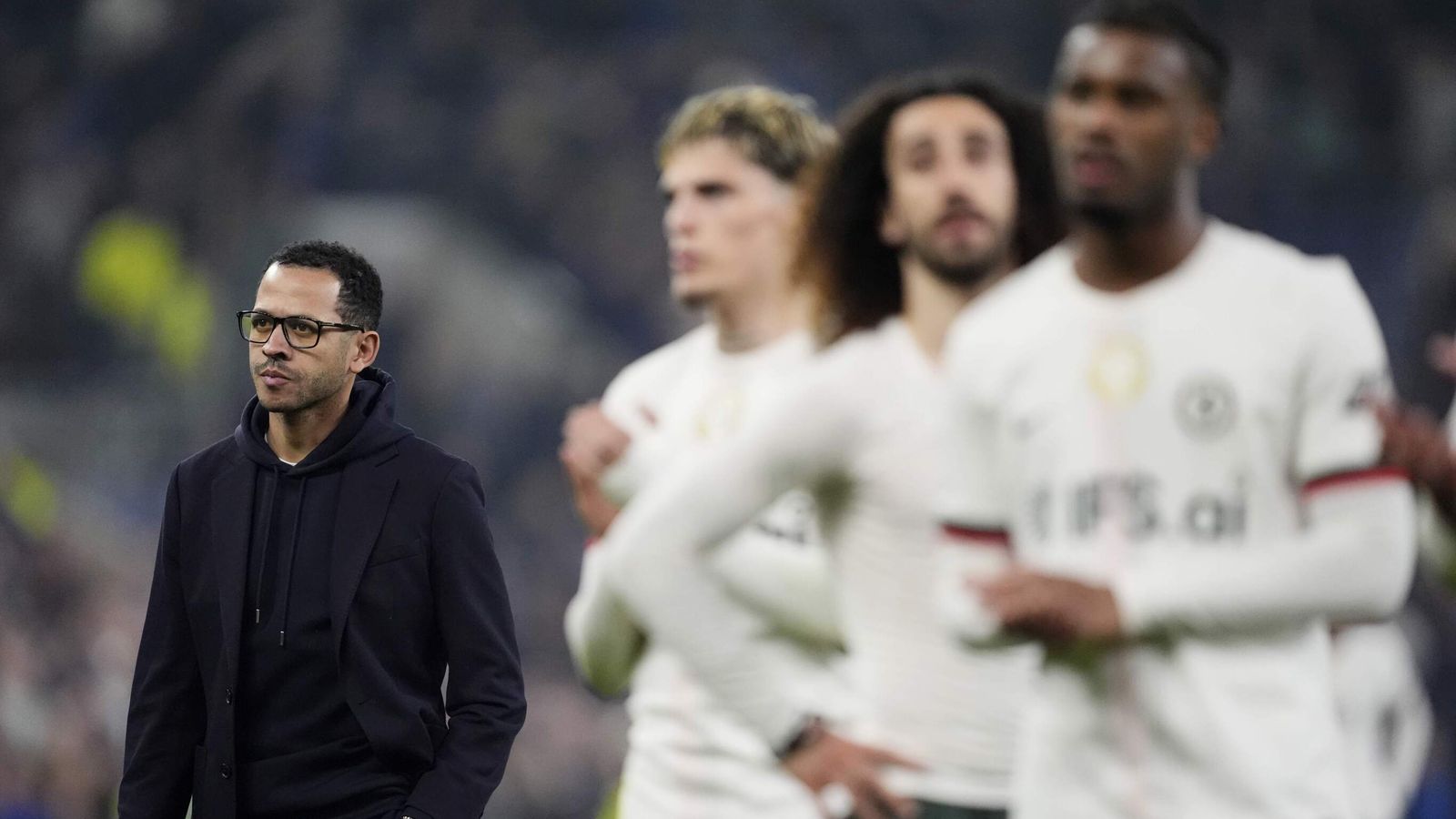
Liam Rosenior hits a wall as Chelsea crumble at Goodison Park
2 months, 1 week ago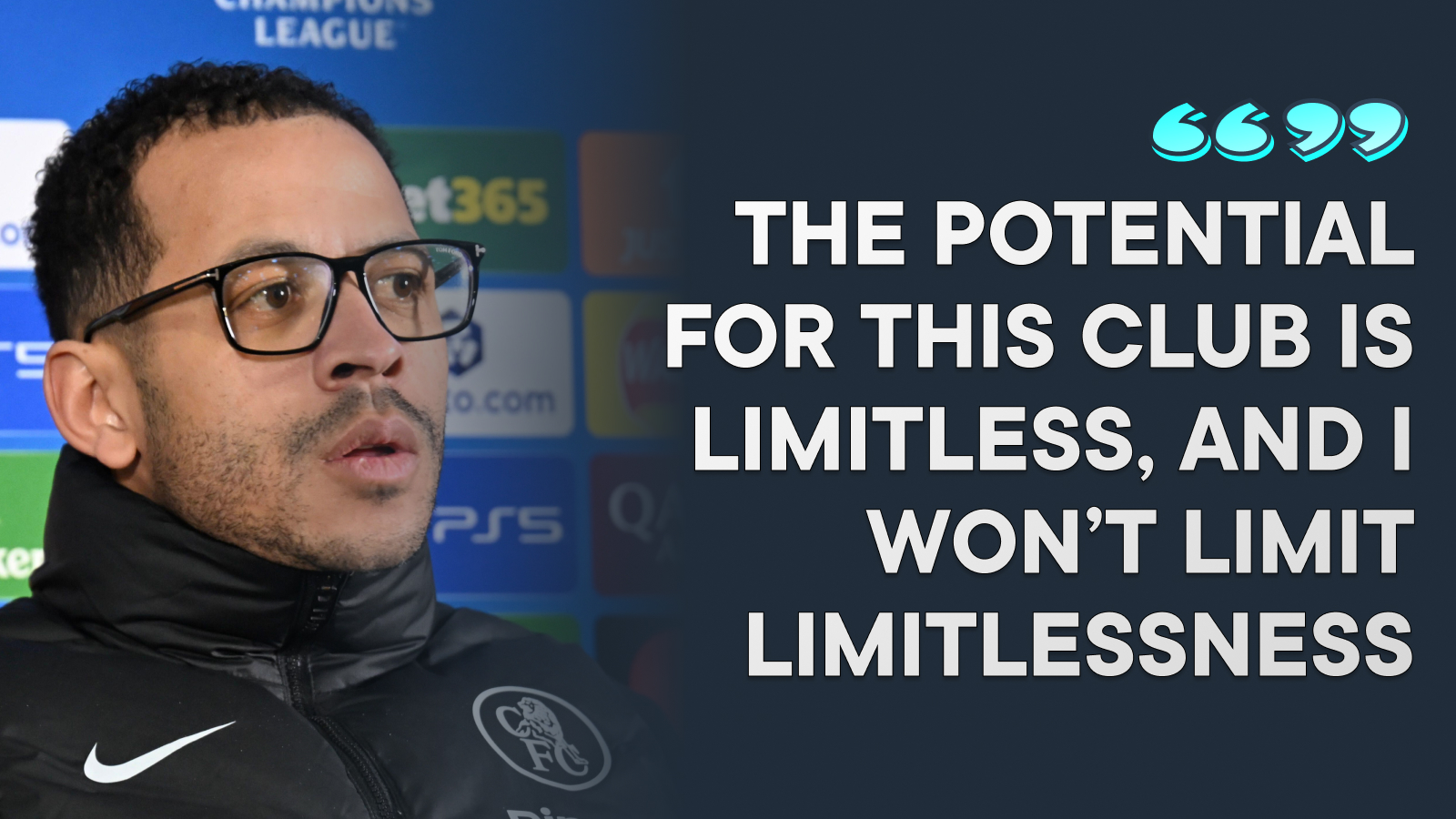
Liam Rosenior's Chelsea experiment is unravelling after Everton disaster
2 months, 1 week ago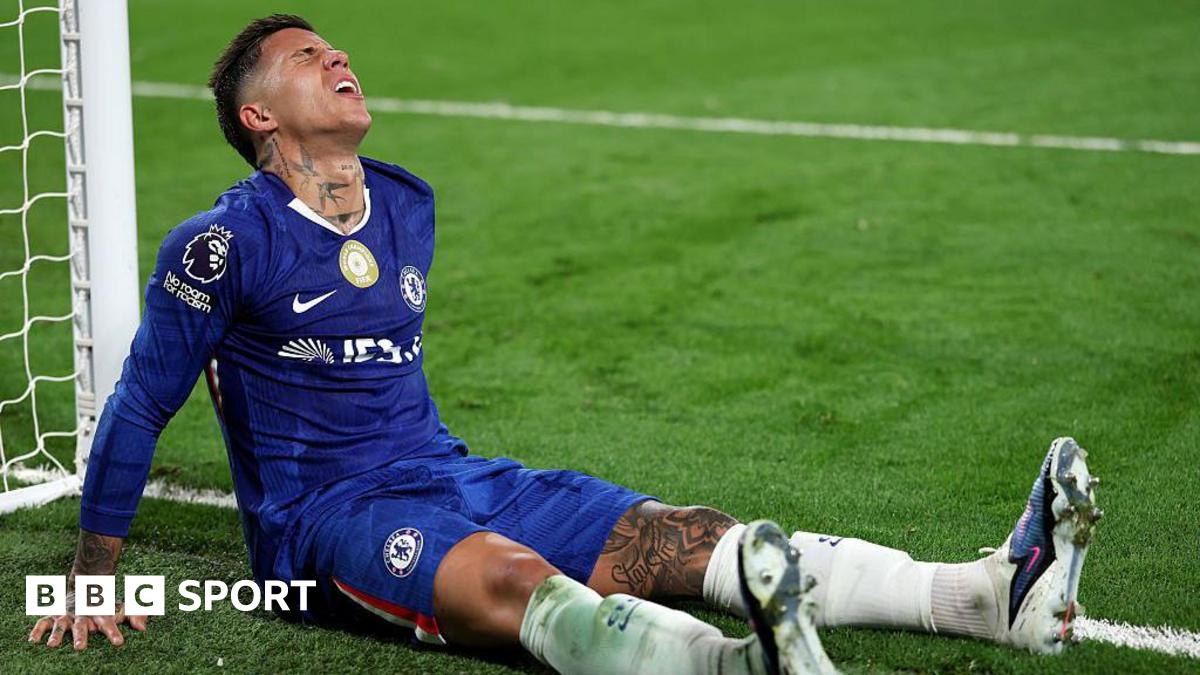
Liam Rosenior is watching Chelsea fall apart in real time
1 month, 1 week ago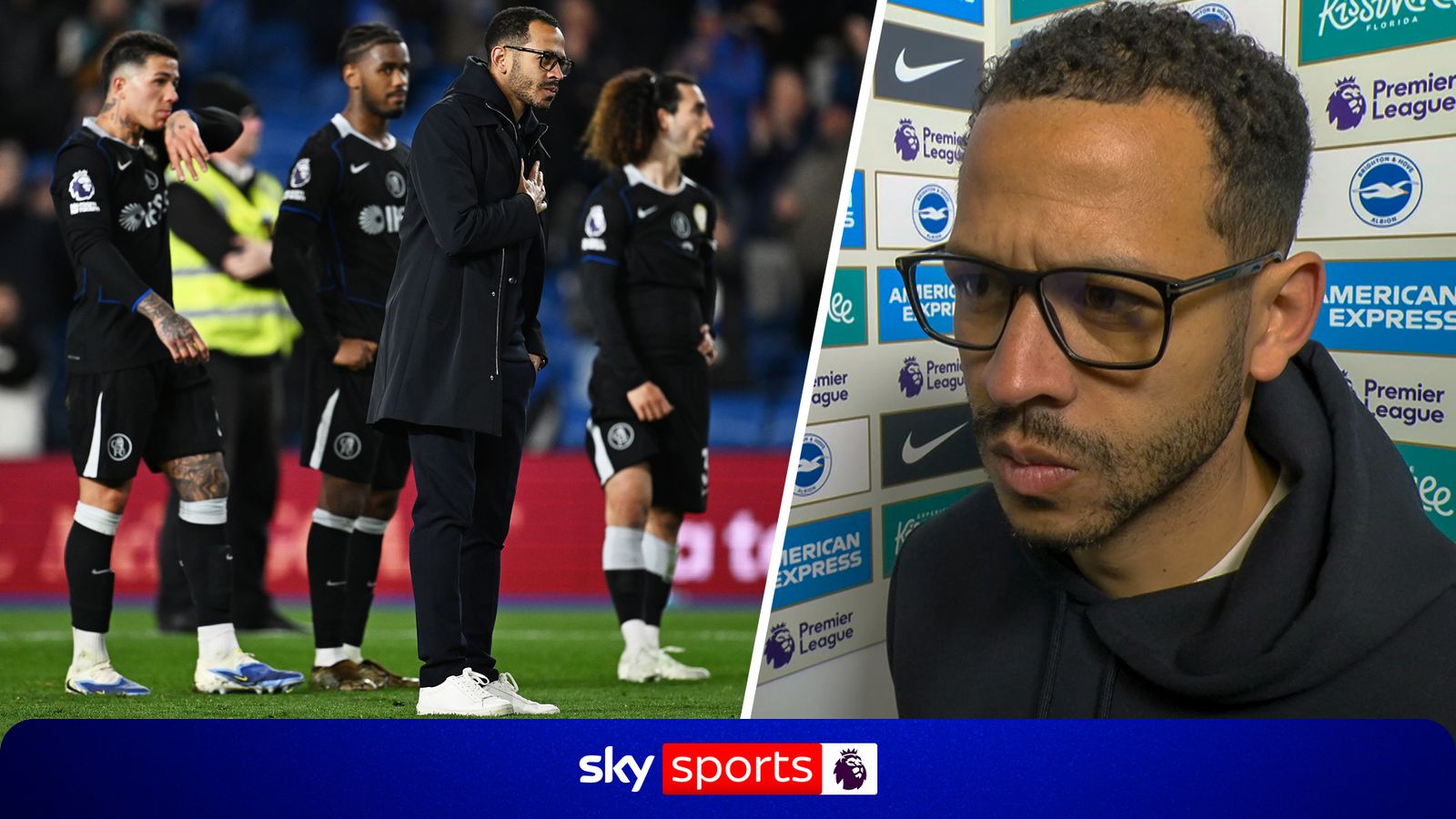
Liam Rosenior and the tactical collapse at Chelsea
1 month, 1 week ago
Liam Rosenior's Chelsea project is spiraling into a familiar London farce
1 month, 1 week ago