The £150m reality check hitting Anfield
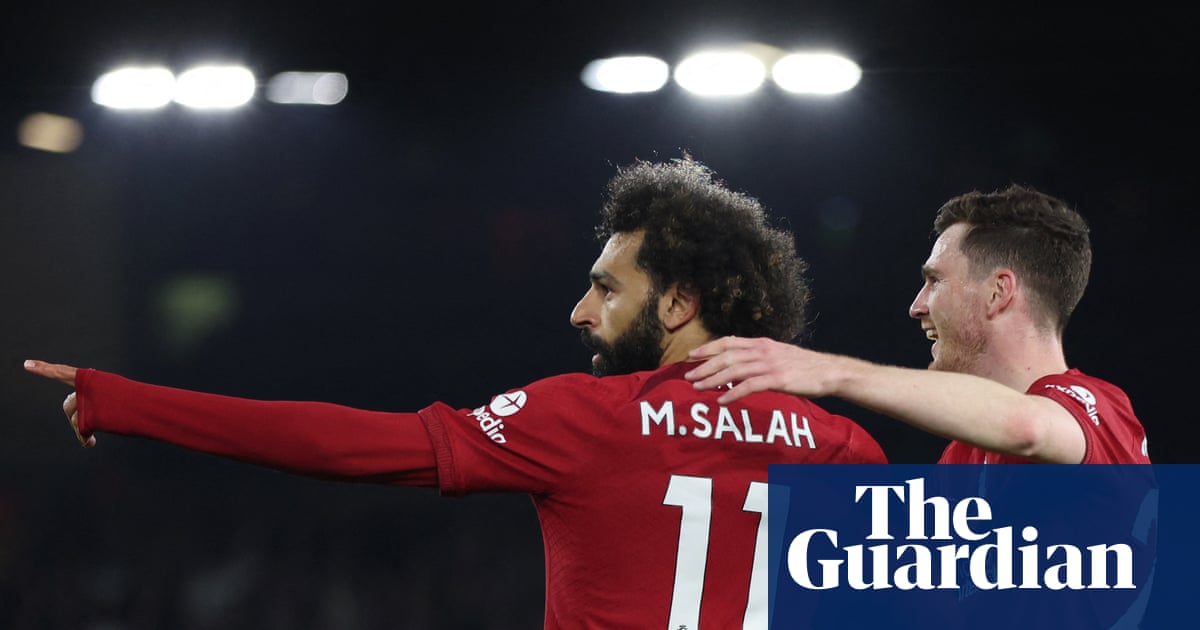
The writing has been on the wall for months, but seeing it in print still stings. The Mirror is reporting that Liverpool are preparing to bid farewell to Mohamed Salah and Andy Robertson. That triggers a massive summer rebuild, with the club reportedly sacrificing near the £150m mark.
You cannot simply replace Salah. It is a mathematical impossibility. We are talking about a player who has consistently guaranteed 20-plus league goals a season since he arrived.
FSG are notoriously careful with their cash. The familiar problem of tightening the purse strings is rearing its head again. Letting two franchise pillars reach the absolute twilight of their Anfield careers without a seamless succession plan is a glaring front-office failure.
They lost control of the narrative. Now, they have to rebuild a third of their starting lineup in a wildly inflated market.
The sheer panic in the fanbase is justified. When you strip away that much experience from a squad, you are not just losing tactical output. You are losing the muscle memory of how to win tight matches.
Tactical erasure on the right wing
Arne Slot has tweaked the system he inherited from Jurgen Klopp, but the reliance on Salah’s sheer output remained. Salah is not just a winger; he is a volume shooter who operates as an inside forward.
When he vacates that right channel, Liverpool lose their primary out-ball. Defenses currently double-team Salah, which opens up half-spaces for Dominik Szoboszlai and Trent Alexander-Arnold.
If you plug a traditional winger in there, the entire geometry of Liverpool’s attack breaks down. You either find another left-footed killer who cuts inside, or you completely redraw the attacking blueprint.
Looking at the market, there is no direct equivalent. Players like Johan Bakayoko or Michael Olise offer progression, but they do not offer Salah's brutal penalty-box efficiency.
The front office will likely try to spread the goal burden across three players rather than dropping £80m on one impossible replacement. That sounds smart in a boardroom, but on the pitch, it often looks disjointed.
Slot prefers wide players who can hold the width and isolate fullbacks one-on-one. Salah adapted to this, but his natural instinct was always to crash the box. Finding a player who can hug the touchline but still deliver 15 goals a season is the hardest scouting assignment in world football.
Do not be surprised if Liverpool initially try to force a square peg into a round hole. They might ask Harvey Elliott to play wider, which entirely blunts his creative passing through the middle.
The left side needs a reboot anyway
Robertson’s departure hurts emotionally, but tactically, it might actually make sense. The Scottish captain is an overlapping machine. He thrives in a high-octane, chaotic system.
Slot’s control-based approach asks different questions of fullbacks. We have already seen the manager experiment with more inverted positioning on the left side to create midfield overloads.
Robertson has never been fully comfortable tucking inside as a secondary holding midfielder. He wants to hit the byline. Moving him on allows Liverpool to recruit a specialist for Slot’s preferred shape.
Rayan Ait-Nouri or a similar profile makes total sense here. They need someone comfortable receiving the ball under pressure in central areas.
This is where the recruitment team has to be ruthless. They cannot sign a traditional overlapping fullback just because it feels familiar to the Kop. They need a technician.
If they get this signing wrong, the left side of their attack becomes completely dead. Luis Diaz relies heavily on the fullback either overlapping to drag a defender away or underlapping to offer a quick combination option.
Without Robertson’s chaotic energy pulling markers out of position, Diaz will find himself isolated against double teams far more often.
The FSG financial crunch
Here is the negative truth about this whole operation. Liverpool are awful at selling aging stars. They held onto players past their peak transfer value, and now they are footing a massive bill.
The Mirror notes that the purse strings are tight. That £150m figure sounds massive until you look at the going rate for elite talent.
A top-tier winger costs £60m minimum. A left-back who fits the system is another £45m. That leaves almost nothing to reinforce the defensive line or add midfield depth.
Liverpool are going to have to find value in the market just like they did during the Michael Edwards golden era. The problem is, every club in Europe now has an analytics department. Unearthing a hidden gem is ten times harder than it was five years ago.
The days of signing a raw Sadio Mane from Southampton and turning him into a global superstar are largely over. Teams like Brighton and Brentford will demand a heavy premium for anyone showing statistical promise.
FSG's rigid wage structure will also be tested. You cannot entice prime talent without offering Champions League wages, especially when you are selling the project of a rebuild.
A gamble on potential over proven output
The reality of a tight budget means Liverpool cannot buy finished products. They are going to buy potential. That is a terrifying prospect when you are replacing the most consistent output machine in Premier League history.
Let's look at the numbers. Salah routinely generated over 0.70 non-penalty xG+xA per 90 minutes. Finding a 22-year-old who can replicate even 70 percent of that immediately is pure fantasy.
The drop-off in production will put massive stress on Darwin Nunez and Diogo Jota. If the wide areas stop producing elite numbers, the central strikers suddenly have to finish every half-chance they get.
We all know Nunez is an agent of chaos, not a clinical finisher. Demanding he suddenly becomes an ice-cold killer because the right wing is no longer carrying the scoring load is a recipe for disaster.
The burden will also shift to the midfield. Szoboszlai and Alexis Mac Allister will be expected to crash the box more frequently. That stretches the team vertically and leaves them vulnerable to counter-attacks.
Evaluating the market replacements
If we are predicting who actually walks through the door, the options are bleak. The elite tier is locked down by Madrid, City, and Bayern.
Liverpool will likely shop in the tier just below. A player like Bryan Mbeumo offers Premier League experience and solid underlying metrics, but he is not going to strike fear into Arsenal's backline.
Alternatively, they could look to the Bundesliga or Eredivisie. But the translation rate for attackers moving from those leagues to England is spotty at best. For every Erling Haaland, there are three Jadon Sanchos or Antony profiles.
The risk of a catastrophic transfer flop is high. If they blow £60m on a winger who takes two years to adapt, the entire Slot project could derail.
Predicting the immediate fallout
So where does this leave Liverpool for the upcoming season? You cannot pull two legendary figures out of a dressing room without a culture shock.
The leadership vacuum will be immense. Virgil van Dijk and Alisson will carry the load, but the daily intensity Robertson brought to Kirkby is hard to replicate.
I am calling it now: Liverpool will struggle to break 80 points next season. The attack will misfire early on as the new signings try to understand the spacing Slot demands.
Defenses will sit deeper, knowing they no longer have to fear Salah running behind them. That will force Liverpool into sterile possession, passing side to side against low blocks.
They will still be a top-four team. The structural floor under Slot is too high for a total collapse. But a title challenge? Forget it.
Arsenal and Manchester City are too ruthless to let a transitional side keep pace. Even a minor drop in efficiency against the lower-table teams will see Liverpool bleed points.
The painful transition year
Fans need to brace themselves for a frustrating period. We are going to see a lot of 1-1 draws where Liverpool hold 70 percent possession but fail to create high-xG chances.
The rebuild is necessary. It had to happen eventually. But the execution of this transition is already looking clumsy.
They should have phased a new right winger into the squad twelve months ago. Instead, they are doing open-heart surgery on the starting XI while trying to compete at the highest level.
History shows that massive, sudden squad overhauls rarely click in year one. Liverpool are about to learn that expensive lesson the hard way.
Slot will need immense patience from the stands. When they drop points away at Newcastle or Aston Villa next November, the absence of Salah will be screamed across sports radio.
The front office backed themselves into a corner. Now they have to spend their way out, and they better hope their scouting algorithms are perfectly calibrated.
Read Next
- Liverpool's massive Arsenal test shadowed by summer exodus rumors
- Liverpool’s midfield rebuild shows the dangers of a high-stakes gamble
- Arsenal and Chelsea courting Lucas Bergvall despite Spurs tenure
- Liverpool and Everton both reeling after grim Merseyside Derby injuries
- 🏴 Scotland World Cup 2026 — Tartan Army Hub