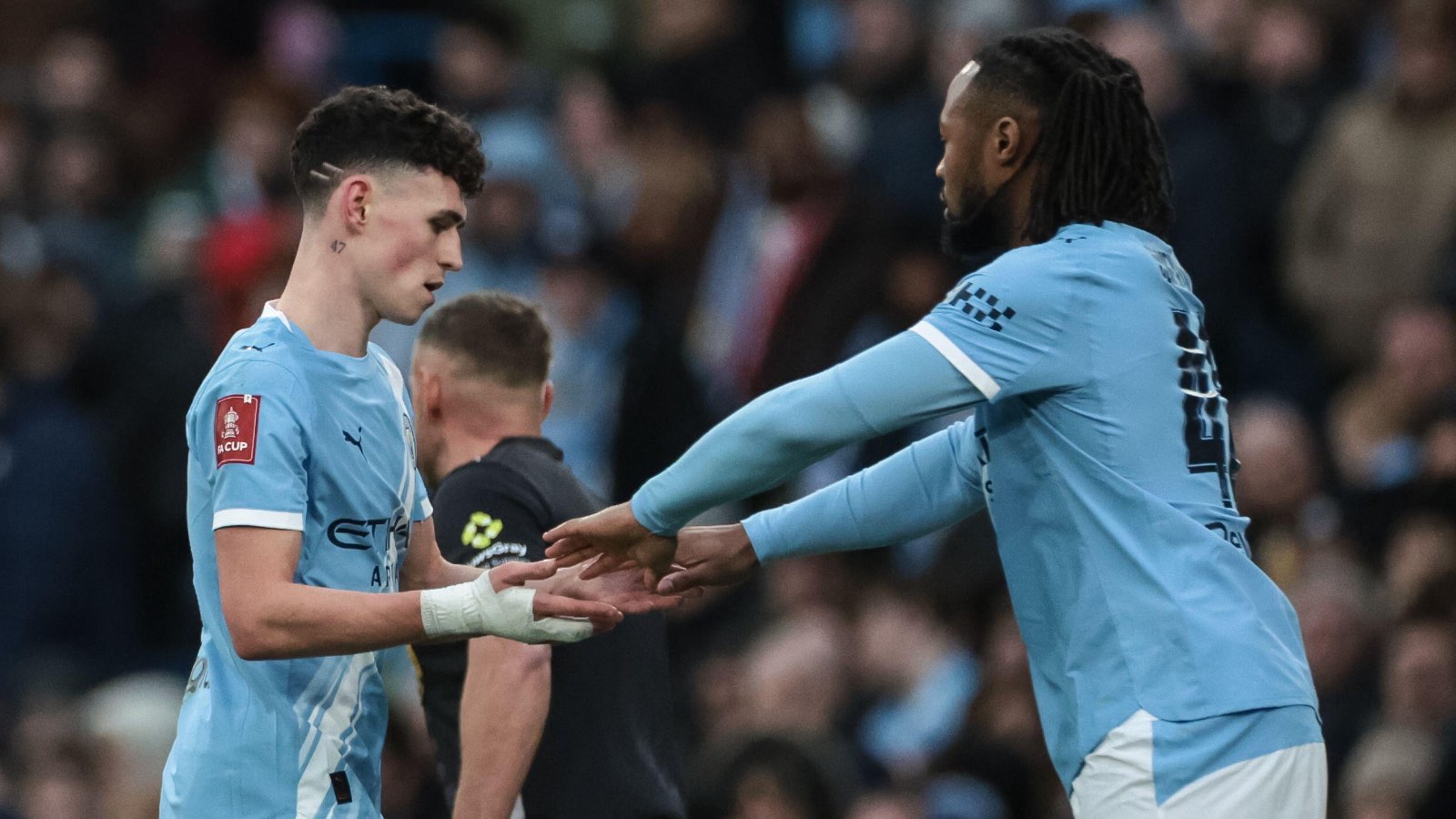
The Silent Crisis at the Etihad
Phil Foden is not injured in the traditional sense. You will not see him leaving the Etihad on crutches. You will not see him wearing a protective boot.
But make no mistake, Manchester City’s brightest academy product is currently locked in a severe medical freeze-out. The club's sports science department has flagged him as a major injury risk. Guardiola has listened. Foden has been benched.
This silent fitness crisis has triggered a massive rift behind the scenes. According to Football365, Foden is currently 'ready to move abroad' if he does not receive immediate 'assurances regarding his playing time.' The report points to a 'huge' problem under his current manager.
That problem is fundamentally medical. Foden feels physically ready to start. The data on Guardiola’s iPad says otherwise.
The Anatomy of Pelvic Overload
To understand this standoff, you have to look closely at the biomechanics of City’s tactical system. Foden operates almost exclusively in the tight confines of the half-spaces.
His game relies on sudden, violent decelerations. He receives the ball on the half-turn, drops his shoulder, and explodes in the opposite direction. Every single one of those movements places immense shearing force on the pubic symphysis and the adductor longus tendons.
Do this frequently enough over a grueling ten-month season, and the muscular attachments begin to fray. Micro-tears develop. Bone marrow edema sets in around the pelvic ring.
This condition, often leading to chronic osteitis pubis, is the silent killer of explosive attacking midfielders. Foden is not currently feeling acute pain. That lack of discomfort is exactly why he is furious about his rapidly vanishing minutes.
The City medical staff are not reacting to pain. They are reacting to force plate data. Daily screenings measure the power output of his left leg versus his right. When the asymmetry hits a specific threshold, the red lights flash in the laboratory.
The medical team knows that compensating for pelvic instability places immense secondary strain on the hamstrings. If Foden sprints fully in his current state, an explosive hamstring tear is highly probable. They are shutting him down to prevent a localized overload from becoming a catastrophic muscle rupture.
The Ghosts of Premier League Past
The historical context for this type of injury is brutal. Premier League history is littered with phenomenal talents who played through early-stage pelvic and hamstring warnings, only to permanently lose their pace.
Michael Owen won a Ballon d'Or while constantly battling lower-body imbalances. The unchecked load effectively ended his peak years before he turned 26. Fernando Torres was repeatedly rushed back from groin and knee issues at Liverpool. Once his explosive burst vanished, it never returned.
City’s medical director is staring at this exact historical cliff edge. They are actively trying to protect Foden’s long-term career. If the pubic bone degenerates further, surgical intervention becomes mandatory.
Recovery from pelvic surgery is a miserable, unpredictable process that routinely keeps players out for upwards of six months. By keeping Foden chained to the bench, the staff believes they are saving him from the operating table.
A Complete Breakdown in Communication
But the communication surrounding this strategy has been an absolute disaster. This is where City’s backroom staff deserve severe criticism. Modern sports science is highly effective, but it is entirely useless if a club fails at basic human man-management.
Telling a deeply competitive player that he is functionally sidelined when he feels perfectly fine is a delicate conversation. City have seemingly skipped the nuance entirely.
Freezing a star out of the starting lineup without clearly outlining a return-to-play timeline breeds pure resentment. Foden looks at the pitch and sees himself fully capable of contributing. Guardiola points to an algorithm.
It is a cold, clinical approach to player management that is actively driving one of Europe’s best talents to the exit door. You cannot manage human frustration with a spreadsheet.
Tactical Adjustments and The Immediate Timeline
The tactical fallout on the pitch is glaring. Without Foden’s direct, vertical threat in the right channel, City look entirely different. Bernardo Silva slows the tempo to dictate possession. Jeremy Doku stays wide, demanding the ball to his feet to isolate his fullback.
Neither player offers the sudden, jarring central penetration that Foden provides. Defenses can easily reset. The low block remains incredibly comfortable.
With Foden sidelined by the medical team, the physical burden shifts directly onto Kevin De Bruyne. The Belgian maestro is no stranger to severe muscle issues himself, having battled multiple hamstring tears in recent campaigns.
By protecting Foden, Guardiola is forcing De Bruyne to cover significantly more ground. De Bruyne now has to drift wider, execute more high-intensity sprints, and carry the creative load alone. City are risking a secondary injury crisis just to manage the first.
The timing of this medical intervention is terrible. The calendar is utterly unforgiving. City face the first leg of their Champions League quarter-final on April 7. The return leg follows quickly. If they advance, the semi-finals hit on April 28.
Guardiola absolutely needs Foden’s directness to break down elite European defenses. Instead, the medical timeline restricts Foden to brief, tightly controlled cameos. Expect him to miss out on starting XI spots entirely for the next three weeks.
The sports science team wants to limit his load strictly until the pelvic inflammation subsides. Only then will they clear him for a full 90 minutes. By the time Foden is medically cleared, City’s season could be entirely derailed.
The Gritty Contrast in the Lower Leagues
This sterile, hyper-controlled environment in Manchester sits in wild contrast to the gritty reality of the lower leagues. While Foden argues over force plate metrics, players down the football pyramid are dragging broken bodies onto the pitch out of sheer necessity.
Over the weekend, Southend United and Wealdstone secured their spots in the FA Trophy final. As the BBC reported, both National League sides battled past tough northern opponents to book a date at Wembley.
The medical facilities at these clubs do not feature cryotherapy chambers or daily biomechanical screenings. Players deal with dead legs, mild sprains, and muscle tears using nothing more than ice, tape, and raw adrenaline. You play until you physically cannot run.
The emotional weight of Southend's victory is immense. According to the Daily Mail's Ian Herbert, the club was recently trapped in a 'death spiral' under owner Ron Martin.
Herbert bluntly noted that 'gifts from the heavens have not generally been bestowed upon Southend United in their benighted past.' A bizarre scoreboard malfunction may have briefly put them 5-1 up on the day, but their actual survival was built on pure physical endurance.
The Shrimpers' fans finally feel their club is alive and kicking again. Their players are fighting fiercely for the right to play through the pain at Wembley.
A few hours north, Phil Foden is fighting his own manager for the exact same privilege. One is a matter of pure club survival. The other is a hyper-modern luxury problem. Both are entirely defining their respective seasons.
Read Next
- Man City fans are in full meltdown over Phil Foden exit rumors
- Phil Foden wanting out of Man City has the internet in an absolute meltdown
- Arsenal are cruising to the title while Spurs are staring at the Championship
- Arsenal cruise toward the title while Tottenham hit the panic button
- 🏴 England World Cup 2026 — Three Lions Hub