The tactical deadlock at the Bernabéu
In eight days, the Etihad and the Bernabéu will once again become the laboratories for the most advanced tactical experiments in world football. Manchester City and Real Madrid meeting in a Champions League semi-final has become the sport’s most reliable recurring drama, but 2026 feels different. We are no longer watching a clash of styles; we are watching two teams that have effectively solved the game, leaving the rest of Europe to scramble for the scraps of possession they leave behind.
Pep Guardiola has spent the last six months refining his 3-2-4-1 shape, moving away from the rigid positional play that defined his early years in Manchester. He has embraced a more fluid 'box' midfield, often pushing John Stones or Manuel Akanji into a dual-pivot role that dares opponents to press them. If you commit an extra man to the press, Phil Foden finds the pocket of space in the right half-space and turns the game into a 4-on-3 counter-attack in seconds. It is a suffocating, mathematical approach to football that relies on every player possessing the spatial awareness of a grandmaster.
Carlo Ancelotti, meanwhile, has moved Real Madrid into a post-Modric era that is terrifyingly efficient. This is not the Madrid of 'vibes' and late-game heroics; this is a side that utilizes Jude Bellingham as a 'false ten' to disrupt the very defensive structures Guardiola works so hard to build. Madrid’s transition speed remains their greatest weapon, but their ability to hold a mid-block and force City into sterile possession is what will decide the first leg. They are comfortable without the ball, a psychological advantage that City still hasn't fully mastered when the lights get bright in Spain.
The physical toll and the science of the game
There is a growing shadow over this semi-final, one that has nothing to do with formations or transfer fees. As players prepare for the highest intensity matches of their careers, the physical cost of the modern game is finally being quantified. The sheer volume of matches leading up to the 2026 World Cup has left squads looking ragged, and the medical departments at both clubs are working overtime to manage cognitive load and recovery.
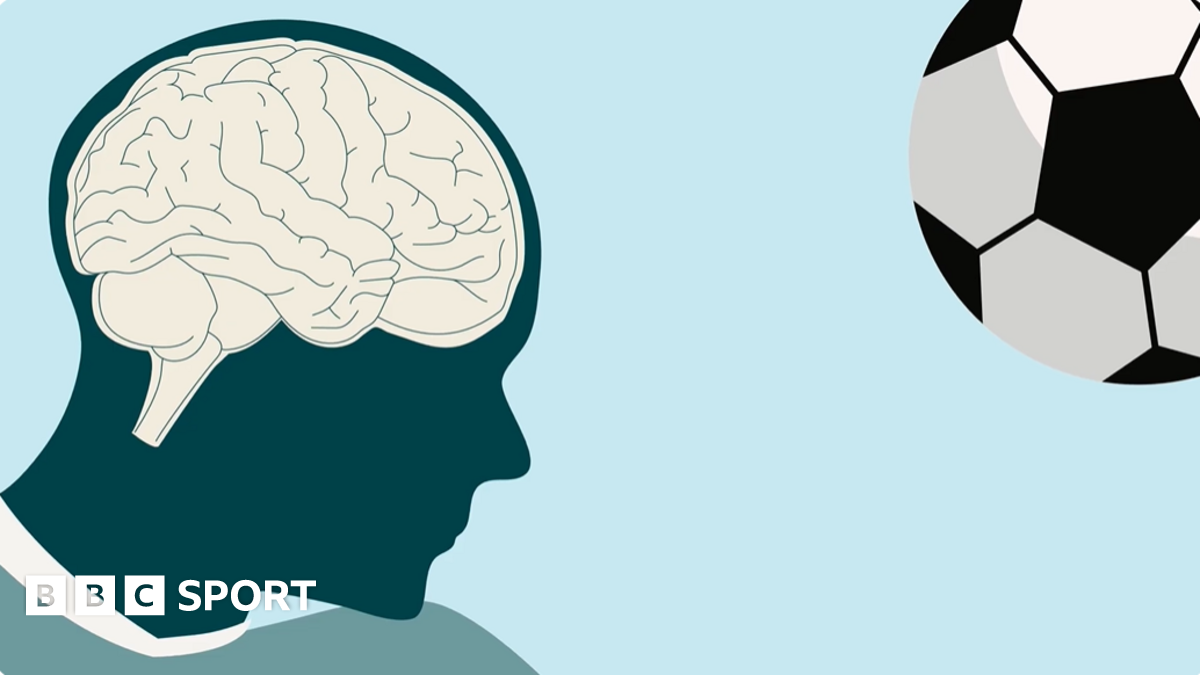
Recent developments in sports science are beginning to influence how these elite teams approach training. As the BBC recently reported, researchers have identified a previously unreported pressure wave energy transfer to the brain during heading. This discovery has led to a quiet revolution in training ground protocols. City, for instance, have reportedly limited 'live' heading drills in the forty-eight hours following a match, focusing instead on positional shadow play. When scientists suggest that ball redesign could reduce this impact, it’s not just a health concern; it’s a performance variable that could dictate player availability for years to come.
The intensity of the press-and-sprint cycles in this rivalry makes the ball technology discussion even more relevant. If the energy transfer during high-velocity impacts can be mitigated, we might see a shift back toward more aerial duels in the final third. For now, however, both Guardiola and Ancelotti seem content to keep the ball on the deck, prioritizing the 94 percent pass completion rates that keep their defensive structures from being stretched. The game is becoming faster, flatter, and more cerebral, leaving little room for the traditional target man who thrives on heavy contact.
The critical failure of UEFA's scheduling
It is impossible to preview this match without addressing the cynical mismanagement of the footballing calendar. By expanding the Champions League and adding more fixtures to an already bloated schedule, UEFA has ensured that we rarely see these two giants at 100 percent fitness. Rodri has already logged over 4,200 minutes this season, and the drop-off in his lateral covering speed during the quarter-finals was obvious to anyone watching the second-half heat maps. We are watching the best players in the world being driven toward a cliff just weeks before the most expanded World Cup in history kicks off in North America.
This congestion creates a negative feedback loop. Instead of the high-octane pressing we saw in their 2022 or 2024 encounters, we are likely to see long periods of 'rest-possession' where neither side wants to trigger the first sprint. It is a tactical necessity, but it is also a sign of a sport that is eating its own stars. The quality remains high, but the 'snap' in the transitions is starting to fade. If the first leg turns into a cagey chess match, do not blame the managers; blame the administrators who think more football always equals better football.
What to watch for: The Vinícius Jr. versus Walker duel
The individual battle that will define the tie remains the same as it has for three years: Vinícius Júnior against Kyle Walker. Walker’s recovery pace is the only thing that allows City to play a high line against Madrid. If Walker is even half a step slow—a distinct possibility given his recent hamstring issues—Madrid will bypass the City midfield entirely with direct diagonal balls into the left channel. Vinícius no longer just stays wide; he has learned to drift inside and occupy the space between the center-back and the fullback, forcing a decision that City usually gets wrong under pressure.
Watch the 15th minute to the 30th minute. This is when Madrid usually feels out the pressing triggers of their opponents. If City are too aggressive in their counter-press, Kroos will look to drop deep and find Bellingham with a vertical pass that breaks two lines at once. If City are too passive, they allow Madrid to settle into a rhythm that eventually leads to a moment of individual brilliance from Rodrygo or Valverde. The margin for error is non-existent; a single mistimed tackle or a failed offside trap will be the difference between a trip to the final and a summer of what-ifs.
Predicting this match is a fool's errand, but the data suggests a stalemate is the most likely outcome for the first leg. City will dominate the ball, Madrid will dominate the moments. Both teams are too smart to lose the tie in the first ninety minutes. Expect a performance that is high on tactical discipline but perhaps lower on the chaotic energy of previous years as both squads try to survive a schedule that has become unsustainable. It will be a masterclass in control, but it might not be the thriller the casual fan is hoping for.
Prediction
I am backing a tactical draw in the first leg. Madrid will score early on the break, but City’s persistence in the half-spaces will eventually yield a late equalizer through a deflected Foden strike. The tie will be settled in Manchester, where City’s depth and home-field advantage usually tilt the scales, but the Bernabéu will see a very disciplined, very professional 1-1 that keeps everyone on edge for the return leg.
Read Next
- Man City and Real Madrid are about to break football again
- Haaland and Gabriel are turning the Champions League into a heavyweight brawl
- Erling Haaland is tired of being the only honest man in the box
- Arsenal's fullback conservatism will cost them in Europe
- ⚽ La Liga 2025-26 — Title Race Hub
- ⭐ UCL 2026 — Champions League Quarter-Finals Hub