The sleeping bags represent the desperation in Marseille
Olympique de Marseille is currently forcing its first-team squad to sleep at the Robert Louis-Dreyfus training center. This move, confirmed by reports this week, signifies a locker room nearing a breaking point. Mason Greenwood and his teammates are effectively living in isolation to address a catastrophic run of form that has left the club flailing in the league standings.
Drastic squad isolation is rarely a precursor to success. It is an indictment of the management’s inability to motivate professionals through standard training and tactical review. By stripping players of their personal agency and forcing them into communal confinement, Marseille leadership has signaled that they no longer trust the squad to regulate their own professional habits.
The ownership model crisis is not limited to France
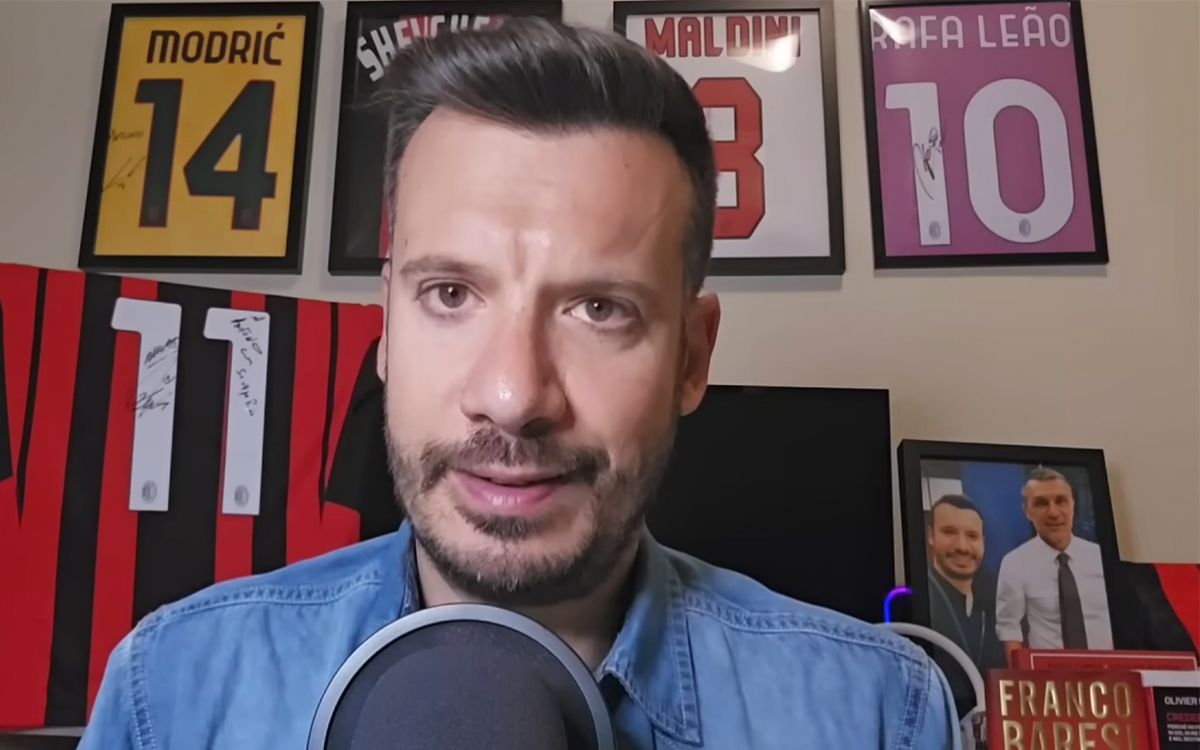
Marseille’s volatility creates an uncomfortable parallel to the structural issues currently plaguing AC Milan. Antonio Vitiello recently noted that the RedBird model at Milan is facing severe scrutiny, with fans and pundits calling for Gerry Cardinale to step aside. Like Marseille, the Italian giant is struggling to reconcile long-term financial austerity with the immediate, high-stakes demand for silverware.
Ownership experiments are failing the eye test across Europe. In London, the situation is increasingly toxic. As John Obi Mikel noted in his critiques, Chelsea management has alienated the figures who defined the club’s previous era of success. The push toward purely data-driven signings and 8-year contracts has created a squad that lacks connection to the fanbase, mirroring the tension between Marseille’s brass and its ultras.
Why forced isolation fails as a tactical fix
Football is a game of mental clarity. Sleep deprivation and forced proximity to teammates—who are likely as frustrated as the coaching staff—do not generate tactical breakthroughs. Physical exhaustion from restricted movement away from home creates sluggish performance on the pitch. When the legs heavy up in the 75th minute, a coach cannot blame the lack of concentration; that is a byproduct of a broken daily routine.
History provides a clear template for why these stunts backfire. Clubs rarely improve when they trade trust for surveillance. From the ill-fated training retreats of mid-2000s Premier League teams to modern experiments in hyper-monitoring, the data shows that squads under pressure rarely respond to gimmicks. They need structural consistency, not a change of sleeping arrangements.
The competitive fallout
With the UCL Final 2026 looming on May 28, the desperation at clubs like Marseille becomes even more pronounced. Other teams are fine-tuning their physical conditioning and tactical setups for summer tournaments. Marseille, meanwhile, is engaged in a public relations and culture war with its own employees. The gap between functional clubs and those governed by fear is widening.
The club has not provided a return to normality for the squad’s living situation. For the players involved, this is a distinct disadvantage compared to rivals who maintain professional balance. If the results do not show an immediate uptick on the scoreboard, this strategy will be remembered as the moment the front office completely lost the locker room.
Critical mistakes in hiring and squad construction cannot be masked by sleepovers. Whether it is Marseille, Milan, or Chelsea, the common thread is a boardroom that prioritizes administrative control over footballing reality. The players on the training ground are only as productive as the system they inhabit, and right now, the system at Marseille is failing its most basic mandate.
Read Next
- Darwin Nunez's career just took a nosedive that even his worst critics didn't predict
- Manchester United's injury crisis deepens ahead of brutal schedule
- Arsenal reach first Champions League final in 20 years
- Arsene Wenger isn't buying the Rooney narrative on Arsenal's big win
- ⚽ Ligue 1 2025-26 — PSG, Monaco & the Title Race Hub