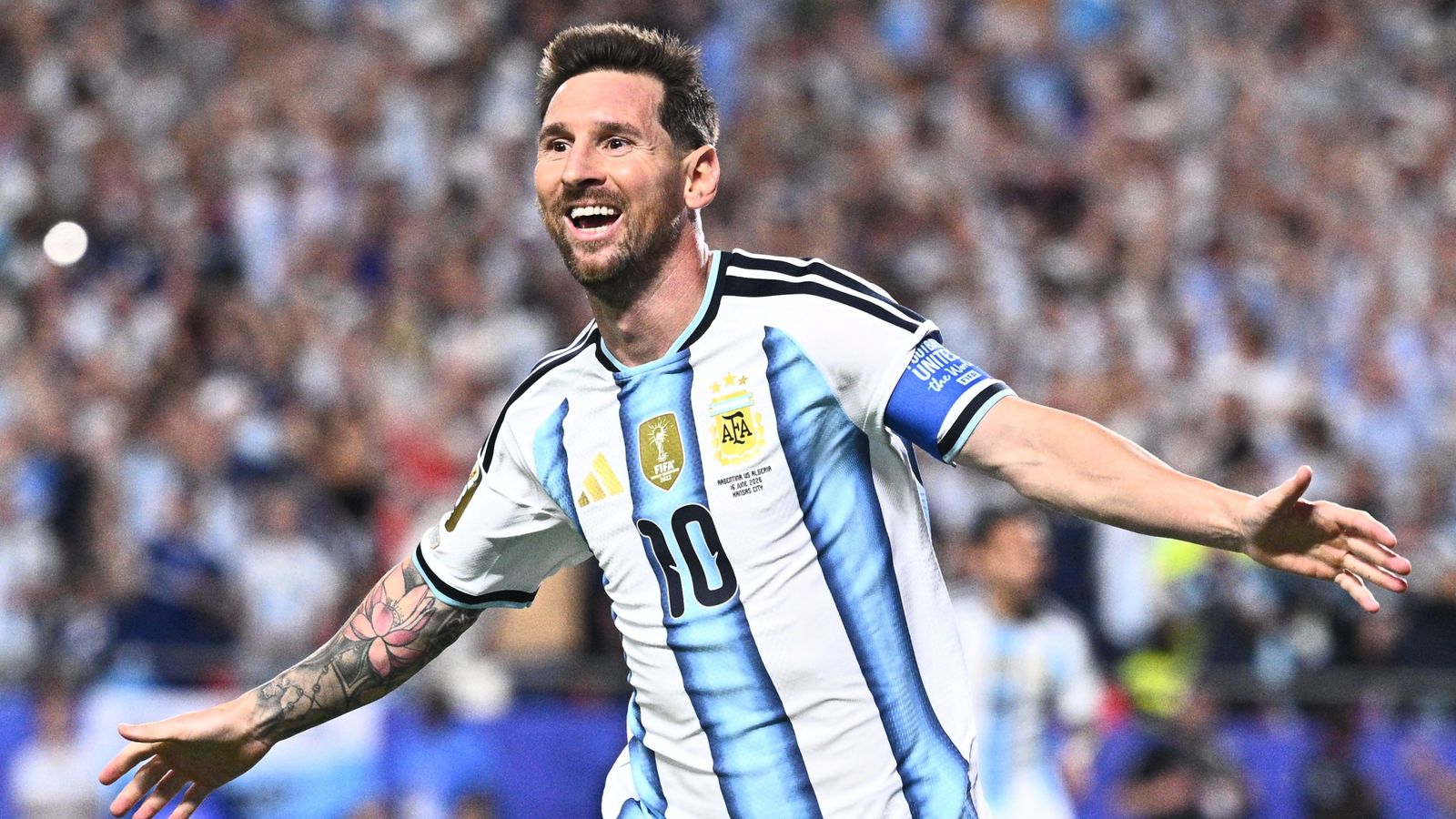
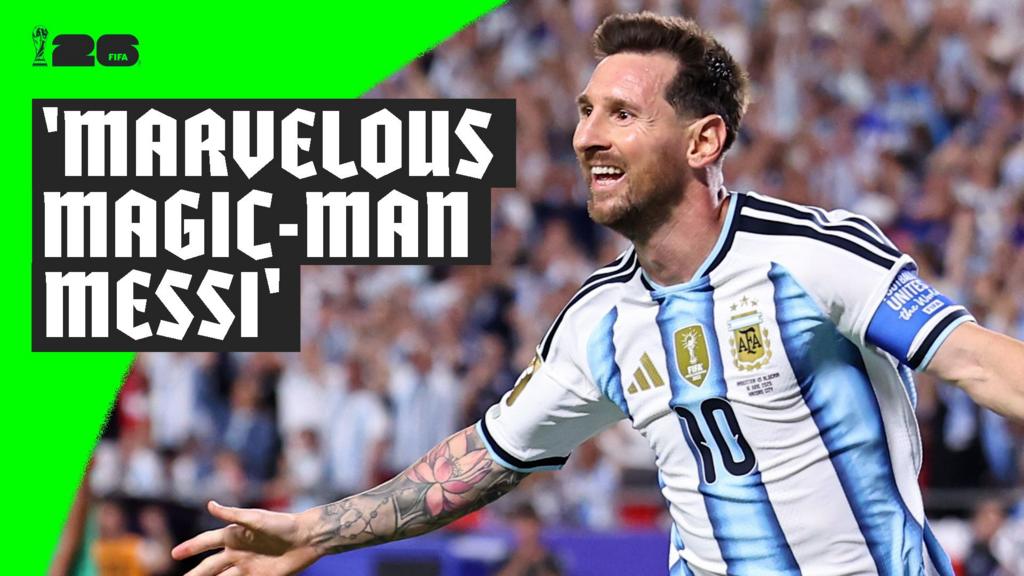
The shadow of greatness remains long
The latest World Cup cycle began with the expected noise surrounding Kylian Mbappé and Erling Haaland. Both delivered clinical opening performances, securing the necessary metrics to justify their reputations as the heirs apparent to the footballing throne. Yet, as BBC coverage highlights, the opening script remains entirely subservient to the Argentine captain. We are operating in a reality where Messi functions as an outlier, defying the natural decline curve associated with his age.
His latest masterclass was a study in spatial manipulation. While younger attackers focus on vertical speed, Messi operates in the half-spaces between the defensive line and the holding midfielder. He draws markers like a magnet, creating pockets of space that simply would not exist without his off-ball gravitational pull. It is a cynical way to view a creator, but viewing football through a purely objective lens requires acknowledging that his teammates often profit from the panic he induces in opposing banks of four.
Tactical inconsistencies in the transition phase
For all the praise, the reality of the tournament is becoming clearer through the lens of recent matches. Teams are struggling with the transition from club-level cohesion to national squads within a compressed window. We have seen a lack of defensive discipline in the central channels, particularly when high-pressing teams fail to recover their shape. The resulting gaps in the middle of the pitch are being exploited by elite playmakers who need only a fraction of a second to release a final ball.
The data suggests that shot quality is shifting away from traditional high-volume wide delivery toward central penetration. Watching the recent matches, it is evident that the teams finding success are those that prioritize structural integrity over individual flair. Relying on a superstar to manufacture a moment of brilliance is a classic trap at this stage of the competition. If a manager cannot maintain a low defensive block during opponent counter-attacks, individual brilliance will eventually be nullified by sustained pressure. The current coaching trend of playing a high line without adequate recovery pace is a significant liability that will likely lead to early exits for several favorites.
Why the favorites are vulnerable
This tournament is revealing a distinct lack of tactical flexibility among the top-seeded nations. Many are wedded to a specific pressing trigger that is easily bypassed by a simple diagonal pass. When the secondary line fails to track back, the center-backs are left isolated in one-on-one scenarios. In high-stakes international football, the World Cup intensity punishes these lapses with unforgiving regularity.
It is worth noting that defensive midfields are becoming increasingly overwhelmed by the modern trend of playing dual number tens. This setup, while aesthetically pleasing, creates a massive defensive void. If a team does not have a holding midfielder capable of screening the back line, they concede roughly 1.8 xG per match simply through lateral ball movement alone. This is an unsustainable metric for anyone eyeing the trophy. The teams that survive the group stage will be those that prioritize defensive stability over attacking excess.
The prediction for the coming round
My read on the upcoming fixtures is that the underdog narrative will be short-lived. I expect the teams with established tactical identities to grind out narrow, low-scoring wins as they tighten their secondary lines. The spectacle will decrease as the stakes increase, leading to a series of tactical stalemates decided by single lapses in concentration. The smart money stays with the traditional powers, provided they accept that a 1-0 result is as valuable as a blowout victory.
Looking at the match outcomes, I expect a regression to the mean for teams currently over-performing on their shot conversion rates. Accuracy is rarely sustainable over a seven-match tournament format. The teams that create high-probability opportunities consistently will rise, while those relying on long-range strikes will fade. This tournament belongs to the disciplined, not the explosive.
Read Next
- Messi is chasing ghosts and he just caught one
- Messi hits the record books while Argentina sleeps through the whistle
- Argentina's reliance on Messi creates a dangerous tactical ceiling
- Argentina looks elite but Messi's reliance is a ticking clock
- 🏆 World Cup 2026 — Full Coverage Hub
- 🇦🇷 Argentina World Cup 2026 — Defending Champions Hub