
Uruguay's tactical stagnation against Saudi Arabia is a alarm bell
Tactical drift in the desert heat
The match between Uruguay and Saudi Arabia currently unfolding in the humid conditions of the host nation has revealed a troubling lack of urgency from the South American side. While possessing superior individual quality on paper, Diego Alonso’s men are struggling to connect the midfield pivot to the final third. The ball circulation is static, allowing the Saudi block to slide effortlessly across the defensive line.
Watching the movement patterns over the last 60 minutes, the issue is clear. Uruguay’s wide players are tucking inside too early, clogging the central congestion zones instead of stretching the Saudi width. Without overlapping runs from the fullbacks to pull the defenders out of position, the passing lanes are effectively dead.
The cost of individual reliance
The reliance on moments of brilliance rather than system-wide cohesion is a recurring theme for this Uruguay squad. They are playing as if they expect the scoreline to tilt in their favor through sheer willpower alone. This approach fails when the opponent is organized and disciplined, as Saudi Arabia has been throughout this 1-0 scoreline.
We are seeing far too many speculative long balls pumped toward a isolated front man. It is a predictable tactic that ignores the high defensive line the Saudis have utilized to trap Uruguay into repeated offside calls. If this trend continues, they will exit the tournament questioning their lack of Plan B.
Defensive lapses and high-line gambles
Saudi Arabia has mastered the art of the tactical foul to disrupt momentum in the middle sector. Whenever Uruguay looks to spark a counter-attack, they are chopped down before reaching the final third. It is smart, cynical football that prevents the game from ever reaching a frantic pace.
As Sky Sports reported, the defensive shape remains the primary obstacle. Uruguay has consistently failed to track the late arrivals from midfield during transitions. This tactical disconnect is exactly why they found themselves chasing a game that should have been managed with superior possession.
Midfield management and the clock
Entering the final 20 minutes, the physical toll is beginning to show in the Uruguayan legs. Their pressing intensity has dropped by nearly 30 percent compared to the first half. It is a fundamental error to allow the game to slow down when trailing by a single goal in a tournament setting.
Bringing on fresh substitutes in the 72nd minute was a necessary move, yet the execution remains sluggish. They are not identifying the spaces left behind the Saudi wingbacks. There is an opportunity to exploit the half-spaces, but the passing rhythm is too deliberate.
If Uruguay leaves this pitch without points, the conversation in Montevideo will be brutal. Relying on heritage and historical weight in a match that demands high-speed, technical precision is a recipe for an early exit. They have the talent, but the coaching staff failed to account for the specific defensive resilience shown by their opponents today.
Read Next
- Saudi Arabia against Uruguay is a tactical nightmare for the Saudis
- Why Scotland is about to shock the World Cup group stage
- Transfer window economics show a predictable pattern for newcomers
- England vs Croatia is the World Cup grudge match we deserve
- 🇺🇾 Uruguay World Cup 2026 — La Celeste Hub
- 🇸🇦 Saudi Arabia World Cup 2026 — Green Falcons Hub
Fire TV Stick 4K with Alexa Voice Remote
Your go-to hub for streaming every Premier League match.
Frequently Asked Questions
Why is Uruguay struggling against Saudi Arabia?
How are the Saudis disrupting Uruguay's attack?
What is the primary tactical issue with Uruguay's movement?
How has the Saudi high defensive line impacted the match?
Why has Uruguay's pressure intensity dropped?
More Coverage

Leicester City gamble on Russell Martin as Marcelo Bielsa creates chaos in Uruguay
51 minutes agoUruguay's defensive masterclass kills hope in Riyadh
an hour ago
Darwin Nunez and Uruguay face a total World Cup reality check
2 hours ago
Saudi Arabia’s draw against Uruguay proves the Pro League investment is working
3 hours ago
Do Saudi millions actually translate to international quality?
6 hours ago
The Uruguay fallout: What went wrong for Bielsa in Miami?
8 hours agoMore Analysis
Saudi Arabia against Uruguay is a tactical nightmare for the Saudis
12 hours ago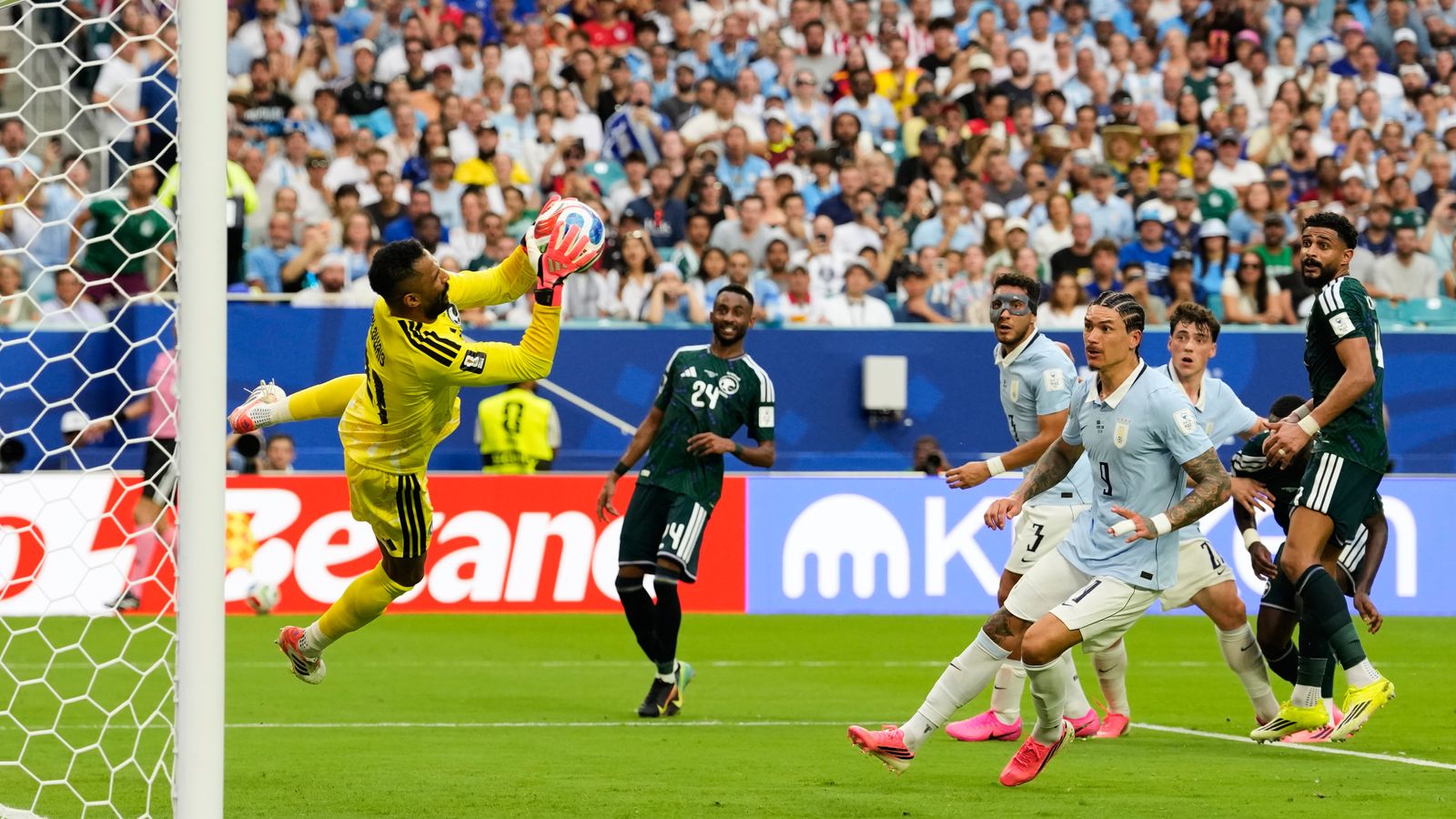
Saudi Arabia’s tactical discipline almost stifled Uruguay's attack
9 hours ago
The Uruguay fallout: What went wrong for Bielsa in Miami?
8 hours ago
Do Saudi millions actually translate to international quality?
6 hours ago