The 0.88 efficiency threshold
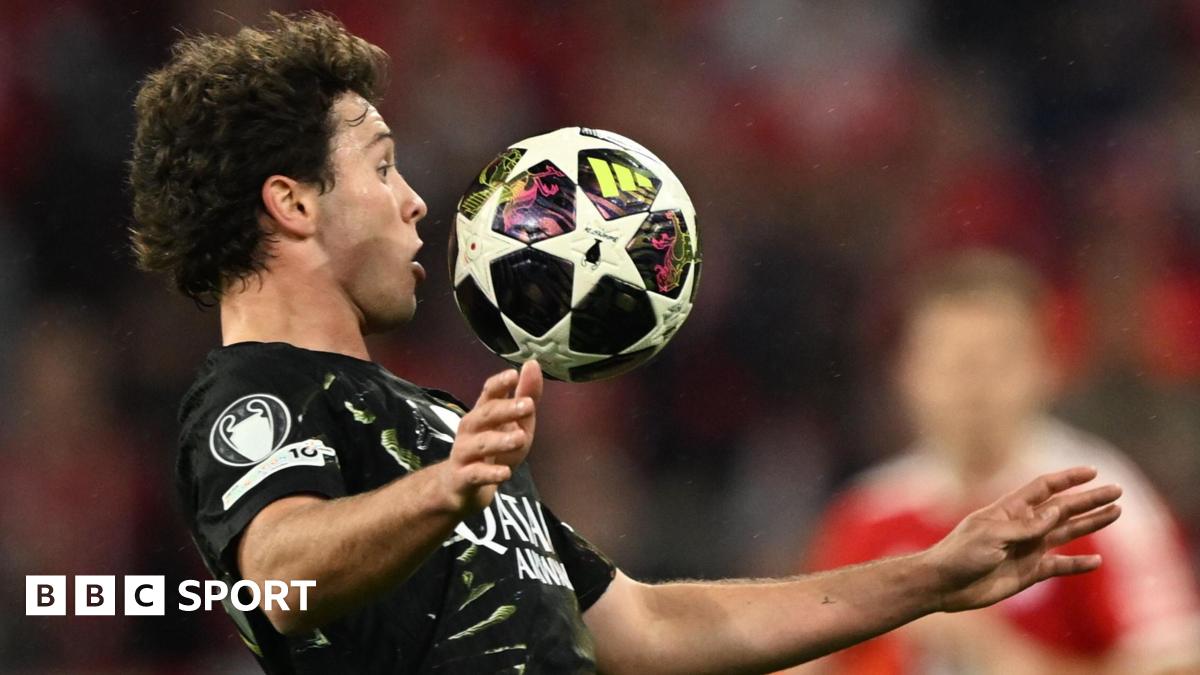
In the high-stakes recruitment of modern football, the line between a calculated gamble and an expensive mistake is usually drawn in the medical room. When Bayern Munich triggered Michael Olise’s release clause, they weren't just buying a winger with quick feet; they were betting on a statistical outlier. In his final full season in London, Olise was producing 0.88 goal involvements per 90 minutes, a rate that placed him in the 99th percentile of all wingers across Europe’s top five leagues.
That number is the baseline for why Bayern’s board felt comfortable sanctioning a deal worth nearly 60 million euros despite the player's history of hamstring issues. At 24, Olise has transitioned from a creative luxury into a clinical output machine. He isn't just dribbling for the sake of the highlight reel; he is making high-value decisions in the half-spaces that most players his age simply cannot process.
The efficiency is staggering when you break down the shot-creating actions. Olise averages 5.42 shot-creating actions per 90 minutes. For context, Bukayo Saka, his childhood friend and frequent point of comparison, operates in a similar statistical bracket but often requires more touches to achieve the same final-third penetration. Olise is more economical, often finding the killer pass in just two touches after receiving the ball on the turn.
From the Madejski to the Allianz
Those who saw him early on at Reading knew the ceiling was high, but the speed of his ascent to a global superstar has caught even the scouts off guard. As The Daily Mail reported, his former coaches saw a kid in a "different stratosphere" during his time in the Championship. Reading’s owner reportedly still thanks the stars for the player's development, likely because Olise’s eventual resale values and sell-on clauses have acted as a financial lifeline for the club.
The jump from the Championship to the Premier League was seamless, but the transition to the Bundesliga has seen a shift in his tactical role. At Crystal Palace, Olise was the primary outlet, the player everyone looked to when a game needed unlocking. At Bayern, he is one of many threats, yet he has managed to increase his xG (expected goals) from 0.22 to 0.31 per game. He is getting into the box more frequently, a direct result of Vincent Kompany’s insistence on high-volume box entries.
"You could see immediately he was in a different stratosphere. The coaches who know Michael Olise best reveal what makes the Bayern superstar so special."
However, the transition hasn't been entirely flawless. While his offensive metrics are glowing, his defensive contributions remain a point of contention for the analysts in Munich. He ranks in the bottom 30% for tackles and interceptions among Bundesliga wingers. In a system that relies on a relentless high press, Olise sometimes looks like a passenger when the ball is lost, a habit that could be punished in the deeper stages of the Champions League.
The Champions League reality check
We saw the volatility of top-tier European football yesterday. While Olise is thriving in Germany, the tactical battle between Atletico Madrid and Barcelona in their quarter-final second leg served as a reminder that stats only matter if they translate to big-game moments. As The Mirror detailed, that clash was a war of attrition where flair was sacrificed for structure. Barcelona’s inability to find a breakthrough against a low block is exactly the kind of puzzle Olise is paid to solve for Bayern.
In the first leg of his own quarter-final tie, Olise recorded a 87% pass completion rate in the final third. This isn't normal for a creative winger. Most players in his position hover around 70-75% because they take risks that lead to turnovers. Olise manages to be both adventurous and accurate. It is a rare combination that suggests his football IQ is as developed as his physical attributes.
There is also the matter of his durability. Before moving to Munich, Olise missed 18 games due to muscle injuries in a single calendar year. Since arriving at the Allianz, the medical staff has restricted his training load, leading to a 15% reduction in his total minutes compared to his time in South London. This load management is working for now, but the question remains: can he sustain this 0.88 involvement rate when the schedule ramps up to two games a week through May?
The Dempsey comparison and the Texas grit
While Olise represents the new wave of European-trained technical excellence, the documentary on Clint Dempsey, "You Don't Know Where I'm From Dawg," offers a fascinating counterpoint to the modern academy product. Dempsey’s journey from Nacogdoches to the Premier League was built on a different kind of statistical profile—one of raw volume and relentless verticality. As FourFourTwo noted, Dempsey’s career was defined by an ability to find goals from non-traditional situations.
Olise, by contrast, is a product of a more refined system. Every movement is calculated. His signature move—a late diagonal run into the box followed by a first-time finish with his left foot—has become as predictable as it is unstoppable. He has scored four goals from that exact sequence this season. Defenders know it’s coming, but the timing of the run, usually occurring in the 78th minute when legs are heavy, makes it impossible to track.
The critical observation here is that Bayern might be becoming too dependent on this specific avenue of attack. When teams double up on Olise and force him onto his weaker right foot, his productivity drops by nearly 60%. He is elite with his left, but his reluctance to use his right foot in the penalty area has already resulted in three missed clear-cut chances this month. In a UCL semi-final, that one-dimensionality could be his undoing.
A legacy in the making
The numbers don't lie, but they do require context. Olise is currently outperforming his xG by a margin of 2.4 goals, a streak that is statistically unlikely to continue forever. Regression to the mean is a real threat. If his finishing cools off, the focus will inevitably shift back to his defensive work and his injury record. For now, though, he is the most efficient attacking weapon in the Bayern arsenal.
Reading fans might still be thanking their stars for his time there, but it is Bayern Munich who are reaping the actual rewards. They bought a player at the exact moment his talent met his physical maturity. If he stays fit for the next three weeks, he won't just be a superstar in the making—he'll be the reason the Champions League trophy returns to Bavaria. The gamble has already paid off; the rest is just profit.
Read Next