The math behind the stalemate
Massimiliano Allegri's Juventus generated a laughable 0.42 xG across 90 minutes at San Siro, providing yet another clinical demonstration of how to murder a football match. You do not tune in to watch this iteration of Juventus to be entertained. You watch them to study the dark arts of attacking suppression. The scoreless draw against AC Milan was a game played entirely in the mud of the middle third, and for data analysts, it was a fascinating case study in tactical nullification.
Juventus did not come to Milan to play open football. They came to build a wall, and the underlying numbers reflect a complete abandonment of attacking ambition in favor of structural rigidity. Milan held the ball for 64% of the match, yet managed only three shots on target. When you face a defensive block this deep, standard possession percentages lose all their analytical value. The game is played entirely in a condensed 30-yard band of grass.
Juventus recorded a Passes Per Defensive Action (PPDA) of 14.2. That is remarkably passive for a top-flight European side. They allowed Milan's center-backs to have the ball all day, dropping into a compact shape that aggressively choked the half-spaces and forced the ball out wide into harmless crossing zones.
This is the reality of Allegri ball. It is not an accident. It is a mathematical calculation that heavily favors defensive variance over attacking output. By reducing the total number of high-quality chances in a match to near zero, Juventus ensure that a single set-piece or transition moment can steal three points.
But Milan's inability to break this structure down reveals a glaring flaw in their own attacking machinery. You cannot hold the ball for an hour and generate less than 1.0 xG unless your offensive patterns are fundamentally broken. The ball circulation was agonizingly slow. The off-ball movement was static. The passing networks looked like a U-shape around the Juventus penalty area, totally devoid of central penetration.
Rafael Leao's statistical evolution
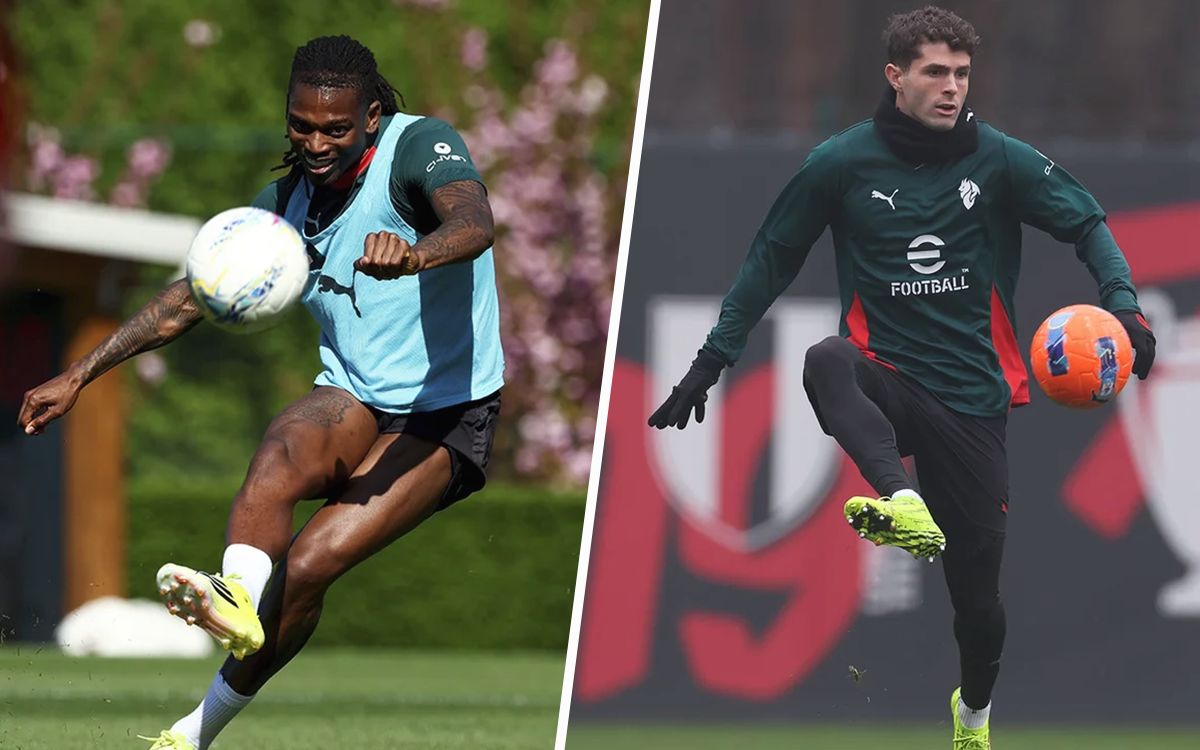
If there is a positive for Milan to extract from this tactical wasteland, it is the continued evolution of Rafael Leao. As Sempre Milan noted in their post-match analysis, Leao's improvement is impossible to ignore, and the data absolutely backs up the eye test.
The narrative around Leao used to center on inconsistency and a lack of final-ball precision. The underlying numbers now tell a completely different story. Against Juventus, Leao completed six of his eight attempted take-ons, operating in spaces where he was routinely double-teamed by a disciplined defensive unit.
More importantly, his progressive carries sit at 7.8 per 90 minutes for the season. He is no longer just a fast winger who occasionally beats his man in isolation. He has become the primary progression engine for the entire squad.
We are seeing a clear maturation in his decision-making. His shot-creating actions (SCA) have climbed to 5.2 per 90. He is recognizing defensive traps earlier and releasing the ball rather than forcing low-percentage dribbles into blind alleys.
But the Juventus match highlighted the fundamental flaw in relying solely on Leao for chance creation. When he beats his first man, he is immediately met by a covering center-back. Without dynamic off-ball movement from the central midfielders to drag those defenders away, his completed dribbles do not translate into high-danger chances.
To understand his isolation, you only need to look at his touch map. The vast majority of his touches occur hugging the left touchline, 40 yards from goal. When he finally cuts inside, the penalty area is empty. The traditional striker is smothered by three central defenders, and the opposite winger is too slow to crash the back post. He is generating all the right inputs, but the system is failing to convert them into outputs. Leao is operating at an elite level, but he is operating alone. If you swapped him into a functional attacking system, his assist numbers would double overnight.
The Mario Gila solution
Milan's reported negotiations with Lazio for Mario Gila make perfect statistical sense in the context of this attacking stagnation. With salary demands now emerging, it is clear the front office is serious about addressing their build-up deficiencies.
Why Gila? Because breaking down a low block does not start with the wingers. It starts from the back. You need center-backs who can break the first line of pressure with a single, aggressive pass.
At Lazio, Gila completes 84% of his passes while under direct pressure. He averages 4.5 progressive passes per 90 minutes. These are not safe, lateral balls to the fullbacks that simply inflate pass completion stats. These are line-breaking passes driven into the feet of the attacking midfielders.
When a center-back can bypass the opposition's forward line with one pass, it forces the entire defensive block to shift rapidly. That rapid shifting is exactly what creates the half-second of space a player like Leao needs to isolate his fullback. You cannot manufacture that space through slow, methodical side-to-side passing. It requires sudden, vertical disruption. Gila provides that disruption from the deepest point on the pitch.
Gila's defensive metrics are equally solid. A 68% success rate in aerial duels provides the necessary security for a team wanting to push its defensive line higher up the pitch. He possesses the recovery pace to manage transitions, which is the exact vulnerability Juventus was trying to exploit on the counter.
If Milan want to stop relying purely on individual brilliance to move the ball into the final third, upgrading the ball-playing capacity of their center-backs is entirely non-negotiable. Gila fits the exact analytical profile they are missing.
The Maurizio Sarri calculation
The tactical stagnation against Juventus brings the managerial situation into sharp focus. With reports linking Maurizio Sarri as a concrete idea, the front office is clearly evaluating a radical shift in philosophy.
Sarri represents the complete antithesis of Allegri ball. Where a pragmatic manager minimizes variance by dropping deep, Sarri demands total control through aggressive, suffocating possession.
Look at the field tilt numbers from Sarri's previous stops. His teams routinely average a field tilt of over 62%, meaning they complete the vast majority of their final-third passes deep in the opponent's territory. They squeeze the pitch and force errors through pure volume of possession.
This is a high-risk, high-reward approach. It requires relentless pressing triggers and a perfectly synchronized defensive line. The current Milan roster is not entirely built for it. They lack a true deep-lying playmaker capable of circulating the ball at the frenetic tempo Sarri requires in his central zones.
Hiring Sarri would not be a simple plug-and-play solution. It would require a brutal roster purge. Players who cannot process complex tactical instructions at high speed or execute one-touch passing sequences under pressure would be benched within a month.
The reality of the rebuild
There is a massive transition cost to implementing Sarriball. You have to accept that the team will drop points early in the season while the players unlearn their previous habits. Passes will be misplaced in dangerous areas. The high line will inevitably be exposed by simple balls over the top when the counter-press fails. The underlying numbers will likely look terrible for the first eight weeks of his tenure. Fans will groan at the endless backward passing as the team learns how to manipulate the opponent's defensive shape.
But the long-term payoff is an attacking system that does not look completely clueless when faced with a 5-3-2 low block. Sarri's automated attacking patterns provide solutions that do not rely on a winger beating three men.
Milan are currently stuck in a frustrating transitional phase. They have the raw talent to avoid a mid-table scrap, but their attacking patterns are far too predictable to break down elite defensive structures consistently.
The scoreless draw against Juventus was a symptom of a broader disease. You cannot rely on one explosive player to generate all your offense against highly organized European defenses. The math simply does not support it over a 38-game season.
The potential addition of Gila is a smart, data-driven move that addresses a clear structural weakness in the initial phase of build-up play. It shows that the analytics department understands where the bottleneck is occurring.
But the managerial decision is the real pivot point for the franchise. Do they continue with a pragmatic approach that guarantees a high floor but heavily caps their attacking ceiling? Or do they embrace the chaos of a high-possession, high-pressing system?
The numbers from the Juventus match provide the answer. The current model is mathematically unsustainable. You cannot draw your way to a title, and you cannot expect Rafael Leao to carry the entire attacking burden in isolation. A structural overhaul is required. The data is screaming for it. It is now up to the front office to act.
Read Next
- San Siro's patience has finally run out after Milan's scoreless Juve draw
- Massimiliano Allegri is polarizing Milan fans and pundits alike
- Milan fans are tearing each other apart over the Gila and Lukaku rumors
- Milan are ready to cut losses on Niclas Füllkrug as Wolfsburg circle
- ⚽ Serie A 2025-26 — Title Race Hub (Inter, Napoli, Juve, Milan)