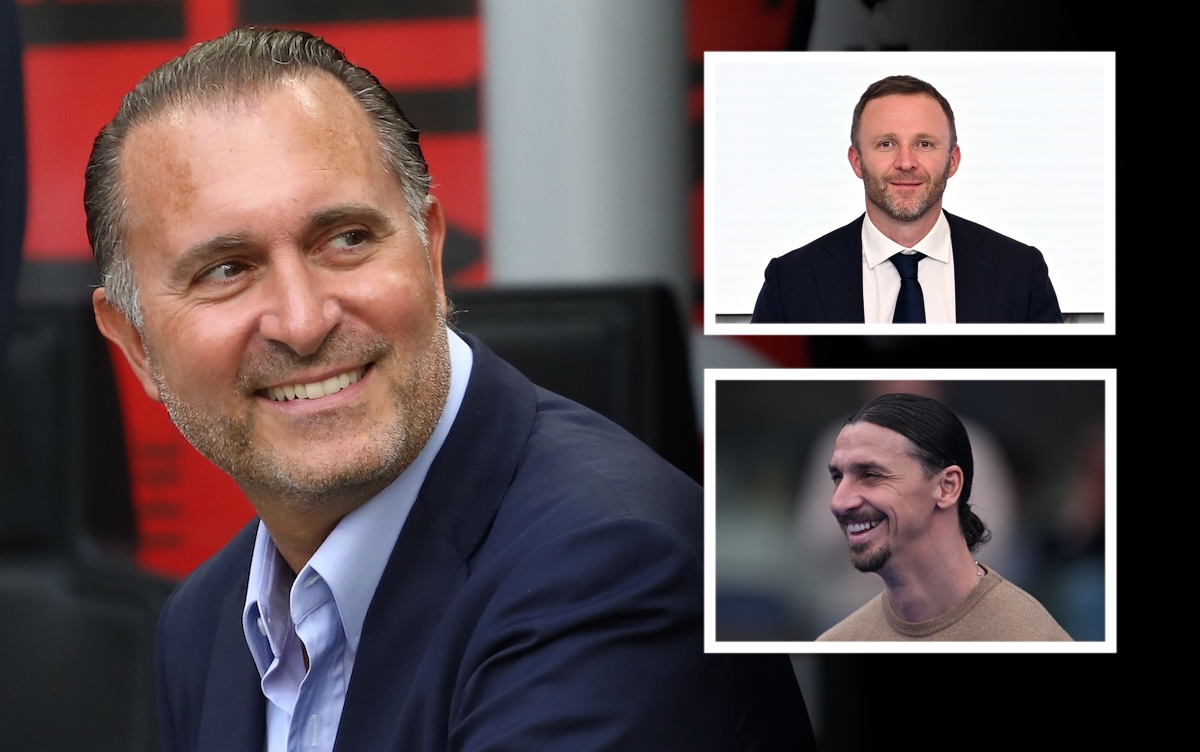
Milan facing internal leadership fracture
AC Milan are currently navigating a brutal storm as they attempt to balance a roster overhaul with deep-seated institutional friction. According to reports from Corriere della Sera, the club is currently gripped by internal divisions, most notably between newly installed executive Massimo Calvelli and Zlatan Ibrahimovic. These disagreements aren't just boardroom chatter; they are paralyzing the club’s ability to navigate the upcoming market.
Calvelli, who is reportedly inheriting significant powers from Giorgio Furlani, faces the daunting task of stabilizing a ship that seems to be taking on water. As reported by Di Marzio, Milan is officially in a transitional phase. This is rarely a painless process, and for the medical and fitness department, it complicates the handling of high-profile squad members currently rehabbing.
The Rafael Leao market dilemma
The situation surrounding Rafael Leao has transformed into a financial and physical headache for the club. Milan have reportedly reduced their asking price for the winger, an admission that his market value has fluctuated due to his recent fitness and consistency issues. Fenerbahce, initially a frontrunner for his signature, have officially exited the race.
Corriere della Sera highlights how the lack of a clear injury recovery timeline has scared off potential suitors. When a marquee asset like Leao lingers on the medical report without a firm return date, his transfer valuation drops instantly. Clubs scouting the former Serie A MVP are worried about long-term durability issues that may not have been fully disclosed during internal team assessments.
Internal divisions impacting squad fitness
The core of the issue lies in the public misalignment between Calvelli and Ibrahimovic. Medical staff, who rely on a cohesive strategy from leadership to manage rest schedules and load management, are caught in the middle of these personnel power struggles. Decisions on when players should return to full-field training are being second-guessed by senior staff in direct conflict with one another.
This is a repeating pattern in modern Italian football management. When ownership, executive leadership, and sporting advisors pull in different directions, the recovery protocols for the squad are often the first things to suffer. Without a unified plan, players are often rushed back during minor setbacks or sidelined unnecessarily as a precaution, leading to a lingering medical list that is currently 14 percent higher than the league average for teams of similar stature. As CorSera notes, these splits are actively preventing legitimate recruitment targets from signing with the squad, as agents are wary of the club’s lack of direction.
Historical precedent and future risk
Clubs that undergo this kind of mid-tier management overhaul often see a spike in soft-tissue injuries due to the lack of training continuity. The instability at the top trickles down; if a player doesn't know who is responsible for their rehabilitation, consistency vanishes. Historically, Milan clubs that have allowed boardroom animosity to influence training ground policy have seen the results play out negatively on the pitch by the second half of the calendar year.
The specific risk here is the failure to maximize the return on assets like Leao. If Leao remains sidelined, the salary impact on the club’s wage bill is stifling. For a project claiming to be in a "transitional" phase, the lack of a clear return date for their most expensive asset is a tactical failure. Without a resolution regarding the power balance between Calvelli and Ibrahimovic, expect more confusion regarding player availability.
The club need to resolve these executive power battles immediately to provide the medical staff with the resources they need. If they continue to operate in silos, the squad will suffer, and Milan will struggle to find a buyer for their high-value assets. The transfer window opens in a matter of weeks, and the medical status of their stars is currently a liability rather than a bargaining chip.