
West Ham's decline is a warning for every mid-table Premier League side

The human cost of West Ham's recent slide
Football is often reduced to shot maps and pass completion percentages. We obsess over high-pressing triggers and xG accumulation while forgetting the individuals occupying those white lines. Michail Antonio’s recent comments about West Ham’s decline reveal a stark disconnect between club policy and the mental reality of the players living through a season that fell apart.
As The Guardian reported today, Antonio speaks with a brutal clarity that is rare among active players. When the club's record goalscorer talks about the lack of care shown to personnel, it highlights a structural rot. If a player who contributed 67 goals in the league underperforms, the immediate impulse is a transfer list. The deeper issue, according to Antonio, is the disposability of the athlete.
Tactical inertia and the missing motivation
West Ham’s on-pitch struggles this year were not the result of a sudden lack of technical ability. They were the outcome of tactical inertia. Watching them in the final months of the season, the spacing grew increasingly disjointed. Midfield blocks that were once disciplined began to fragment, leaving isolation gaps for opposition transition attacks.
The lack of tactical evolution became glaring by April. Opponents learned that dropping deep against West Ham invited pressure that led nowhere, while quick counters exploited a high line that lacked the necessary recovery pace. It is a classic narrative arc: initial success brings tactical rigidness, which then bleeds into dressing room apathy. When high-performing veterans feel the culture turn transactional, the physical output drops in kind.
Learning from the London rivals
Compare this stagnation to the activity at the Emirates. While West Ham stalled, Arsenal’s summer pivot signals an acknowledgment that progress is not linear. Mikel Arteta is hunting for specific profile upgrades to ensure his squad does not hit a similar ceiling. The reported intent to finalize three major signings early suggests an awareness of how quickly the Premier League punishes standing still.
Even the environmental focus being pushed by national setups shows a shift toward marginal gains that mid-table clubs frequently ignore. Thomas Tuchel’s recent reliance on Team GB staffers to manage heat acclimatization for the upcoming World Cup reflects an obsession with controlling the controllable. West Ham failed to control their own environment, allowing internal culture to degrade until the results became inevitable.
The danger of a stagnant rotation
The failure of the last eighteen months at the London Stadium boils down to a lack of rejuvenation. Relying on the same core group after a period of success breeds comfort; comfort eventually results in the 14th place finish that characterized the low points of the season. The physical toll on players like Antonio is not just limited to injury sheets.
Footballers are treated as assets on a spreadsheet, yet their ability to execute a tactical game plan rests entirely on their mental state and sense of security. When that is stripped away, the distance between intent and reality grows. Antonio’s admission that he initially shunned therapy speaks to a wider culture of silence in the game, where performance is prioritized over the person.
If West Ham intends to climb back toward the top half, they must reconcile these two sides. Talent is present, but talent without a cohesive, supportive, and evolving environment is merely potential left to waste. The challenge for the summer is not just a flurry of transfers—it is a complete revaluation of how they retain their most important assets.
Read Next
Amazon Fire TV Stick 4K streaming device
Watch every Premier League and World Cup match in stunning 4K.
Frequently Asked Questions
What caused West Ham’s performance decline?
How does Michail Antonio view the club's current culture?
Why did West Ham's tactical approach fail?
What lesson can mid-table teams learn from Arsenal?
What is the consequence of failing to rotate the squad?
More Coverage

Arsenal's summer pivot and Liverpool's transfer fantasy
an hour ago
The Definitive Top 10: Defining Stars of the Modern English Era
an hour ago
Michael Carrick has a specific tactical void to fill at Old Trafford
an hour ago
Liverpool post-Slot: A tactical void and boardroom panic
an hour ago
Greece faces emotional toll as World Cup preparations begin
an hour ago
Paraguay finalizes 2026 World Cup squad with Premier League reinforcements
2 hours agoMore Analysis
Leah Williamson's absence cripples England's World Cup qualification path
an hour ago
Arsenal's summer pivot and Liverpool's transfer fantasy
an hour ago
The Definitive Top 10: Defining Stars of the Modern English Era
an hour ago
Milan’s medical crisis hits critical mass before transfer window
an hour ago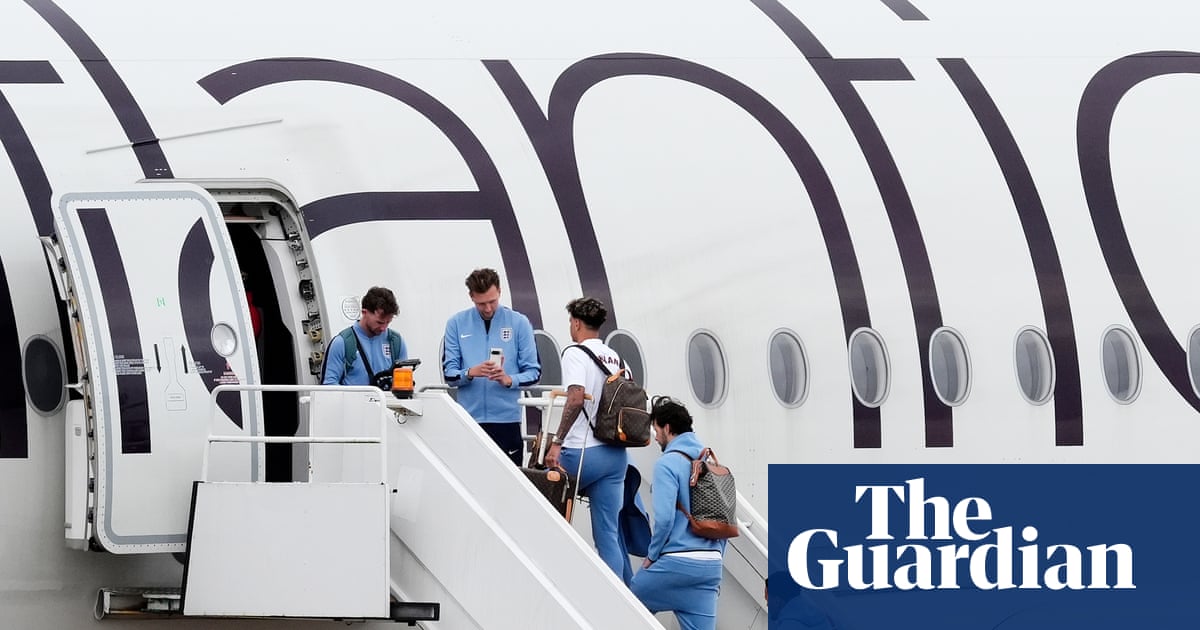
Thomas Tuchel's England gamble is resting on a massive cooling bet
an hour ago