The Big Picture
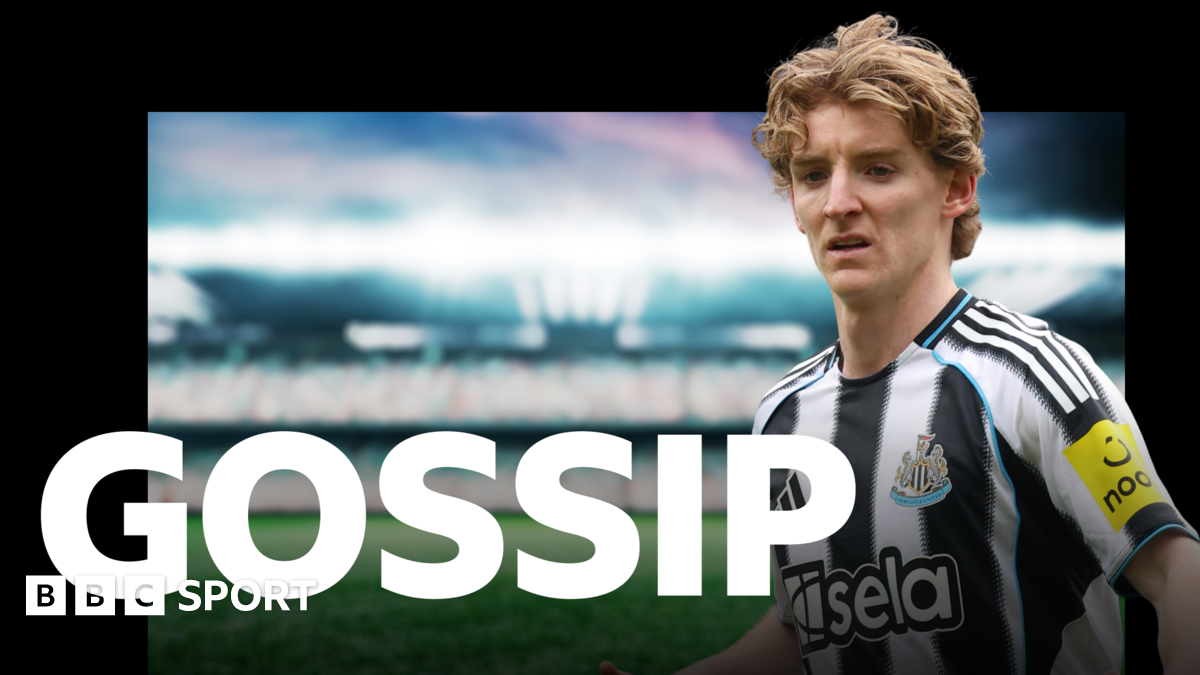
St James' Park feels a long way from the Champions League nights of three years ago. As Newcastle United prepared to host Bournemouth on Saturday, the optimism of the early PIF era has been replaced by the cold reality of a 14th-place scrap and a treatment room that simply won't empty. The headline blow is the absence of Anthony Gordon, who was pulled from the squad after reporting hip flexor tightness during Thursday's final tactical session. It is a massive setback for Eddie Howe, who is already navigating a season defined more by scans than goals.
The timing is brutal. Newcastle are coming off back-to-back defeats against Sunderland and Crystal Palace, and the loss of their primary creative spark leaves a toothless frontline to face a disciplined Bournemouth side. Gordon has been the lone bright spot in a disjointed campaign, but a Friday morning scan revealed a minor strain that made his inclusion today impossible. While the club's medical staff are optimistic about a return for the trip to the Emirates next week, the immediate impact is a Newcastle side stripped of its pace and directness.
The Medical Report: Hip Flexors and Facial Fractures
Gordon’s hip flexor issue is a classic case of 'overuse syndrome' in a high-intensity system. Sources close to the training ground suggest the injury occurred during a routine transition drill. When a player with Gordon's explosive profile feels that sudden 'tugging' sensation in the groin area, the risk of a full Grade 2 tear is too high to ignore. By withdrawing him now, the medical team is likely preventing a 6-week layoff, but it leaves Howe with a tactical vacuum on the left flank that Harvey Barnes—himself only recently back from a calf issue—is expected to fill.
Further back, the defensive situation remains precarious. Sven Botman is still weeks away from a return to competitive action following his facial fracture sustained in the heated Tyne-Wear derby in late March. The Dutchman underwent successful surgery to stabilize an orbital bone displacement, but the recovery timeline for such an injury is notoriously fickle. He has returned to light training wearing a protective mask, but the risk of secondary impact in a physical Premier League environment means he remains a spectator. The current reliance on the Dan Burn and Malick Thiaw partnership has looked increasingly shaky, lacking the recovery speed that Botman provides.
"We have to be smart with Anthony. The scan showed enough to suggest that one wrong movement today could have ended his season. We can't afford that with the World Cup on the horizon."
Historical Context: A Pattern of Fragility
This isn't an isolated incident. Newcastle fans will remember the 2023/24 campaign where the squad was decimated by similar soft-tissue injuries. The question now being asked in the local media is whether the medical department’s 'load management' protocols are fit for purpose. Since the departure of Alexander Isak to Liverpool for 125 million in 2025, the squad has lacked the depth to rotate key players. Isak, ironically, is currently recovering from a broken leg at Anfield, proving that the 'Newcastle curse' might just be a lingering shadow over those who have passed through the doors of Darsley Park.
The strategic implications of these injuries are severe. Newcastle's drop to 14th isn't just a sporting failure; it’s a financial catastrophe for a club trying to balance PSR constraints. Without the revenue of European football, the pressure to sell assets like Gordon—who is already being tracked by Bayern Munich—becomes almost irresistible. If Gordon’s fitness continues to be a recurring theme, his market value may take a hit just as Newcastle are looking to potentially cash in during the 2026 summer window.
Tactical Fallout and the World Cup Factor
With the FIFA World Cup 2026 kicking off in just 54 days, players are naturally becoming more cautious. Gordon knows he is a lock for Thomas Tuchel’s England squad if he is fit, but any long-term muscle injury now would be devastating. This creates a friction between club needs and international ambitions. Howe’s decision to bench Bruno Guimarães today, despite the Brazilian being 'fit' after a two-month hamstring layoff, suggests a manager who has finally learned that rushing players back leads to longer absences.
Guimarães’ return to the bench is the only silver lining. His hamstring tendon remodeling has been a slow process, but his presence in the matchday squad provides a psychological lift. However, asking a player who has missed eight weeks to come on and chase a game against a high-pressing Bournemouth side is a gamble. Newcastle have averaged only 1.1 goals per game since Botman and Gordon were last in the starting XI together, a statistic that highlights the systemic collapse when the spine of the team is removed.
Critical Observation: The Depth Delusion
Let’s be honest: the recruitment since the Isak sale has been poor. The failure to bring in a mobile center-back to cover for Botman’s eventual injuries—which were predictable given his history—is an indictment of the scouting department. Relying on Dan Burn to defend 40 yards of open space in 2026 is tactical suicide. The medical report is the symptom, but the lack of squad evolution is the underlying disease. Newcastle are currently a team built on glass, managed by a man who is running out of ways to glue the pieces back together.
As the clock ticks toward the World Cup and the end of another underwhelming season, the atmosphere at St James' Park is turning from supportive to skeptical. The injury list is long, the points tally is short, and the star players are either on the treatment table or looking at the exit. Bournemouth today represents a must-win, but without Gordon’s verticality and Botman’s composure, it feels like another afternoon of frustration on Tyneside.