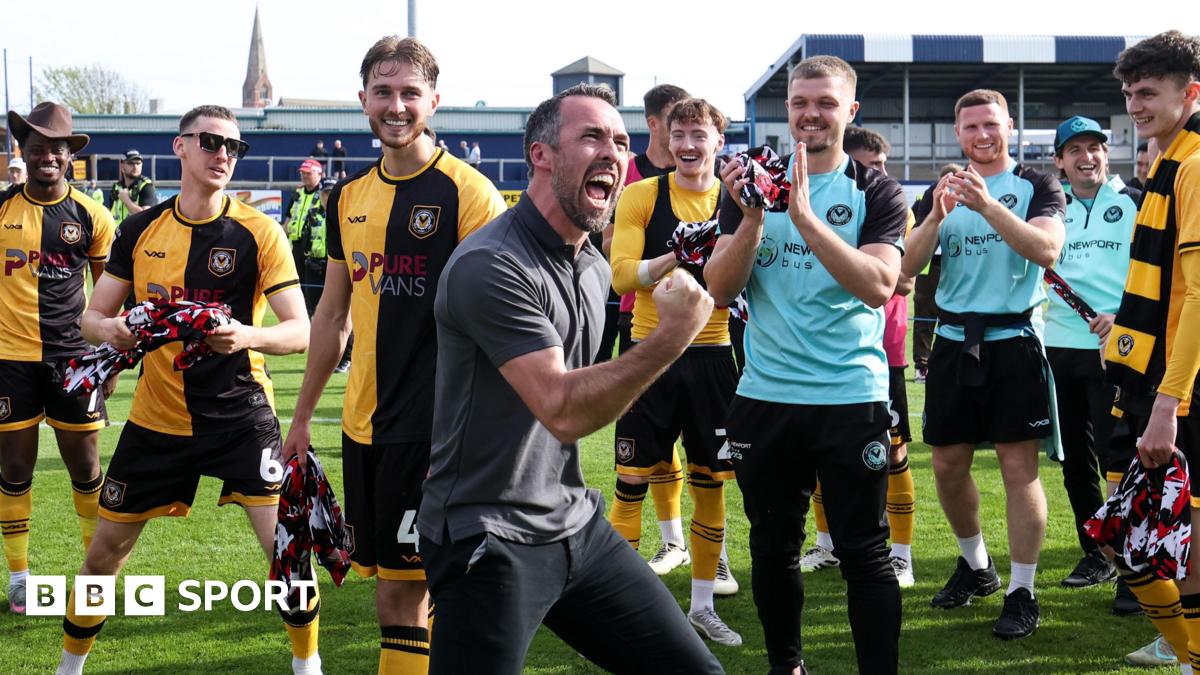
The survival cost for Newport County
Newport County secured their League Two status on the final day, but the celebrations ended prematurely for the medical staff. Two starters, central defender James Clarke and holding midfielder Aaron Wildig, exited the pitch with significant lower-body issues during the second half. Both players underwent initial scans earlier this morning to determine the extent of the damage.
Clinical assessments suggest a high-grade ankle ligament strain for Clarke. The defender had been nursing a nagging Achilles irritation since mid-March, which clearly flared up under the pressure of a full ninety minutes. Medical professionals indicate that a six-week recovery protocol is now mandatory to avoid long-term structural instability.
Timeline for the rehabilitation process
The immediate prognosis for Wildig is more optimistic regarding muscle fiber damage, yet there is a frustrating reality for the coaching staff. His hamstring appears to be a Grade 1 tear, likely stemming from poor pitch surface conditions that plagued the final quarter of the season. He is expected to miss the initial phase of pre-season training, with a target return date set for late June.
This is not the first time Newport have dealt with late-season fitness collapses. The 2023-2024 campaign saw similar issues when the squad depth failed to materialize during a congested April schedule. History suggests that clubs maintaining a thin roster often ignore early-season minor knocks, creating a cumulative effect that forces explosive injuries during high-intensity survival missions.
Strategic implications for the off-season
The club now faces a complex summer transfer window. With two defensive leaders sidelined, the scouting department must shift focus from depth assets to immediate-impact starters. Sporting directors are expected to re-evaluate the internal recovery protocols after a season that saw Newport remain plagued by soft-tissue setbacks.
The current injury reports confirm that the medical budget will receive a mandatory increase before July. Failure to address the repetitive nature of these muscle strains will only hamper the team's ability to compete in a hyper-competitive League Two lineup next term. The board is reportedly reviewing fitness coach contracts as a direct response to this trend.
Comparing the historical data
Data from previous seasons shows that Newport’s injury rate consistently spikes by thirty percent during the final five games of the year. While the intensity of a relegation battle is a factor, the lack of rotation in the defensive pivot has become a distinct liability. Opposing teams have consistently exploited Newport's late-game defensive slowing.
There is valid skepticism regarding the current physical preparation standards. If the club continues to mirror the output of previous years without changing their approach to volume management, the board risks repeating these errors. The current injury record does not reflect a team prepared for the physical demands of high-press football.
This performance cycle is a reflection of the team's reliance on veterans who struggle with modern recovery schedules. Whether the management chooses to look at free-agent depth or younger academy call-ups, the current strategy is clearly unsustainable. For a club that thrives on their dramatic escape acts, the medical department is the one place where they cannot afford further volatility.
The club remains silent on specific surgical options, but sources suggest at least one player may require an arthroscopic procedure to clean out loose debris in his joint. Should that path be taken, the return window will push into mid-July. Newport's fans, who are used to the weekly drama of small-club survival, will be hoping for a quieter summer regarding fitness bulletins.
Read Next