The medical room is emptying out at the worst possible time
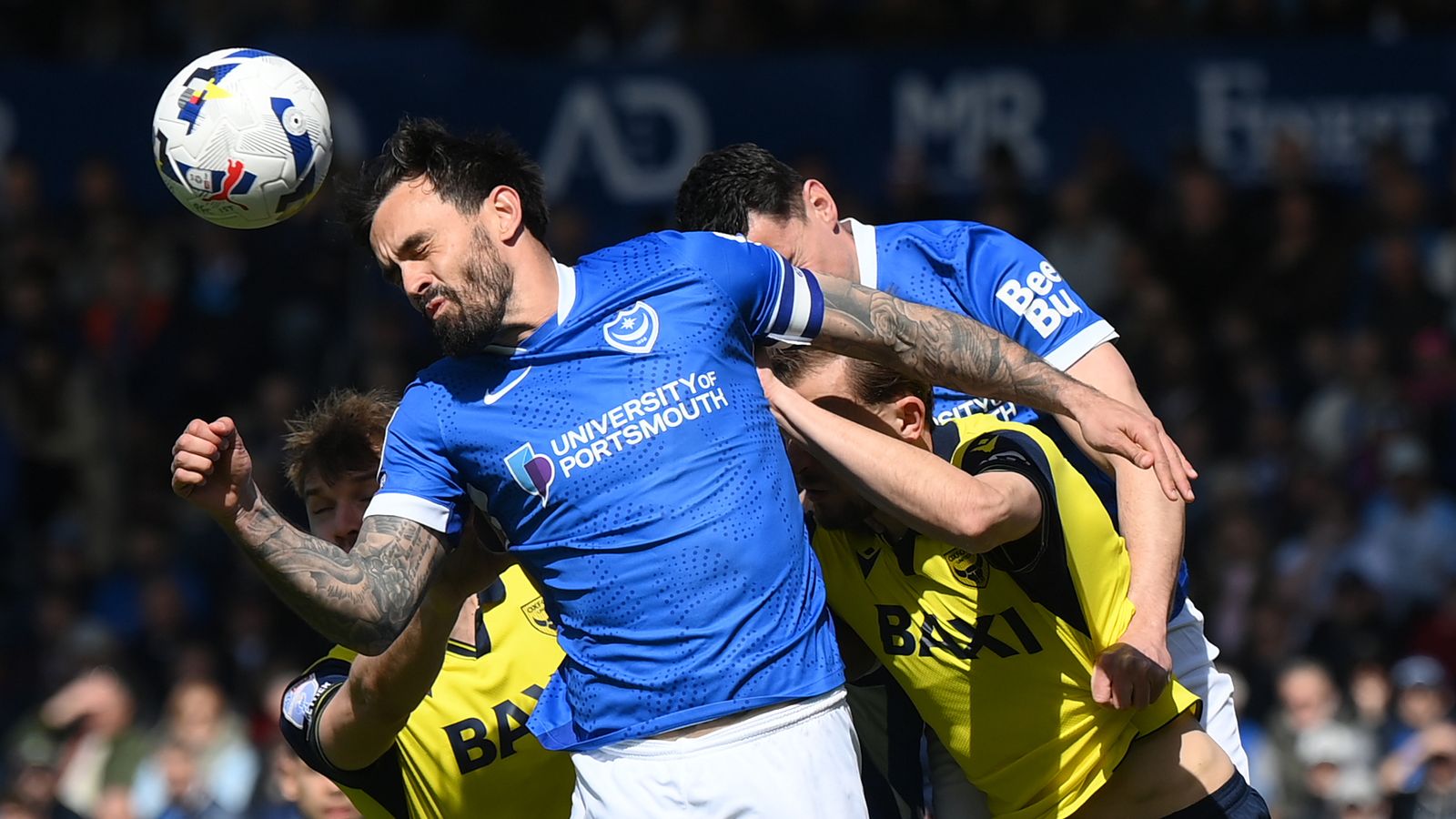
Portsmouth find themselves in a precarious position at the foot of the Championship table. With the season entering its final act, the club is grappling with a thinning squad that lacks the depth required for a high-intensity survival sprint. The recent draw against Oxford highlighted both the resilience of the group and the fragility of their current selection options.
Managerial frustration stems from the lack of reinforcement in key areas. The defensive structure has looked increasingly brittle under pressure, relying on individual moments of luck rather than tactical consistency. When the backline is forced to shift due to mid-game tweaks, the drop-off in output is visible to anyone tracking the match-day data.
The cost of individual errors
The recent stalemate against Oxford underscored how quickly a game turns. A defensive miscommunication involving goalkeeper Schmid allowed Spencer to equalize, an error that directly reflects the tension within the squad. As Sky Sports reported, this singular lapse neutralized the positive momentum generated by the team's defensive scramble.
Schmid’s spill wasn't just a technical fluke—it was a symptom of a unit that is logging too many minutes with too little rotation. Fatigue leads to cognitive lapses. When players are pushed beyond their optimal physiological thresholds, the first things to go are concentration and technical ball handling. At this stage of the campaign, Pompey cannot afford the 1-1 scoreline that leaves them clinging to the bottom rungs.
Tactical implications for the run-in
The coaching staff must decide whether to rotate personnel or stick with a tired but chemistry-heavy starting eleven. History shows that managers who rely on the same core group during a relegation scrap often see a spike in soft-tissue injuries during the final four weeks. Muscle strains and fatigue-related issues are statistically more likely when players exceed 3,000 minutes in a single domestic season.
The strategic failure here lies in the club's inability to foster a squad that handles multiple absences. Relying on loan players or youth prospects to plug holes in April is a desperate gamble. If the medical department fails to stabilize the group before the next fixture, Portsmouth risks being overrun by better-resourced teams in the middle and bottom thirds of the table.
Comparing the current decline to historic precedents
Relegation battles are rarely lost on talent alone; they are lost in the medical room. Looking back at similar Championship struggles over the last five years, clubs that failed to manage their recovery protocols in March and April almost invariably dropped out of the division. The lack of depth creates a cycle of over-reliance and burnout that is almost impossible to arrest once the calendars hit mid-April.
There is also the matter of defensive accountability. While injuries are an external factor, professional squads are expected to mitigate the impact of absent starters through rigid positional discipline. Portsmouth has failed this test consistently. Their inability to keep a clean sheet against direct competitors suggests that the technical gulf is widening, not closing, as the season progresses.
What happens next
The immediate goal for the club is to get bodies back on the training pitch by Tuesday. Any setback to the current recovery timelines will essentially end their survival prospects. The coaching staff is reportedly looking at internal solutions to address the gap left by sidelined contributors, but options are exceptionally thin.
If Portsmouth is to avoid the drop, they must find a way to maintain focus until the 90th minute. Their current inability to close out matches after conceding the momentum indicates a psychological, as well as physical, plateau. Whether they can find the necessary energy for the final stretch remains the biggest question facing the organization.
Players struggling with fitness must prove their match readiness in the coming 48 hours. If the training intensity remains low due to injury management, the performance on the pitch will inevitably suffer. The club is currently navigating a period where every training decision has a direct impact on their league status.
Fans should expect minimal changes to the lineup regardless of the fitness status. Sticking with the familiar, even if suboptimal, is the preferred path for managers under fire. It is rarely the most efficient long-term strategy, but it is the reality of a survival race where stability is prioritized over tactical evolution.
Read Next
- Portsmouth are slipping into a classic Championship nightmare
- Portsmouth’s survival scrap highlights the need for January reinforcements
- Arsenal face mounting pressure as medical staff confirm latest setbacks
- Daniel Farke has bigger problems than just a penalty dispute
- 🏟 EFL Championship 2025-26 — Promotion Race & Play-Off Final Hub