
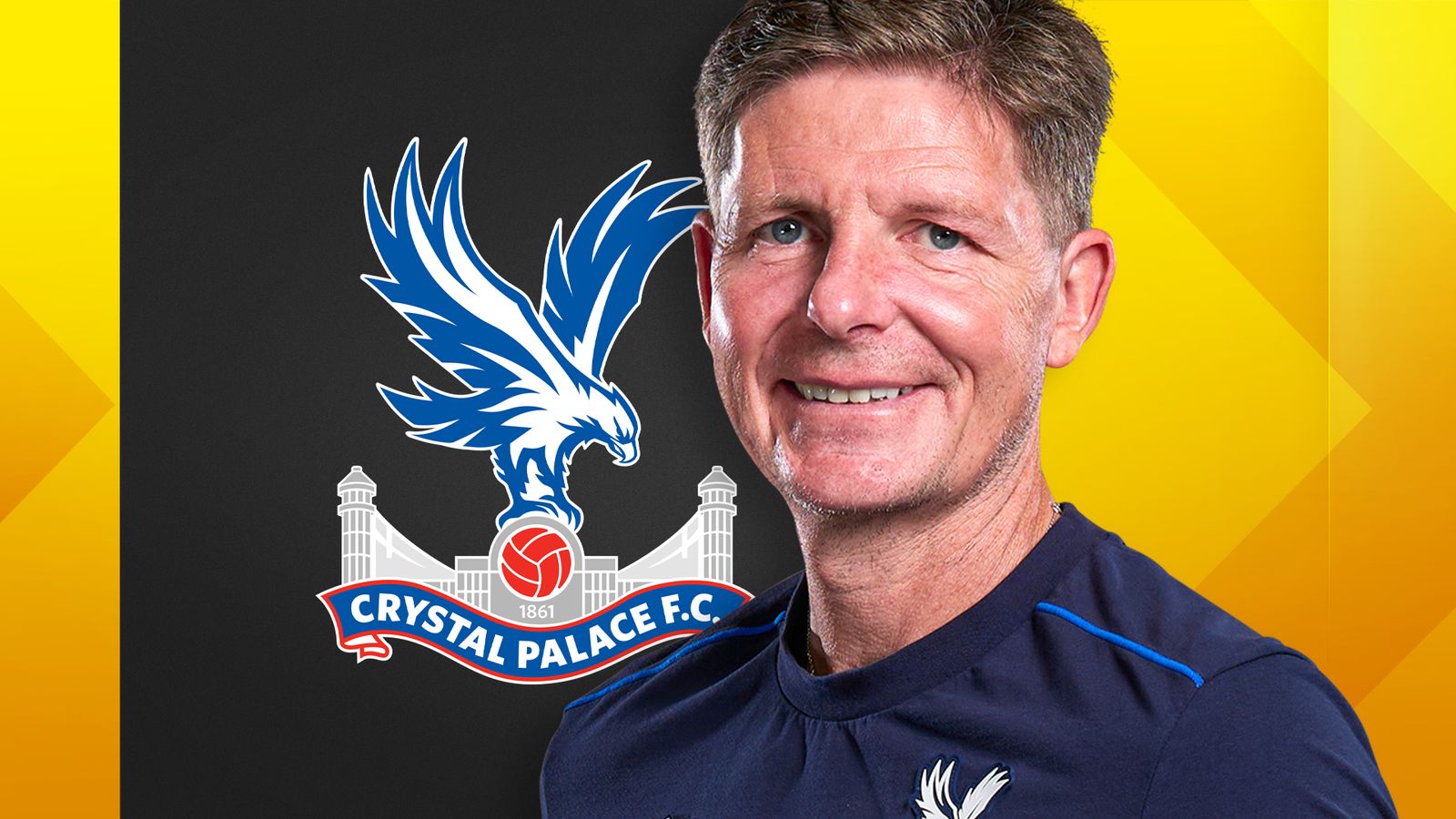
A South London Dream Realized
The final whistle blew, and South London erupted. Crystal Palace are heading to a European final. Manager Oliver Glasner faced the media in the immediate aftermath of the semi-final triumph. He kept his assessment characteristically grounded but entirely accurate.
"This is a huge achievement for the club," Glasner noted, recognizing the magnitude of the moment.
This is uncharted territory for the Eagles. A club that has spent the better part of a decade celebrating the mathematical certainty of Premier League survival in mid-April is now booking flights for a continental showpiece. The sheer scale of this run is staggering when you consider where Palace were just eighteen months ago.
Glasner was brought in to elevate the ceiling at Selhurst Park. The floor was established by Roy Hodgson. That was a sturdy, unglamorous foundation that kept the television money rolling in. But the ownership group wanted more than mere existence. They wanted nights exactly like this.
The Austrian tactician has delivered on that mandate faster than anyone reasonably expected. He translated his knockout tournament pedigree from his Eintracht Frankfurt days directly to South London.
The Tactical Overhaul
The tactical shift under Glasner has been severe and unyielding. Palace moved away from a low-block, counter-attack heavy approach. They adopted an aggressive, front-foot 3-4-2-1 system. This wasn't a gradual phasing in of ideas. It was a hard reset.
The wing-backs were pushed high. The center-backs were asked to step into midfield to win the ball. The pressing triggers became sharp and defined. In Europe, this system has been a complete nightmare for opponents to solve.
Continental teams often expect English sides outside the traditional top six to play a physical, direct, and slightly archaic game. Instead, Palace have smothered teams with organized high pressing and surgical transitions. Adam Wharton has been the undisputed metronome in the middle of the pitch. He intercepts loose passes and immediately finds the attacking midfielders in the dangerous half-spaces.
Eberechi Eze has thrived brilliantly in this setup. Operating centrally rather than being isolated out wide, Eze receives the ball with multiple options ahead of him. His ball-carrying ability breaks defensive lines instantly. He turns defensive situations into dangerous attacks within seconds. When opposing teams drop deep to deny Eze space, Palace have simply utilized the physical dominance of Jean-Philippe Mateta in the penalty box.
The Domestic Collapse
But this European adventure has not been without its serious, glaring flaws. Palace’s domestic form has completely cratered during these knockout rounds. The squad depth is simply not there to fight effectively on two fronts.
When Glasner is forced to rotate his starting eleven, the drop-off in quality is incredibly steep. In recent weeks, the Eagles have looked utterly exhausted in Premier League fixtures. They have dropped cheap points to relegation-threatened sides. Worse, they have shown a startling vulnerability defending set-pieces, conceding sloppy goals from corners and wide free-kicks.
The medical department has been working overtime behind the scenes. Glasner's high-intensity system demands absolute peak physical conditioning. Asking the exact same starting eleven to play Thursday nights in Eastern Europe and Sunday afternoons in the Premier League has resulted in a string of muscular injuries.
Management effectively made a ruthless choice a month ago. They punted the league games. They secured just enough points to stay clear of the drop zone, and then threw every remaining ounce of energy into the European cup run. It was a massive gamble. The underlying data shows Palace conceding far more high-danger chances in the league since March.
A Club Transformed
Despite the domestic slide, the gamble has paid off spectacularly. The atmosphere around Selhurst Park has completely shifted. The Holmesdale Road End, always one of the most vocal stands in England, has turned European nights into a hostile, deafening experience for visiting teams.
The flares, the relentless noise, the sheer hostility. Palace have made South London an absolute fortress during this run. The significance of reaching a European final cannot be overstated for a club of this specific size and stature.
Palace’s history is dotted with near-misses and deep heartbreak. The 1990 FA Cup final loss to Manchester United still stings older fans. The 2016 FA Cup final loss, again to Manchester United, frustrated a new generation. They do not have a trophy cabinet overflowing with silverware. For years, the primary source of pride has been staying in the top flight while watching local rivals drop into the Championship.
Now, they have a legitimate chance at actual glory. The financial implications are also massive. A European trophy brings guaranteed qualification for continental football the following season. This elevates the club's profile internationally. It makes it significantly easier to recruit top-tier talent.
Looking Ahead to the Final
Players who might have viewed Palace as a brief stepping stone to a bigger club might now see it as a destination in itself. Glasner deserves immense credit for fundamentally changing the mentality inside the building.
When he arrived, the press room at the training ground was filled with nervous talk of survival and avoiding a relegation scrap. He immediately shut that down. He spoke about ambition. He demanded his squad look up the table, not down.
He didn't view Palace as a small club punching above its weight. He viewed it as an underperforming asset that needed to be ruthlessly optimized. The upcoming final will be the biggest game in the club's modern history.
The pressure will be immense. Palace will face a team with significantly more European pedigree. They will be the unquestioned underdogs. But Glasner's teams are built for these exact, high-stakes scenarios.
The Legacy of the Run
Eintracht Frankfurt were heavy underdogs when they won the Europa League four years ago. They thrived on the doubt. They used it to fuel their relentless pressing game. Tactically, the final will likely be decided in the midfield transition phases.
If Wharton can disrupt the opponent's build-up play and quickly find Eze, Palace will create high-quality chances. If they are forced into a low block and have to defend their penalty area for ninety minutes, those set-piece vulnerabilities will be exposed. It will be a tightrope walk.
You have to look at the broader context of English football to understand why this matters. The Premier League is increasingly dominated by enormous wealth. Breaking the established hierarchy is near impossible. Domestic cups are usually hoovered up by a select few.
For a club like Crystal Palace, operating on a relatively strict budget, the European knockout formats offer the only realistic path to a major trophy. Glasner recognized this inefficiency in the market. He knew that out-working and out-pressing continental teams was a viable strategy.
He stripped away the fear that usually accompanies English teams traveling abroad. He made his players believe they could impose their will on the game, regardless of the venue. The footage of Palace players celebrating in front of their traveling fans after the semi-final will be played on screens around Selhurst Park for decades.
But Glasner knows the job is not done. Reaching a final is a great story. Winning it makes you legends. The next two weeks will be about managing fitness, hiding tactical wrinkles, and keeping the squad completely focused. They have the opportunity to turn a "huge achievement" into an immortal one.
