The City Ground Sideshow
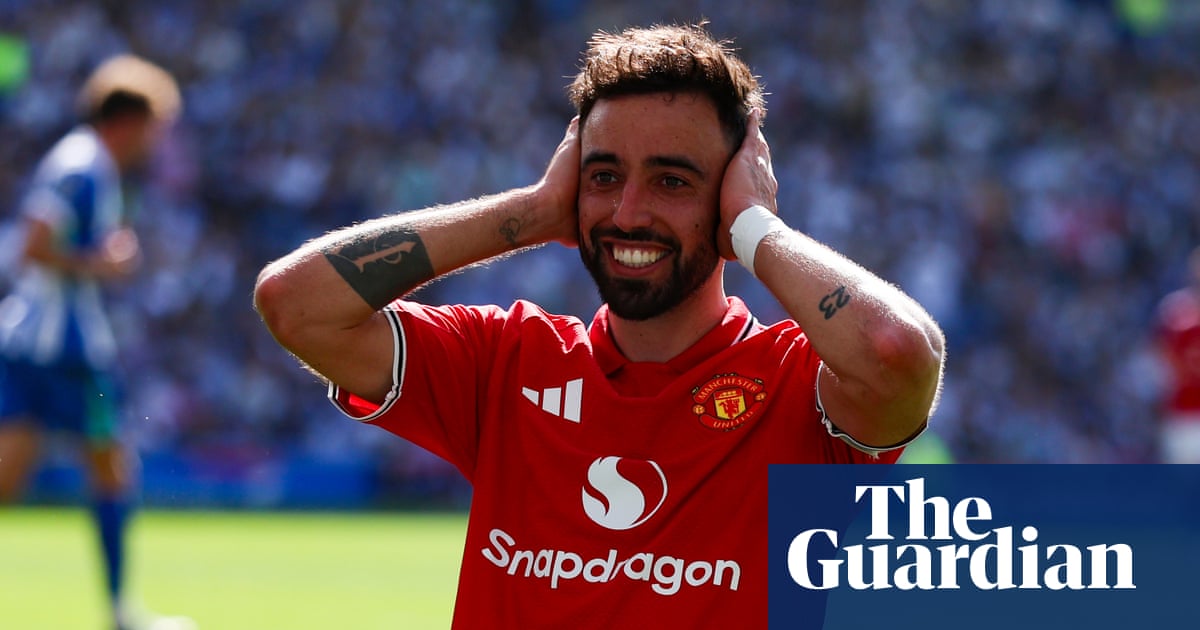
Roy Keane is furious again. It is a sentence that could have been written on almost any Monday morning over the last decade, but this time, the target is Manchester United captain Bruno Fernandes. Following United's clash with Nottingham Forest on Sunday, the former captain unleashed a blistering critique of what he called a "circus act" surrounding Fernandes, as reported by Sky Sports.
The rant was vintage Keane. It was loud, it was uncompromising, and it cut straight to the core of what he believes is fundamentally wrong with the modern iteration of Manchester United. But according to reports from Metro, the Irishman might have let his anger cloud his fact-checking.
Still, right or wrong on the specifics, Keane’s explosion has ignited a massive debate. It highlights a growing friction between the era of individual statistical obsession and the team-first mentality that built the United dynasty.
Chasing Numbers
Manchester United's trip to face Nottingham Forest was supposed to be a straightforward affair. Instead, it became the stage for a bizarre narrative. As the game wore on, Keane observed that the focus was shifting. It wasn't just about securing the win; it was about feeding Fernandes.
Keane watched from the studio, and his frustration visibly spiked. He saw players making unnatural decisions, forcing passes, and overcomplicating simple attacking moves just to ensure Fernandes was the one providing the final ball.
"Circus act."
Those were the exact words Keane used. He didn't hold back, ripping into the behaviour of both Fernandes and his teammates, an incident detailed by the Mirror. For Keane, the pitch is a place for ruthless efficiency, not statistical vanity projects.
The idea that a professional football team would compromise its natural rhythm to chase an individual accolade is anathema to everything Keane stands for. He viewed it as a stark betrayal of the club's foundational ethos.
The Metro Steps In: Did Keane Miss The Mark?
But here is where the story gets complicated. While Keane's outrage made for spectacular television, the foundations of his argument might be shaky. Metro quickly pointed out that the angry pundit got his facts wrong regarding the actual assist record pursuit.
Was Fernandes really that close to breaking a historic milestone? Were the players genuinely instructed to feed him, or was it just a symptom of a disjointed attacking display against a stubborn Forest defense? Keane saw vanity; others simply saw bad decision-making in the final third.
This isn't the first time Keane has fired from the hip without checking his ammunition. His punditry is built on raw emotion and instinct. When he sees something that violates his code, he attacks. The exact mathematical details are often secondary to the broader point he is trying to make.
Yet, this factual misstep provides a shield for Fernandes. His defenders can easily dismiss the entire rant as another exaggerated episode of a grumpy former player yelling at clouds. It softens the blow of a critique that raises completely valid questions about the current leadership at Old Trafford.
The Modern Obsession With Data
Even if the specifics were slightly off, Keane has accidentally stumbled onto a massive issue plaguing modern football. We live in an era obsessed with data. Assists, expected goals, key passes—these metrics often overshadow the actual flow and result of the match.
You can see it in the post-match discourse every single weekend. Fans and pundits alike pull up heat maps and pass completion graphs to justify a player's worth, often completely ignoring the eye test. The actual flow of the 90 minutes is reduced to a spreadsheet. Fernandes is the poster boy for this shift.
Fernandes is a player who thrives on these numbers. His output since arriving in Manchester has been statistically phenomenal. But Keane's rant asks a demanding question: at what cost to the overall system?
When the pursuit of a personal assist record dictates the flow of a game, the team suffers. It creates a predictable attack. Defenders know where the ball is supposed to go, making it far easier to disrupt the rhythm and force turnovers.
Against Nottingham Forest, this predictability was glaring. Instead of making the simple, effective pass, players seemed to be looking for the Hollywood ball to Fernandes, hoping he could then provide the killer assist. It is a convoluted way to play professional football.
This individualistic approach is a far cry from the ruthless, collective machine that Sir Alex Ferguson built. In that era, the only statistic that mattered was the final score on the board. If a player prioritized their own numbers over the team's success, they were quickly shown the door.
A Clash of Generations
The clash between Keane and Fernandes is more than just a pundit criticizing a player. It is a collision of two completely different footballing philosophies. It is the old school meeting the highlight-reel generation.
Keane represents an era where leadership was about setting standards, enforcing discipline, and dragging the team over the line by any means necessary. Captaincy wasn't about being the most talented player; it was about being the most relentless.
Fernandes is a distinctly modern captain. He leads through his technical ability and his emotional, often frantic, on-pitch demeanor. He waves his arms, he complains to the referee, and he chases every statistical milestone available.
Neither approach is inherently wrong in isolation, but they are incompatible in Keane's eyes. Keane looks at Fernandes and sees a player who is too wrapped up in his own narrative. Fernandes likely views Keane's criticisms as the outdated ramblings of a man out of touch with the modern game.
This divide isn't just external; it exists within the Manchester United dressing room. The squad is a mix of young, stats-conscious players and a system struggling to maintain a semblance of traditional elite standards. The resulting tension often spills out onto the pitch.
The Root of the Problem
The performance against Nottingham Forest is not an isolated incident. It is a symptom of a deeper malaise that has infected Manchester United for years. The club has consistently struggled to forge a cohesive identity under Erik ten Hag.
They are a team without a clear tactical philosophy, relying heavily on moments of individual brilliance rather than cohesive team play. When the system fails, they revert to forcing the ball to their star players and hoping for a miracle.
This environment breeds the exact behavior Keane despises. When there is no clear structure, players fall back on their instincts. For Fernandes, that instinct is to chase the ball, force every pass, and pad his stats.
It is a damning indictment of the coaching and the broader recruitment strategy. United have assembled a collection of expensive individuals rather than a functioning team. The alleged pursuit of the assist record was just the latest, most glaring example of this fundamental flaw.
Looking Ahead to the Summer
Adding to the tension is the impending timeline. With the FA Cup Final having just passed and the season winding down, the scrutiny on every single action is magnified. Manchester United don't have the luxury of time to figure this out; they need immediate solutions.
The 2026 season is effectively over, but the autopsy is just beginning. The noise surrounding the captaincy is only going to amplify over the coming weeks. If ten Hag remains in the dugout, he has to address this disconnect immediately.
The looming summer transfer window is their only escape route. Sir Jim Ratcliffe and the INEOS group are reportedly watching everything closely. If the primary takeaway from the final weeks of the season is that the captain is prioritizing personal stats over the badge, heads will roll.
It is a precarious position for a club that should be preparing a serious assault on the title next year. Instead, they are stuck debating whether their best player is actually detrimental to the tactical framework.
If they are to challenge for major honors again, they need to eradicate this disjointed mentality. They need players who are willing to sacrifice personal glory for the collective good. They need a system that doesn't rely on one player providing all the creative output.
Keane might have been wrong about the specific facts of the assist record against Forest. He might have been overly harsh in his aggressive delivery. But the underlying message of his rant is undeniable and demands attention.
Manchester United cannot continue down this path. The obsession with individual milestones and the lack of collective responsibility are a recipe for continued mediocrity. Until they rediscover the team-first ethos that defined their glory years, Keane will have plenty more reasons to be furious.
The irony, of course, is that Fernandes is undeniably their best player. Removing him from the equation isn't the answer. The challenge for the manager is to channel his undeniable talent into a system that benefits the team, rather than a system designed simply to inflate his individual statistics.
Until that happens, the circus will continue. And Roy Keane will be right there in the studio, ready to tear it down.
Read Next
- Keane's 'Circus Act': Is Bruno Chasing Records While United Burn?
- West Ham's summer is shaping up to be a total fire sale
- Vultures circle West Ham as relegation threatens to force Bowen exit
- Michael Carrick is not a charity for Manchester United's transfer window
- 🇵🇹 Portugal World Cup 2026 — A Seleção Hub
- 🏆 Europa League Final 2026 — Full Coverage Hub