Champions League semi-finals are decided in fractions of a second. You can plan for months, drill shapes until players see passing lanes in their sleep, and analyze expected goals data until your eyes bleed. Yet, when the ball drops in the penalty area, all that preparation yields to pure instinct.
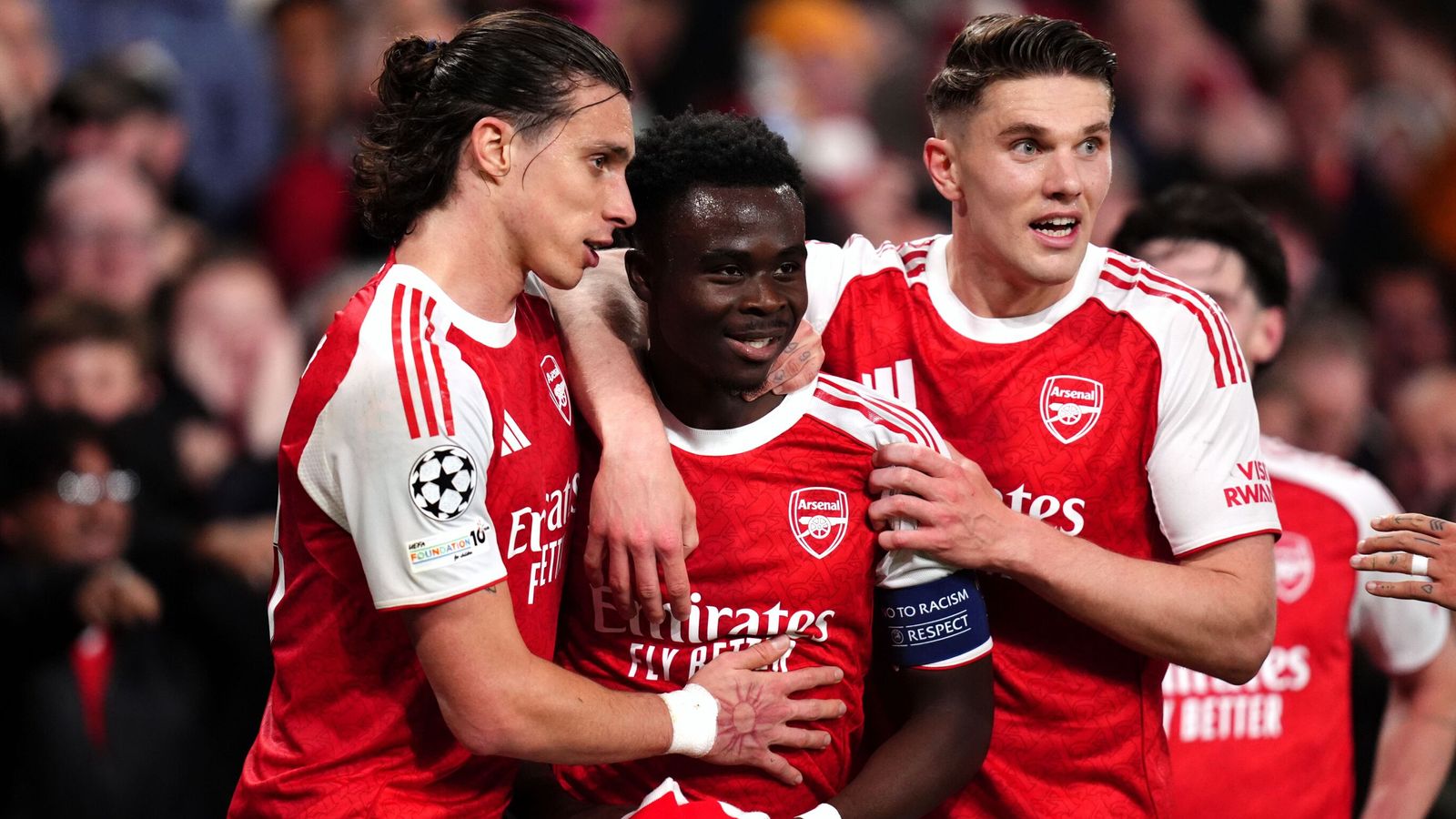
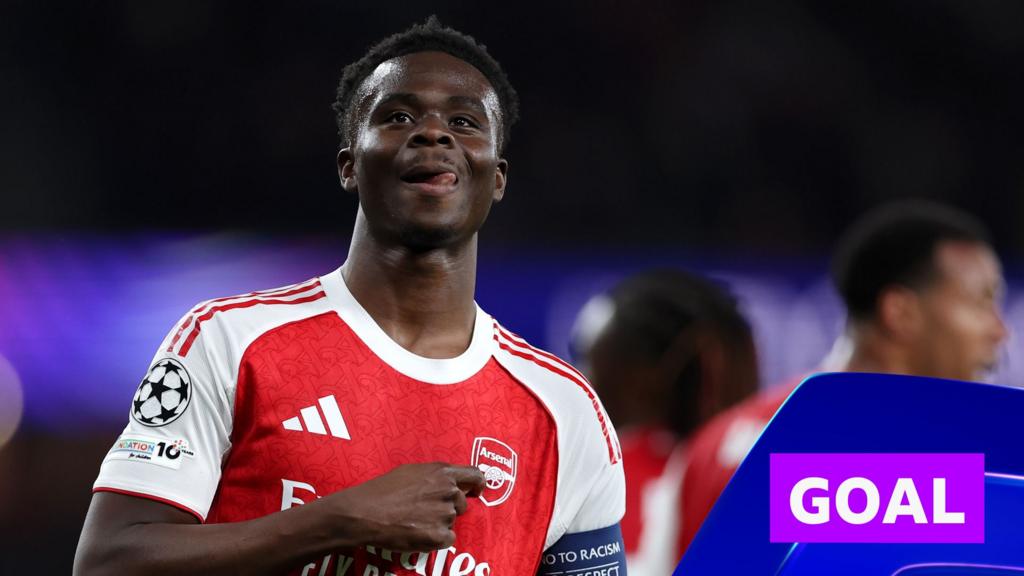
That was the reality at the Emirates Stadium. Bukayo Saka reacted fastest to give Arsenal a massive advantage against Atletico Madrid. It wasn't a sweeping team move consisting of 25 uninterrupted passes.
As the BBC documented, it was a scrappy, necessary intervention. Leandro Trossard unleashed a shot, Jan Oblak made the initial save, and Saka was there to mop up the rebound from close range. Arsenal walked away with a 1-0 lead on the night in this second leg, shifting the entire tactical burden onto Diego Simeone’s men.
When you look at the raw numbers of European knockout ties, the team that scores first advances over 70 percent of the time. This is not just a lead; it is a statistical stranglehold on the tie. Arsenal now dictate the terms of engagement.
The Simeone Problem
Breaking down Atletico Madrid is notoriously miserable work. For over a decade, Simeone has perfected the art of defensive suffering. His teams sit in a compact 4-4-2 block, clogging the center of the pitch and forcing opponents into harmless wide areas.
They do not care about your possession stats or how many passes you string together in the middle third. They actively want you to shuffle the ball side-to-side 40 yards from goal. Arsenal, a squad that thrives on intricate passing patterns and finding the half-spaces, were always going to find this matchup profoundly irritating.
When you do manage to bypass the midfield line, you still have to beat Jan Oblak. The veteran goalkeeper has spent his career organizing the defense in front of him and swallowing up low-percentage shots. You rarely get a clean look at his net, and his save percentage on shots inside the box has consistently ranked among Europe's elite.
That is why Arsenal’s approach had to adapt to the grim reality of the fixture. Trying to walk the ball in against a team that routinely puts eight men inside their own 18-yard box is a fool's errand. You have to manufacture chaos.
Three paths through a low block
Elite possession teams typically rely on three specific mechanisms to break down a bunkered defense:
- Rapid switch of play to isolate a fullback 1-on-1.
- Third-man runs from deep midfield positions.
- Deliberate shots on target to generate second balls and scramble the defensive shape.
Arsenal leaned heavily on the third option. They stopped looking for the perfect final pass and started testing Oblak’s handling.
Trossard's Catalyst
This brings us to the buildup of the goal and the catalyst for the chaos. Trossard’s initial shot deserves harsh scrutiny. In truth, it was a surprisingly poor decision and a mediocre execution.
The strike lacked the vicious bend or extreme placement required to beat an elite goalkeeper clean. Trossard essentially drove it centrally, right at a comfortable height for Oblak. Arsenal had bodies arriving late in much better crossing positions, making the shot a selfish, low-probability choice.
From a purely analytical standpoint, opting to shoot from that angle when better passing lanes were developing is highly questionable. It is the kind of decision that frustrates managers when it blazes into the stands.
However, a shot on target against a low block sometimes serves a totally different functional purpose. It aggressively disrupts the defensive structure. When the ball leaves the attacker's boot, defenders naturally drop deeper, turning their bodies toward their own goal and losing track of their markers. They enter reaction mode, abandoning their carefully organized zonal marking system to watch the flight of the ball.
Oblak parried the ball, pushing it back into the danger zone instead of tipping it safely around the post or over the crossbar. This is the exact moment where defensive schemes entirely collapse. You cannot drill a set defensive shape for a rebounding ball; it is pure, unscripted panic.
The Anatomy of the Rebound
The conversion of second balls is an undervalued metric in elite football analysis. Most observers focus heavily on the expected goals (xG) from the initial shot, completely ignoring the massive mathematical advantage of the ensuing chaos. When a goalkeeper spills a shot, the xG of a rebound shot skyrockets, provided an attacker is there to meet it. The probability of scoring jumps dramatically because the goalkeeper is grounded and the defensive line is facing their own net.
Saka’s anticipation was statistically anomalous. Before Trossard even made contact with the ball, Saka was already drifting aggressively inside from his starting right-wing position. He was not waiting to see if Oblak would save it; he acted on the assumption that a save was coming and a rebound would fall. This is the difference between reactive attacking and proactive attacking.
Atletico’s defenders, typically so rigidly disciplined under Simeone's meticulous coaching, were caught completely flat-footed. They ball-watched the flight of the initial shot rather than tracking runners on their blind side. Saka ghosted past his assigned marker, completely untracked, and arrived in the 6-yard box carrying maximum forward momentum. It was a failure of basic defensive awareness from a team that usually prides itself on exactly that.
Putting the ball in the net from close range seems like the simplest task in football. It is anything but simple in reality. The ball comes at you fast, often with awkward spin, and the atmospheric pressure of a massive European night is immense. Saka kept his composure, slotting it home before Oblak could recover his footing or a defender could block the lane.
Saka's Evolution
This single sequence highlights a massive shift in Saka’s overall attacking profile. In his early years breaking into the first team, he operated as a classic touchline winger. He would beat his man on the outside, hit the byline, and deliver crosses into the penalty area.
Now, the 24-year-old plays with the ruthless, single-minded mentality of a traditional center-forward. Elite wide players share this exact evolutionary trait. They do not just create chances for others; they arrive late in the penalty box to finish moves themselves.
By making that sharp diagonal run off the right flank, Saka adds an extra, unaccounted-for body to the attack where it hurts the opponent most. Arsenal increasingly rely on this specific off-the-ball movement to overload opposing central defenders. It is a tactical wrinkle that makes them incredibly difficult to predict and track.
If Saka had simply held his width, remaining disciplined to his starting position, Oblak would have gathered that rebound unopposed. Alternatively, a recovering defender would have hacked it clear. Because Saka broke his positional rules to hunt for the scrap, Arsenal changed the trajectory of the tie.
The Final Hurdle
The job, of course, is not entirely finished. Arsenal still have to manage the remainder of this high-stakes tie against a team that will now be forced out of their comfort zone. Atletico Madrid chasing a game with attacking intent is a fundamentally different beast than Atletico Madrid protecting a 0-0 draw.
Simeone will eventually have to abandon his preferred deep block and commit bodies forward into the attacking third. This tactical shift will leave glaring spaces in behind, spaces that Arsenal’s pacier forwards will be eager to exploit on the counter-attack. The tactical dynamic of the match has completely flipped on its head.
If Arsenal can maintain their defensive solidity and hold their nerve, a trip to the Champions League final on May 28 awaits them. They have spent the last few seasons building a young squad theoretically capable of competing on this exact stage. Tonight, they proved they possess the gritty, opportunistic streak required to actually win on it.
Saka's reaction time was measured in mere fractions of a second. Yet, the impact of that single, chaotic moment could easily define Arsenal's entire season.
Read Next