A Disrupted Micro-Cycle
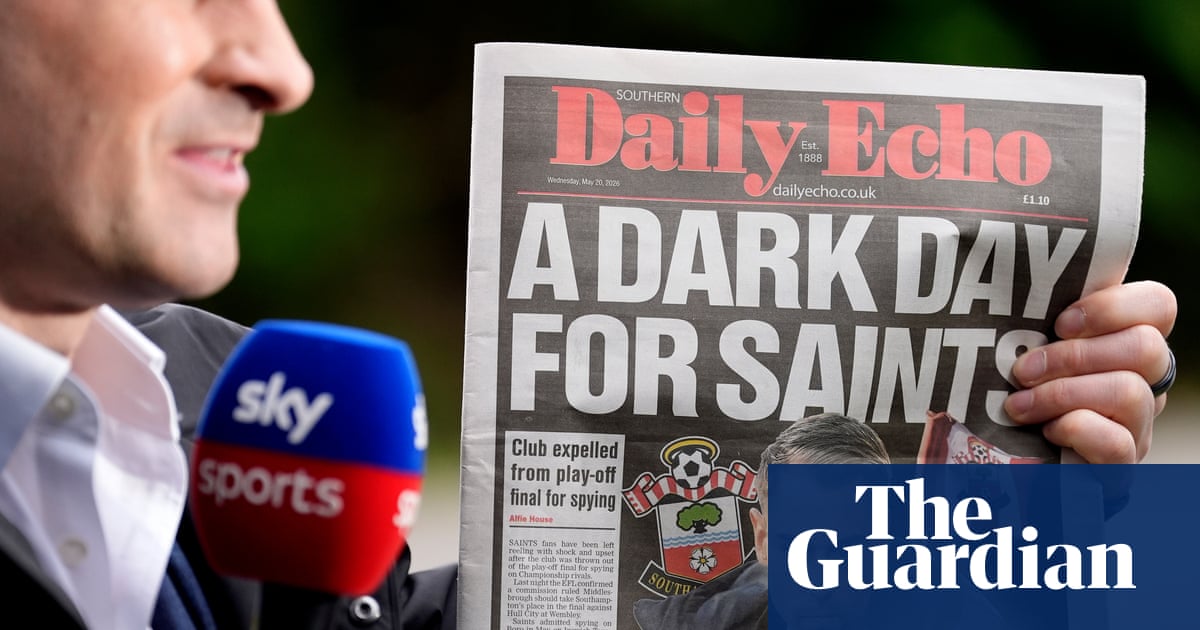
Southampton are out of the play-off final. The EFL officially expelled them after finding the club guilty of severe rule breaches in a Spygate scandal, capturing the attention of executives nationwide. But down in the training grounds, far from the boardrooms, this administrative decision has created a totally different crisis.
For a football medical department, the days leading up to a play-off final involve building a rigid physical periodization model designed specifically for one opponent. Hull City spent the last fortnight preparing to face Southampton's specific pressing triggers, possession patterns, and transition speeds. Now, with a late change in opponent, that entire physical preparation is effectively useless.
Changing an opponent at the eleventh hour alters the expected physical load of the match entirely. Preparing for a team that dominates the ball requires a dramatically different metabolic conditioning profile than preparing for a direct, counter-attacking side that plays heavily in the air. Hull's sports science staff must now tear up their established tapering schedule and scramble to adjust match readiness on incredibly short notice.
The fundamental principle of elite football fitness is predictability. You load the players heavily early in the week to simulate the specific physical demands of the upcoming game, then taper off to ensure they peak on match day. When the opponent changes, the required physical profile changes, rendering the early-week micro-cycle entirely mismatched to the reality of the fixture.
The Owner's Fury and Legal Precedent
While the fitness coaches panic and recalibrate GPS trackers, the boardroom is going to war. Hull City's owner is furious with the entire situation. According to reports from the Mirror, the club's legal team genuinely believes the chaotic circumstances warrant an automatic promotion to the Premier League, rather than forcing Hull to play a replacement team at Wembley.
The argument originating from Hull's camp is straightforward but powerful. They prepared in good faith for a specific opponent that has now been proven to have broken the rules to gain an illicit advantage. Forcing Hull to face a late replacement—rumored to be Middlesbrough based on the fallout—puts Hull at a massive, unfair disadvantage due to the entirely disrupted preparation.
There is a massive financial disparity between the Championship and the Premier League, with the play-off final frequently billed as a £140 million fixture. Demanding a team play this match under compromised physical and tactical preparation is an unacceptable risk for the club's overall valuation. The lawyers argue that the sporting integrity of the final is already gone.
We have seen espionage in the English Football League before, most notably when Marcelo Bielsa's Leeds United dominated headlines in 2019 for spying on Derby County's training sessions. That incident resulted in a lengthy PowerPoint presentation from Bielsa and a massive fine from the authorities. However, expelling a team from the play-off final entirely is an unprecedented escalation by the governing body.
The closest structural equivalent in terms of legal chaos is the 2007 Carlos Tevez saga, where Sheffield United pursued massive financial compensation from West Ham after third-party ownership rules were breached. It proved that off-pitch rule breaches can lead to astronomical compensation claims if a club feels financially prejudiced. If Hull are forced to play this altered final and lose, the EFL should absolutely prepare for a lawsuit that will dwarf the Tevez settlement.
The EFL dragged its feet on this investigation. If Southampton were under serious suspicion of a Spygate breach, the investigation should have concluded before the play-off semi-finals even kicked off. Allowing them to progress to the final before dropping the axe is pure administrative incompetence that prevents either remaining team from preparing safely.
The Physical Toll of Unpredictability
The physiological risk profile for Hull City has now skyrocketed into unprecedented territory. When you prepare for a specific match, your central nervous system and muscular endurance are peaked precisely for that exact date and tactical requirement. Asking them to suddenly sit deep or play a transitional game against a different opponent changes the eccentric muscle loading completely, placing immense stress on the joints.
We saw a terrifying glimpse of this physical chaos during the 2020 Covid restart, where schedules were thrown together at the last minute and preparation time essentially vanished. Muscle injury rates—particularly high-grade hamstring and groin strains—spiked across the entire league as players were forced into high-intensity matches without adequate, opponent-specific preparation. This exact injury risk profile is what Hull City's squad is facing right now.
Consider the absolutely terrifying medical situation for the replacement team. Assuming Middlesbrough steps into the void to play the final, their squad members have likely been in off-season mode for weeks, far removed from competitive training. You cannot simply pull professional athletes off a beach, put them in boots, and throw them into a high-stakes play-off final without severe, immediate physical consequences.
The detraining effect begins within mere days of stopping high-intensity interval work. If the replacement squad has not been maintaining strict match fitness, their tissue resilience is severely and dangerously compromised. Throwing completely unprepared players into a frantic 90-minute fixture is a guaranteed recipe for severe soft tissue injuries, tendon ruptures, and potential long-term career damage.
What Happens Next on the Training Pitch
The EFL's decision shows a complete disregard for player welfare. While punishing Southampton for their Spygate breaches is morally correct, you simply cannot alter the structure of a season-defining match at the last minute without putting athletes at immense physical risk. The replacement team's medical staff will be forced to clear players who are empirically unfit for elite competition.
For now, the medical and fitness departments at Hull City are working brutal overtime hours. They are running emergency hydration protocols, frantically adjusting sleep schedules, and trying to cram two weeks of tactical periodization into a few frantic days. Every single sprint, every deceleration, and every change of direction in training this week will be intensely scrutinized.
GPS tracking data will be analyzed frame by frame to ensure players are not entering the dangerous red zone of injury risk. The EFL has just taken every controllable athletic variable—opponent, tactical load, preparation timeline—and thrown it completely out the window. This is no longer just an administrative and legal scandal; it is a live, reckless experiment in how poorly managed football administration directly threatens physical health.
If a Hull City winger goes down clutching a torn hamstring in the 75th minute of this altered final, the blame will absolutely not lie with the fitness coaches. The fault will lie squarely at the feet of the executives who incompetently let this Spygate scandal drag on until the eleventh hour. Football is a precise physical science, and right now, the EFL is ignoring that science completely.