
The EFL's Spygate Sequel Is a Crisis of Its Own Making

The Hearing Room Becomes the Pitch
Tonight, in a sterile hearing room far from the mud and roar of a stadium, the English Football League will preside over a case that threatens to define its authority for the next decade. Southampton are appealing a punishment for an alleged act of espionage against a rival — a “Spygate” sequel that has the entire pyramid watching. But this isn't a simple procedural review. On the other side is Hull City, whose owner has publicly demanded the most extreme sanction available: expulsion from the league. It’s a demand so severe, so disproportionate to precedent, that it transforms a disciplinary hearing into an existential crisis for the EFL's governance.
This is more than a legal squabble. It’s a battle for the soul of the rulebook, a moment that will determine whether the EFL is a proactive governing body or one perpetually reacting to crises of its own creation. The ghost of Marcelo Bielsa and his bucket haunt these proceedings. The question is whether the league learned a single thing from that chaotic chapter.
A Precedent Ignored, A Vacuum Created
To understand the gravity of Hull's demand, we must rewind to the original Spygate in 2019. When a Leeds United staffer was found with binoculars outside Derby County's training ground, it triggered a firestorm of moral outrage. Bielsa, in a move of breathtaking transparency, responded by calling a press conference where he detailed the exhaustive, almost pathological, extent of his opposition analysis. He argued, compellingly to some, that he hadn't broken a specific rule, and that the information gained was marginal anyway. He'd done it for years.
The EFL was paralyzed. Was it poor sportsmanship? Unquestionably. Was it explicitly illegal under their statutes? No. After weeks of deliberation, they fined Leeds a mere £200,000 — a punishment that, notably, was for failing to act in “good faith” rather than for the act of spying itself. The message was ambiguous: it was wrong, but not *that* wrong. It was a cost of doing business, not a foundational breach of integrity.
That ambiguity created a vacuum. Instead of codifying a clear, punitive rule against training ground espionage with a pre-defined tariff of sanctions — a major points deduction, for instance — the EFL kicked the can down the road. They hoped the controversy alone would be a deterrent. It wasn't. Now, with Southampton in the dock for a similar alleged offense, that failure to legislate has come home to roost. Hull's owner, seeing no clear and painful punishment on the books, has reached for the nuclear option. He is filling the void the EFL left behind, and the league has only itself to blame.
The Chaos of the Nuclear Option
Let's be clear: the demand for expulsion is theater. It is an anchor point in a negotiation, a maximalist position designed to force the independent panel's hand towards a harsher penalty than they might otherwise consider. Actually ejecting a club from the league mid-season would be an act of self-immolation for the EFL. It would trigger a tidal wave of legal challenges, not just from the expelled club but from every team whose position in the table was affected by the voiding of results.
What happens to broadcast contracts predicated on a certain number of games? What of the players at the expelled club, their careers thrown into limbo? The logistical and legal fallout would be catastrophic. The panel knows this. Hull's owner almost certainly knows this. But the fact that the demand can even be made with a straight face exposes the weakness at the heart of the EFL's disciplinary framework.
My critical take is this: the EFL's handling of the Bielsa affair was a masterclass in indecision. By opting for a vague, vibes-based punishment, they failed to send a clear signal. Now, a club owner feels empowered to demand a sanction that would effectively invalidate the competition. This isn't a sign of a healthy, well-regulated league; it's a symptom of a power vacuum where individual actors believe they can dictate terms because the central authority is perceived as weak and reactive.
An Impossible Tightrope Walk
The independent panel is now in an impossible position. If they hand Southampton a lenient punishment — another fine, a slap on the wrist — they confirm that the Bielsa precedent holds. They send a message to all 71 other clubs that the reward of illicitly gained information (however marginal) outweighs the financial risk. The practice will continue, and the next Spygate will be just around the corner.
But if they bow to the pressure and impose a truly draconian penalty — a significant points deduction, for example — they risk being seen as making up the rules as they go along. Southampton's lawyers would, quite rightly, point to the Leeds case and ask: where is the consistency? Why does our client face a season-defining punishment for an offense that previously warranted a moderate fine? Without a specific rule on the books outlining the penalties, any severe punishment looks arbitrary and is ripe for a protracted and expensive legal challenge, potentially at the Court of Arbitration for Sport.
This is the trap the EFL has set for itself. By failing to create clear, black-and-white regulations in the wake of a predictable controversy, it has outsourced its legislative responsibility to a disciplinary panel. These panels are supposed to interpret rules, not invent them under duress. This entire hearing is a monumental failure of governance, long before the verdict is even read.
The Line Between Data and Deception
Zoom out from this specific case, and you see the real, underlying tension. Professional football is an information war. Clubs now employ entire armies of analysts, data scientists, and scouts. They spend millions on platforms like WyScout and Catapult, seeking any fractional advantage. Every pass, every sprint, every defensive action is logged, cataloged, and scrutinized. Opposition analysis is no longer a manager watching a VHS tape; it's a data-driven enterprise on an industrial scale.
In this environment, where is the ethical line? Watching a team’s previous games on video is standard practice. Compiling detailed statistical reports is essential. But what about sending a scout to a public training session? What about flying a commercially available drone over a walled-off facility? What about the act Southampton is accused of — allegedly having someone watch from a public thoroughfare?
The act of watching is not, in itself, illegal. The information is, theoretically, in the public domain. The outrage stems from a sense of violated privacy, an intrusion into the one place a team can prepare without prying eyes. The spirit of the game, we're told, is what's been broken. But “the spirit of the game” is a notoriously flimsy concept on which to build a legal framework. One club's dirty trick is another's due diligence.
Tonight's verdict will be tasked with drawing a line in this shifting sand. It will, by necessity, create a new precedent that every club in the country will study intently. The panel's decision won't just be about Southampton. It will be a message to the entire sport about what constitutes acceptable intelligence gathering in the modern era. The EFL had years to draw this line in peacetime. Instead, it will be drawn tonight, under fire, with the credibility of the competition hanging in the balance.
Read Next
- The Spygate Farce Repeats: Hull Are Right to Be Furious at a Toothless EFL
- Southampton's play-off Spygate disaster is absolute cinema
- Middlesbrough's Wembley return is a chaotic miracle Southampton cannot stop
- Steve McClaren in League Two is English football's strangest experiment
- 🏟 EFL Championship 2025-26 — Promotion Race & Play-Off Final Hub
- 🏆 Europa League Final 2026 — Full Coverage Hub
Adidas Trionda League Soccer Ball
Bring the magic of the 2026 World Cup to your local pitch with this match-grade
Frequently Asked Questions
What is the 'Spygate II' controversy involving Southampton?
Why is Hull City demanding Southampton's expulsion from the EFL?
What happened during the original 2019 Spygate scandal?
How did the EFL fail to address spying after the Marcelo Bielsa incident?
What penalty did Leeds United face for the first Spygate?
More Coverage

Michael Skubala takes the hot seat at Ashton Gate
3 hours ago
Lincoln City's joint-manager gamble is a blueprint for disaster
3 hours ago
Sunderland’s goalkeeper gamble could define their summer window
7 hours ago
Hull City's Premier League rise is built on pure chaos
1 day, 3 hours ago
The FA Cup disciplinary crisis is masking deeper issues
1 day, 4 hours ago
Hayden Hackney's Middlesbrough future looks increasingly uncertain
1 day, 5 hours agoMore Analysis
The Spygate Farce Repeats: Hull Are Right to Be Furious at a Toothless EFL
1 week, 2 days ago
Southampton's Spygate scandal is peak Championship chaos
2 weeks ago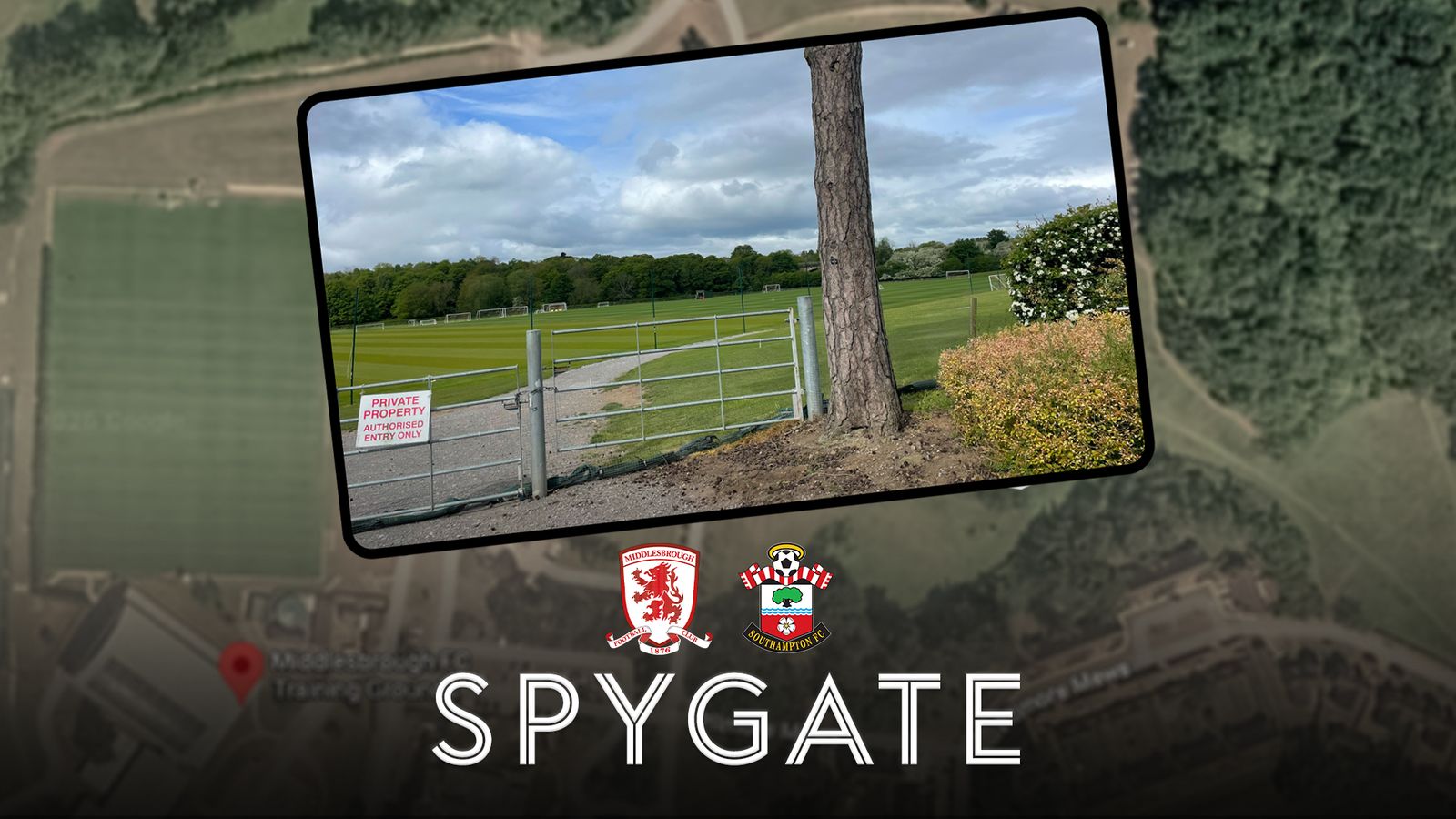
Southampton's spy game has broken the Championship play-offs
2 weeks ago
Southampton have nobody to blame but themselves after the Spygate fallout
1 week, 1 day ago