The quiet before the attrition
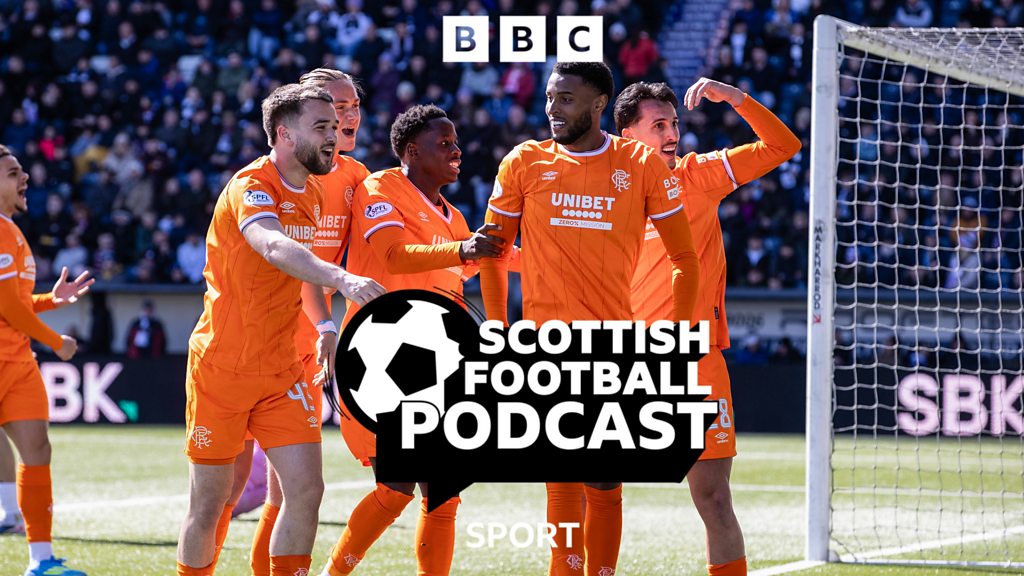
The weekend results confirmed the scenario every manager was secretly dreading. The top three all secured victories, freezing the points gap and ratcheting the pressure up another notch. As the BBC noted in their latest broadcast breakdown, the title race is intensifying precisely as the league hurtles toward the split. The margin for error has officially dropped to zero.
For those outside the ecosystem of Scottish football, the split is a uniquely unforgiving mechanism. You do not get to pad your goal difference against relegation candidates in May. After 33 games, the league neatly cleaves in two. The top six are locked into a miniature tournament against each other.
It is a five-game gauntlet that operates as a supreme lie detector for tactical systems. Teams that looked fluid and expansive in October routinely fall apart in this environment. You are playing your direct rivals consecutively, week after agonizing week. The psychological toll is immense.
The anomaly of the top three
What makes this specific April window fascinating is the presence of three teams consistently taking points. Historically, the Scottish title race is a binary equation. One team drops points, the other immediately capitalizes. The math is simple, and the narratives are deeply entrenched.
Having a third team actively winning matches at this late stage breaks the traditional models. It introduces a rogue variable into the title calculus. The third-placed squad does not need to win the league to entirely dictate where the trophy goes.
They act as kingmakers. They only need to organize one successful defensive block and steal a point from the leaders to blow the entire race wide open. Managers cannot simply plan for one rival anymore; they have to navigate a multi-front war.
The inevitable tactical regression
Here is the uncomfortable reality of the Scottish Premiership in late April. The football gets objectively worse. The tactical bravery we see earlier in the season completely vanishes under the weight of expectation. Managers who spent the winter preaching high-pressing, possession-based systems suddenly abandon their principles.
Another dramatic weekend in the Scottish Premiership as we head towards the split.
We see a chronic regression to survival football. Defensive lines drop ten yards deeper to protect against the transition. Full-backs are instructed to hold their positions rather than overlapping into the final third. The creative midfielders are bypassed entirely in favor of long, diagonal clearances.
It is fear-based football, driven by the knowledge that a single mistake can define an entire season. Look closely at the tactical shifts when the split fixtures begin:
- The immediate midfield bypass: center-backs looking directly for the channels.
- The collapse of the high press into a passive, risk-averse mid-block.
- An absolute over-reliance on wide overloads purely to force corners.
The underlying data always reflects this panic. Expected goals (xG) generated from open play plummets across the board. The games devolve into disjointed, physical battles decided by second balls and sheer luck. Nobody wants to lose, so nobody actually tries to win until the final ten minutes.
The VAR failure and the physical toll
The standard of officiating in these high-stakes matches rarely elevates the spectacle. Scottish football has struggled with the implementation of VAR, and the system buckles under the pressure of title-deciding fixtures. Every throw-in is contested. Every minor penalty box collision results in a lengthy review.
The flow of the game evaporates entirely. A simple penalty claim turns into a momentum-killing three-minute stoppage. The players cool down, the crowd grows toxic, and the actual football suffers immensely. It is a terrible product to watch when the stakes are highest.
Combine this stop-start rhythm with the physical reality of the season. We are deep into April. The heavy, rain-soaked winter pitches have taken their toll on hamstrings and calves. The technical quality dips because the players are physically exhausted. Passing through the central channels becomes a lottery.
This is why squad depth becomes the only currency that matters. The team that wins this league will not be the one with the best starting eleven. It will be the team whose fourth-choice center-back manages to avoid making a catastrophic error in the 80th minute of a tight match.
The financial chasm
The tension on the pitch is a direct reflection of the balance sheet. The financial disparity tied to league position in Scotland is suffocating. Winning the title provides direct access to the lucrative group stages of European competition.
With the implementation of the expanded 36-team Champions League format, the revenue generated from automatic qualification dwarfs the operating budgets of the rest of the league. It is an influx of cash that guarantees dominance for years to come.
Finishing second offers a treacherous, unforgiving qualification route that often ends in failure. Finishing third means settling for the Europa League or Conference League. The difference between lifting the trophy and finishing second is not just pride; it is an existential financial gap.
Players know this. Managers know their jobs depend on this specific revenue stream. That knowledge bleeds onto the pitch, manifesting as nervous, erratic performances. You can see it in the heavy touches and the desperate clearances.
Predicting the chaos
As we head into the final pre-split fixtures, do not expect free-flowing attacking displays. Expect grinding attrition. The top teams will look sluggish. The mid-table teams will fight desperately to secure top-six status and the financial bonuses that come with it.
We are going to see highly favored teams drop points at home. A manager will likely face severe pressure, or even lose their job, for failing to navigate this final hurdle before the split. The tension in the stands will be miserable, translating into an anxious energy on the field.
My prediction for the immediate fallout? The league leaders will stumble this coming weekend. They will dominate possession, fail to break down a rigid low block, and concede from a chaotic set-piece to lose 1-0.
The title race will tighten even further. The split fixtures will begin with a maximum of six points separating the top contenders. It will be ugly, it will be heavily criticized, and it will be absolutely fascinating to watch unfold.
Read Next
- Man City demolish Chelsea 3-0 as title race with Arsenal reaches boiling point
- Bruno Fernandes' creative burden and the tactical reality of United vs Leeds
- Arsenal's Bournemouth disaster exposes Arteta's fatal flaw ahead of Europe
- De Zerbi needs a quick fix before Tottenham enters a tailspin
- ⚽ Scottish Premiership 2025-26 — Celtic vs Rangers Hub