The Classic Managerial Spin Cycle
It is Saturday, March 28, 2026. We are exactly 75 days away from the kickoff of the biggest, most bloated World Cup in history. The panic should not be setting in yet. The panic usually waits until late May, right around the time someone fractures a metatarsal.
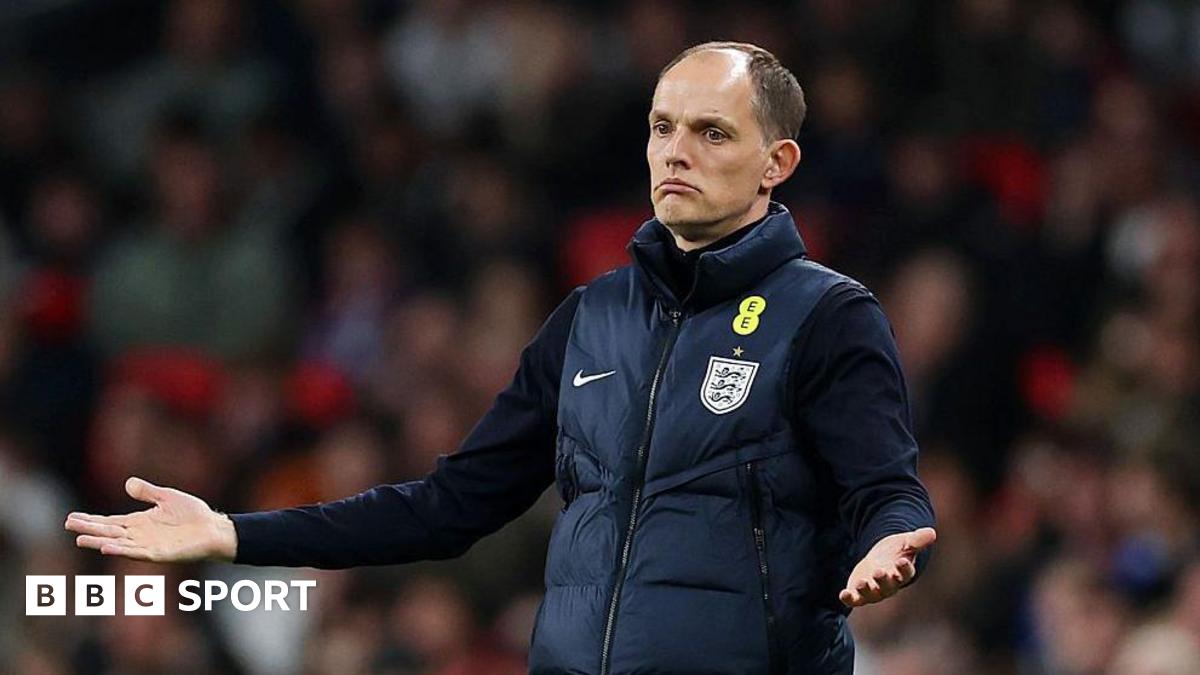
But after watching England's latest outing against Uruguay, I can feel a familiar knot forming in the stomach of the nation. As Sky Sports reported in their live coverage, Thomas Tuchel stepped up to the microphone after the final whistle and delivered the most terrifying phrase a football manager can utter. He claimed he 'learned a lot' from the test.
Let me translate that from UEFA Pro License speak into plain English. It means the game tape looks like a crime scene. When a manager tells you they learned a lot, it is never about discovering a hidden tactical weapon. It means their midfield got bypassed like a broken toll booth.
It means the grand whiteboard theory completely dissolved the second it made contact with actual, breathing South American footballers. This is the eternal cycle of the England national team. We dominate a qualifying group consisting of plumbers from Andorra, convince ourselves we are invincible, and then act shocked when a proper footballing nation punches us in the mouth.
Uruguay Taught a Brutal Lesson
Let's be brutally honest about what happened against Marcelo Bielsa's Uruguay. This was not a friendly. Uruguay does not play friendlies. They play every match like someone insulted their ancestors in the tunnel before kickoff.
They brought chaos, physicality, and a relentless pressing structure that made England look like they were playing underwater. Bielsa has transformed that squad into a terrifying machine. They don't just beat you; they exhaust you.
Tuchel was brought in to be the ultimate problem solver. The tactical heavyweight who would finally figure out how to arrange the most ridiculously talented attacking generation England has produced in decades. We wanted heavy metal football, or at least highly structured German techno football.
Instead, we got a buffering screen. The spacing was weird. The pressing triggers were completely out of sync. Every time Uruguay transitioned, they drove straight through the center of the pitch.
It was an alarming display of fragility. You could see the frustration building in the body language of the forward line. You cannot 'learn' against Uruguay. They don't give you pop quizzes. They give you a bloody nose.
The Ghost of Tournaments Past
We are running out of runway here. The Champions League quarter-finals kick off on April 7th. The domestic seasons are hitting their most grueling, bone-crunching phases. Half of Tuchel's preferred starting eleven are going to be playing high-stress football for the next two months.
By the time they report for the final pre-tournament camp, they are going to be physically and mentally shattered. This is not the time to be experimenting with wildly different shapes. You need your starting XI to be able to find each other in the dark.
What is the identity of this team? Under the previous regime, the identity was simple. Suffer without the ball, keep a clean sheet, and pray Bukayo Saka or Jude Bellingham does something miraculous. It wasn't always pretty, but it gave the team a baseline of solidity.
Tuchel wants absolute control. He demands positional perfection. But when you are managing a national team, you get these guys for a few days every few months. You cannot install a complex, high-wire system in that timeframe.
When you try, you get exactly what we saw against Uruguay. Hesitation. Second-guessing. Players caught between their club instincts and their international instructions. Tuchel still seems to be handing out textbooks when he should be running fire drills.
The Midfield Black Hole
We need to talk about the midfield. Declan Rice is an absolute machine, but he cannot cover the entire width of the pitch by himself. When Uruguay overloaded the central areas, Rice looked like a man trying to bail out a sinking ship with a teaspoon.
Who plays next to him? It is the eternal question. We have tried technicians. We have tried runners. Every time we face a top-tier international side, the midfield looks porous.
The gap between the defense and the midfield was large enough to park a double-decker bus in. Uruguay exploited that space ruthlessly. They picked up the ball on the half-turn and immediately had the backline backpedaling.
Tuchel needs to figure this out immediately. If he goes to North America with a soft underbelly, teams like Argentina or France will slice us to ribbons in the knockout stages. The defensive line isn't exactly inspiring confidence either.
We are heavily reliant on players who have a terrifying history of picking up muscular injuries in May. If one of the starting center-backs goes down, the drop-off in quality is steep. We are one bad hamstring tweak away from absolute disaster.
The Forward Line Disconnect
Let's shift the spotlight from the midfield disaster to the supposed strength of this squad. The forward line. On paper, it is a terrifying collection of talent. You have Harry Kane dropping deep, Phil Foden buzzing between the lines, and Bukayo Saka driving down the right flank.
It sounds unstoppable. Against Uruguay, it looked utterly toothless. The disconnect was jarring. Kane was dropping deep to collect the ball, but nobody was making the penetrating runs behind the defense to exploit the space he created.
Foden looked completely lost in a system that seemed to demand he hug the touchline rather than drift inside where he does his best work. It is a classic case of having too many chefs in the kitchen. Tuchel is trying to accommodate everyone, and in doing so, he is maximizing absolutely nobody.
You cannot just throw your four best attacking players onto the pitch and expect them to figure it out organically. International football requires clear, simplistic attacking patterns. The kind of patterns that can be executed under immense pressure when your legs feel like lead.
Uruguay's defense didn't even look particularly stressed. They simply held their shape, aggressively challenged every loose ball, and watched as England passed the ball harmlessly from side to side. It was sterile possession at its absolute worst.
The American Odyssey Awaits
People are vastly underestimating the logistical nightmare of the 2026 World Cup. This is a sprawling, multi-time-zone monster of a tournament. Teams are going to be flying thousands of miles between games.
They are going to be dealing with brutal heat and humidity. If your tactical system requires your players to run 13 kilometers a game just to maintain their defensive shape, you are going to run out of gas by the quarter-finals.
This is where my biggest fear regarding Tuchel lies. His systems are notoriously demanding. Can you maintain that level of intensity in a knockout game in Miami in the middle of July? I have serious doubts.
Right now, it feels like Tuchel is trying to build a perfectly tuned sports car out of parts sourced from five different manufacturers. It looks great on paper. But when you turn the key, the engine just sputters.
The Burden of Expectation
This brings us to the ultimate problem facing Thomas Tuchel. The sheer weight of expectation. The FA didn't hire him to build a project. They didn't hire him to gently usher in a new era of possession-based football.
They hired him to win the World Cup. Anything less than an appearance in the final on July 19th will be viewed as an unmitigated failure. That is the brutal reality of managing this specific group of players at this specific moment in time.
The honeymoon period is officially over. The English press will let you get away with a lot of things, but looking tactically inept against South American opposition is not one of them. The knives are already being sharpened.
If the first game of the group stage is a sluggish 1-0 win, the noise will become deafening. Tuchel has built his career on his supreme self-confidence, but he has never managed a national team under this kind of media microscope.
Time is the Enemy
He has practically zero time to fix the transmission. There are no more free hits. The margin for error has completely vanished.
I am not saying it is time to hit the panic button. But we should definitely be making sure the button is plugged in. The attacking firepower is capable of dismantling any team on the planet on their day.
But tournaments are not won by having the best players. They are won by having the best team. Uruguay looked like a collective unit that understood exactly what their manager demanded of them.
England looked like a collection of very expensive individuals trying to remember a dance routine they learned over Zoom. Thomas Tuchel was hired specifically because the FA believed he was the ultimate cup manager.
He learned a lot against Uruguay. He learned that international football does not care about your coaching pedigree. The rest of us learned that this summer is going to be incredibly stressful. Strap in.
Read Next
- Top 10 Moments of the 2025/26 Season
- Why Thomas Tuchel's England are walking into a World Cup disaster
- Jude Bellingham sidelined for Uruguay clash as England injury list grows
- Why Uruguay's chaotic press will expose the flaws in Tuchel's England
- 🏆 World Cup 2026 — Full Coverage Hub
- 🏴 England World Cup 2026 — Three Lions Hub