The Big Picture
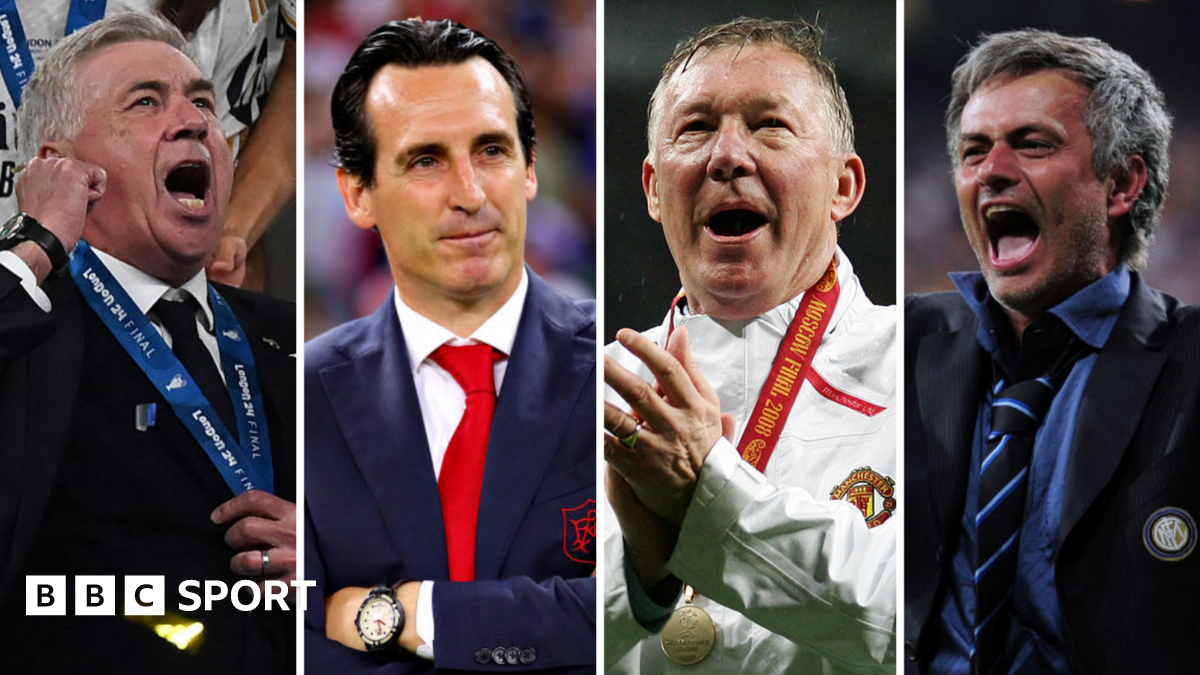
European football is the ultimate managerial crucible. Tactics that crush domestic leagues often melt under the harsh lights of a two-legged continental tie. As Unai Emery prepares for another shot at his fifth Europa League on Wednesday, the BBC rightly questioned where the Basque tactician ranks among the continental elite. To answer that, we have to look past total trophies and examine the defining moments that cemented these managers in history.
With the 2026 Champions League final looming on May 28, it is the perfect time to review the archives. The best managers do not just win; they break the opposition mentally. They impose their absolute will when the stakes are highest. Here is how the greatest touchline moments in European finals and deep knockout ties stack up against each other.
10. Unai Emery: The 2016 Second-Half Blitz
Emery's domestic struggles at Paris Saint-Germain and Arsenal mask his mastery of Europe's secondary competition. In the 2016 Europa League final against Liverpool, Sevilla went into halftime trailing 1-0. They looked outclassed by Jurgen Klopp's heavy metal pressing. Then, Emery adjusted his midfield shape during the break.
He bypassed the Liverpool press entirely by feeding direct balls out wide to Mariano. Coke scored twice, Sevilla won 3-1, and Emery secured an unprecedented third consecutive title. He ranks lowest here because these tactical miracles consistently evaporated in the Champions League. His Europa League dominance is staggering, but the failure against elite opposition keeps him at ten.
9. Diego Simeone: Storming Stamford Bridge in 2014
Atletico Madrid's 2014 Champions League run was built on suffering, but the semi-final second leg against Chelsea was a tactical flex. Jose Mourinho set up his Chelsea side to absorb pressure at home. Simeone inverted the script. Instead of throwing men forward, Simeone instructed Tiago to sit deep and forced Chelsea to initiate the play.
The resulting 3-1 victory announced Simeone as a top-tier manager on the continent. The defensive discipline was absolute, restricting Eden Hazard to zero successful dribbles in the second half. He ranks here because, despite this brilliance, he ultimately fell short in the Lisbon final a month later.
8. Thomas Tuchel: Suffocating City in Porto
Pep Guardiola famously overthought his starting XI in the 2021 Champions League final by dropping Rodri. However, Thomas Tuchel's setup deserves the actual credit for Chelsea's 1-0 win. Taking over mid-season, Tuchel drilled a chaotic, disjointed Chelsea squad into an impenetrable block within months.
Mason Mount and Kai Havertz operated aggressively in the half-spaces, purposely dragging Ruben Dias out of position for the deciding goal. Tuchel ranks eighth because his subsequent implosions at Chelsea and Bayern Munich cast a shadow over this victory. He proved his tactical brilliance on the night, but his abrasive man-management always puts a short expiration date on his success.
7. Jupp Heynckes: The 2013 Wembley Redemption
Bayern Munich's 2012 defeat to Chelsea broke the club psychologically. Fans and pundits questioned their mental fortitude. Jupp Heynckes rebuilt them into a terrifying, ruthless machine within twelve months. The 2-1 victory over Borussia Dortmund at Wembley in 2013 was the crowning achievement of a treble-winning season.
Heynckes figured out exactly how to neutralize Klopp's pressing traps by utilizing Manuel Neuer as a legitimate sweeping playmaker. Arjen Robben's 89th minute winner was poetic justice for a squad that refused to fold. Heynckes edges out Tuchel because he maintained total control over a famously volatile dressing room, proving he could manage egos just as well as he managed space.
6. Carlo Ancelotti: The 2014 Decima Relief
Real Madrid waited twelve agonizing years for their tenth European Cup. The pressure crushed multiple elite managers before Carlo Ancelotti arrived to stabilize the ship. Trailing Atletico Madrid 1-0 in Lisbon, Ancelotti refused to panic. He threw on Marcelo and Isco in the 59th minute, shifting from a balanced shape to an all-out attacking swarm.
Sergio Ramos equalized late, and Madrid rolled in extra time for a 4-1 win. Ancelotti's defining trait is not complex tactical systems; it is his uncanny ability to manage superstar egos and project absolute calm in high-stress environments. He earns the sixth spot for breaking the psychological block that paralyzed Madrid for a decade, even if the actual match required a desperate late goal.
5. Jurgen Klopp: The 2019 Anfield Miracle
Overturning a 3-0 deficit against Lionel Messi's Barcelona without Mohamed Salah and Roberto Firmino seemed statistically impossible. Klopp did not rely on tactical reinvention for the second leg; he relied on sheer, overwhelming intensity. Starting Divock Origi and Xherdan Shaqiri, Klopp instructed his team to press relentlessly high and aggressively target Jordi Alba's flank.
The resulting 4-0 win was chaotic, sloppy in parts, but entirely suffocating for the Spanish champions. Klopp sits in the top five because he turned Anfield into a weapon. No other manager could convince a depleted squad they were the heavy favorites against Barcelona. It was a victory of psychology over superior talent.
4. Jose Mourinho: The 2010 Camp Nou Masterclass
Inter Milan went down to ten men in the 28th minute of their semi-final second leg against Guardiola's Barcelona. Mourinho responded by essentially playing a 6-3-0 formation. Samuel Eto'o, one of the greatest strikers of his generation, spent sixty minutes playing as a makeshift left-back tracking Dani Alves.
Inter lost the match 1-0 but won the tie 3-2 on aggregate. It was a brutal, cynical, and utterly mesmerizing display of defensive organization. Mourinho earns this high placement because he defeated the greatest club side of the modern era through sheer force of will. He killed possession football for a night and walked away as a champion.
3. Zinedine Zidane: The 2017 Cardiff Destruction
Zidane's managerial critics constantly claim he lacks tactical depth and merely manages vibes. The 2017 Champions League final against Juventus destroyed that narrative. Facing a Juventus defense that had conceded only three goals in the entire tournament, Zidane instructed Luka Modric and Toni Kroos to dictate a rapid, one-touch tempo that exhausted the Italian press.
Real Madrid scored three second-half goals to win 4-1. Zidane became the first manager to defend the Champions League in the modern era. His massive flaw is his absolute reliance on singular, generational talents to bail out average defensive structures. Still, his record of three straight European Cups demands a top-three finish.
2. Sir Alex Ferguson: The 1999 Treble Climax
Manchester United were completely outplayed by Bayern Munich for 89 minutes in Barcelona. Roy Keane and Paul Scholes were suspended, forcing Ferguson to deploy David Beckham out of position in central midfield. Down 1-0, Ferguson's aggressive game management won the trophy.
He brought on Teddy Sheringham and Ole Gunnar Solskjaer, completely abandoning width to flood the penalty box with bodies. Two stoppage-time goals changed football history. Ferguson grabs the runner-up spot not for tactical purity, but for building a squad with an absolute refusal to accept defeat. The substitutions were purely desperate, but he engineered the luck.
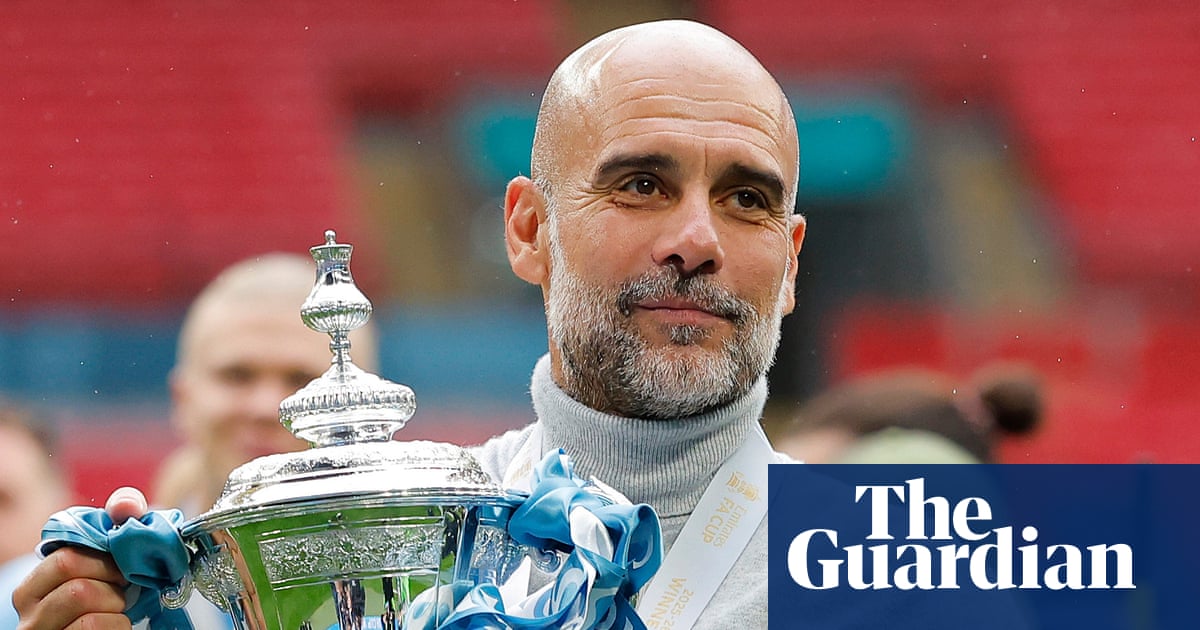
1. Pep Guardiola: The 2011 Wembley Pinnacle
No manager has ever dominated a European final quite like Guardiola did against Manchester United in 2011. Sir Alex Ferguson bluntly conceded his team was outclassed in the 3-1 defeat. Guardiola deployed Lionel Messi as a false nine, dropping him deep into midfield to create a numerical overload that left Nemanja Vidic and Rio Ferdinand completely isolated.
Xavi and Iniesta dictated the game with a suffocating 73 percent possession. Guardiola takes the top spot because this was not just a victory; it was an instructional video on how the sport should be played at its absolute apex. It remains the gold standard of modern tactical execution.
Honorable Mentions
- Brian Clough (1979): Taking a provincial club like Nottingham Forest to European glory remains the sport's greatest fairy tale. He proved organization can beat immense financial power.
- Arrigo Sacchi (1989): AC Milan's 4-0 dismantling of Steaua Bucharest revolutionized high-pressing football. He permanently changed how teams defend in space.
- Bob Paisley (1981): Winning three European Cups in five years established Liverpool as a global superpower, doing so with quiet, devastating efficiency.
Read Next
- Why Villa's high line could ruin their Europa League dream
- Unai Emery is about to complete his revenge arc with Aston Villa
- Arsenal face their ultimate European test behind a television paywall
- Arsenal will win the Champions League, but the TV paywall is a disgrace
- ⭐ UCL 2026 — Champions League Quarter-Finals Hub