The Big Picture
As we hit the second week of April 2026, the EFL season is reaching its boiling point. The narratives that dominated August have been shredded by the brutal reality of a 46-game campaign. The heavily publicized Hollywood hype train has stalled out right when it matters most.
While international cameras remain securely fixed on the Racecourse Ground, the actual footballing drama is unfolding far away from the celebrity spotlight. The recent Southampton rout that unceremoniously dumped Wrexham out of the playoff spots served as a massive reality check. This spring, genuine underdog tales and ruthless tactical masterclasses are entirely rewriting the script.
The Ranking
1. Southampton's Ruthless March to Sixth
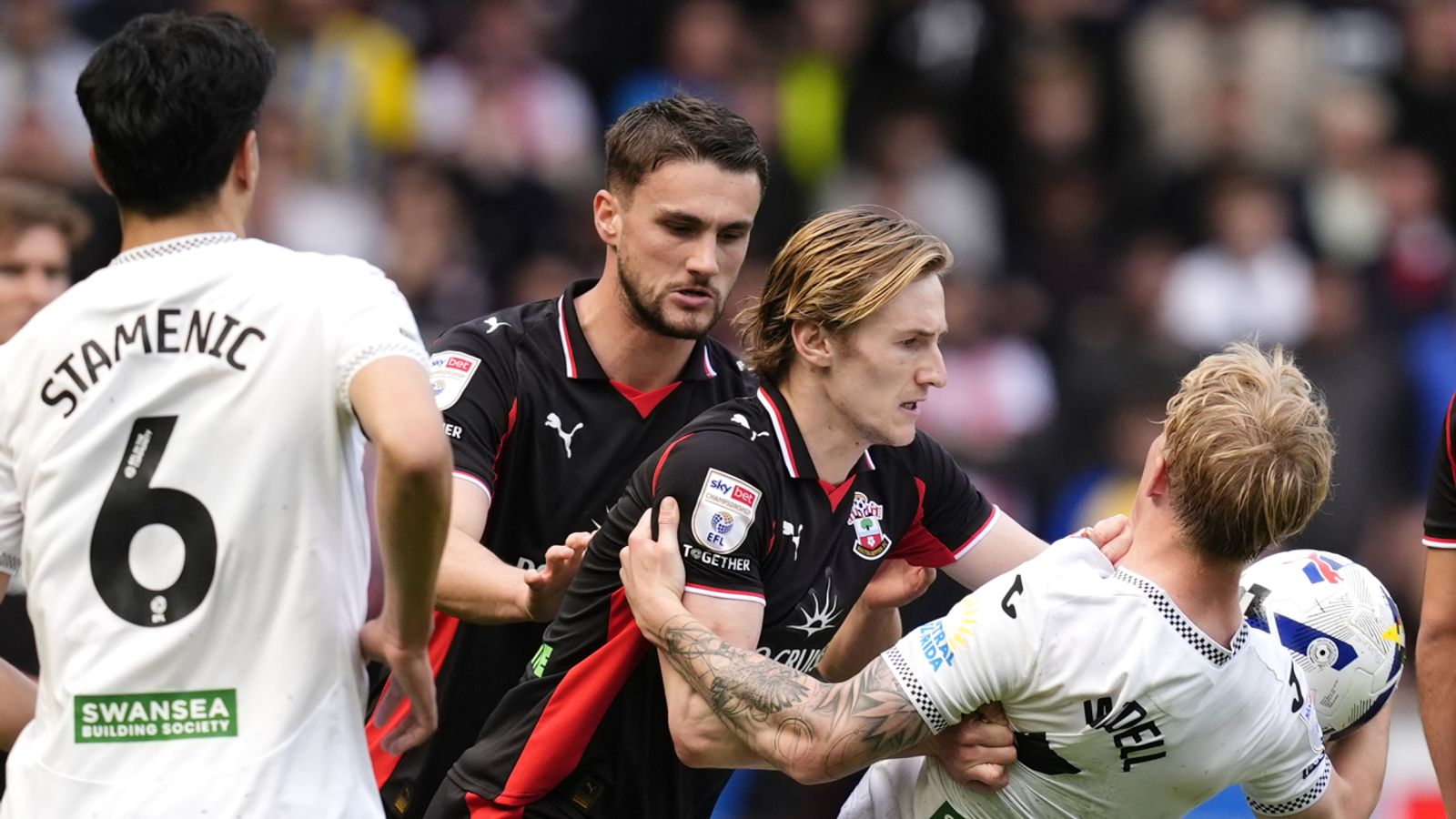
Southampton didn't just beat Wrexham; they dismantled them entirely. The recent clash was a tactical clinic that exposed every single flaw in the Hollywood project's midfield setup. By romping past their rivals to hijack sixth place, the Saints proved that structural discipline always beats emotional momentum.
Their midfield completely bypassed Wrexham's initial press with ease, finding pockets of space constantly. Russell Martin’s possession-heavy system starved the opposition of the ball for massive stretches of the second half. It was a sobering reminder of the stark quality gap at the top of the table, and a massive blow to the Welsh club's automatic promotion hopes.
2. The First "Real" Fairy Tale: Stockport's Quiet Dominance
As FourFourTwo recently reported, the most compelling stories this month have absolutely nothing to do with Wales. Stockport County currently leads that exact charge with ruthless efficiency. Unlike the heavily bankrolled celebrity projects in their division, their rise relies on astute scouting and a rigid, sensible wage structure.
They dominate possession metrics without needing to spend millions on marquee Championship-level names to bail them out. Their impending promotion feels earned in the shadows rather than bought under the bright floodlights. Dave Challinor has built a relentless machine that simply refuses to break down, grinding out results when the pressure peaks.
3. Reading's Great Escape
If you want a genuine feel-good story this spring, you have to look at Reading's miraculous survival bid. Point deductions, ownership chaos, and a threadbare squad should have mathematically doomed them by November. Instead, they have orchestrated a survival campaign built entirely on academy graduates stepping up.
The manager has fostered a fierce siege mentality that makes them horrible to play against on a wet Tuesday night. They grind out gritty 1-0 away victories with zero budget and an active transfer embargo hanging over their heads. This is actual football drama born from adversity, not a contrived television storyline crafted in an editing room.
4. Wrexham's Defensive Naivety Exposed
This is the critical failure no one wants to discuss on camera right now. Wrexham’s recruitment strategy has heavily favored attacking flair, leaving their backline painfully exposed against transition-heavy sides. The weekend fixture saw Southampton tear them apart out wide, isolating their fullbacks repeatedly on the counter.
You cannot mask structural defensive issues with late equalizers forever in this division. The center-backs look incredibly heavy-footed when dragged out of the penalty area by fluid attackers. If they miss the playoffs entirely, this heavily unbalanced squad building will be squarely to blame.
5. The Downfall of the Class of 92 at Salford
While one celebrity ownership model battles desperately for sixth, another is actively imploding further down the pyramid. Salford City's continued stagnation in the lower tiers is a brutal cautionary tale about throwing cash at aging veterans. They severely lack a cohesive on-pitch identity, looking like a collection of individuals rather than a team.
The board changes managers with alarming frequency the moment results dip or form stutters. It proves that simply having famous ex-players as backers does not guarantee upward mobility in a grueling 46-game season. The stark contrast with more organically run, sustainable clubs is glaring.
6. Barrow's Analytic Miracle
Barrow operates on a fraction of the budget of their division rivals, yet they sit comfortably in the promotion hunt as we hit late April. Their front office has fully embraced a data-driven recruitment model that identifies undervalued assets in non-league football before anyone else spots them. Every single signing fits a specific, rigid tactical profile designed to frustrate opponents.
This leads to a cohesive unit that presses relentlessly from the front and never looks out of shape defensively. This is smart analytics actually working in the muddy trenches of the EFL, which is far more impressive than simply outspending the rest of the league.
7. Charlton Athletic's Toxic Stagnation
Not every storyline is positive, and Charlton Athletic's miserable spring truly deserves intense scrutiny for all the wrong reasons. Despite possessing a squad clearly capable of challenging for the top six, they look completely lost and devoid of leadership on the pitch. The severe disconnect between the boardroom and the local fanbase has created a deeply toxic atmosphere at The Valley.
Players look totally devoid of confidence, dropping points from winning positions on a weekly basis. It is a live masterclass in how bad ownership can rot a historic club from the inside out, completely neutralizing any home advantage.
8. Lincoln City's Fortress
Lincoln City has quietly turned Sincil Bank into an absolute nightmare for visiting teams attempting to play expansive football. They are currently riding an absurd defensive streak at home, built on a mid-block that simply refuses to break under pressure. Opposing managers frequently complain about the playing surface and the heavy physicality, but that just masks their inability to break Lincoln down.
It is ugly, highly pragmatic, and incredibly effective against sides that want time on the ball. They are writing their own fairy tale out of pure, unadulterated stubbornness and defensive organization.
9. The Re-emergence of the Target Man
Tactical trends across the EFL are rapidly shifting back toward traditional, physical focal points in the final third. Teams are abandoning the intricate false-nine experiments in favor of robust, traditional target men who can hold up play and bully center-halves. This abrupt shift has severely punished sides that rely exclusively on short-passing out from the back.
Strikers who win aerial duels and provide an immediate out-ball are suddenly commanding massive premiums in the transfer market. It is a fascinating tactical regression that is paying massive dividends for pragmatic managers who prioritize directness over aesthetics.
10. The Death of the Documentary Factor
We are finally witnessing the complete exhaustion of the access-all-areas club documentary factor across the leagues. Referees are no longer intimidated by the extra cameras, and opposing teams explicitly treat these fixtures as their own personal cup finals. The extra motivation provided to clubs playing against media darlings is now a massive, tangible disadvantage on matchday.
Squads are visibly tired of being treated as extras in someone else's television show, and they play with a massive chip on their shoulder. The resulting fierce backlash is driving the most competitive run-in we have seen in over a decade.
Honorable Mentions
Portsmouth's away support deserves massive credit for consistently selling out allocations despite a grueling travel schedule. Meanwhile, the ongoing refereeing crisis cannot be ignored, as a string of high-profile errors has several managers aggressively demanding VAR implementation in the lower leagues.