The Bratwurst Billionaire Drops a Pipebomb
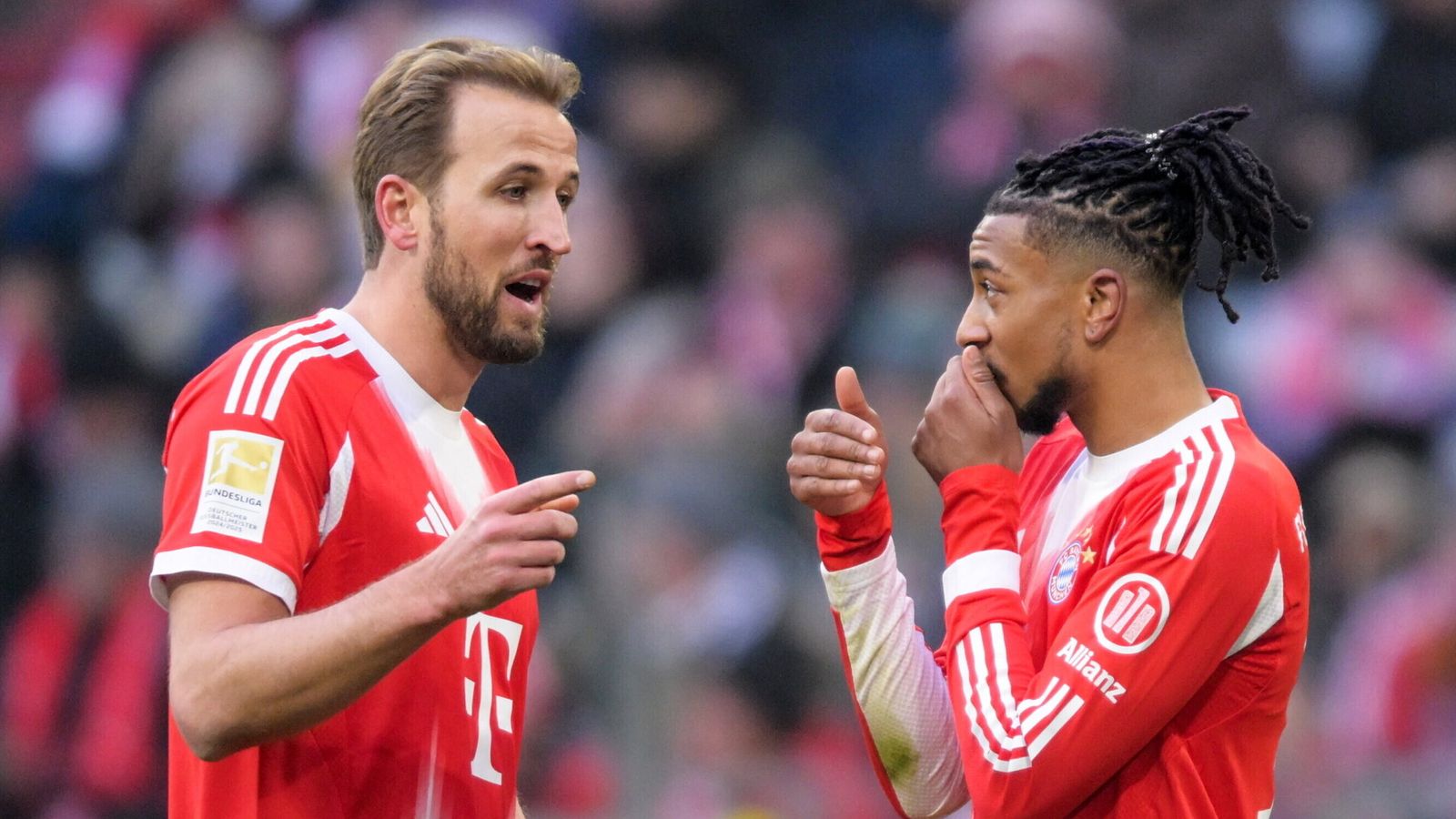
Pull up a chair, crack open a cold one, and let us talk about the beautiful, unhinged theater of Uli Hoeneß. Just when you think European football has become a boring parade of PR-trained corporate robots reading from pre-approved scripts, the honorary president of Bayern Munich steps up to a microphone and behaves like a prime-era pro wrestler cutting a promo on a rival territory. He did not just politely decline the rumors linking Harry Kane to Spain. He took a massive, verbal sledgehammer to the entire Catalan establishment and left it in pieces on the floor.
The quote itself belongs in a museum of pure, unadulterated disrespect. First, Hoeneß declares that Kane is the greatest signing in the history of a club that once employed Franz Beckenbauer, Gerd Müller, and Robert Lewandowski. Then, when a reporter dares to bring up the rumors that Barcelona are sniffing around the English captain, Uli does not even blink. He basically says that Bayern Munich is a buying club, not a selling club, and finishes the job by pointing out that Barcelona do not have a single cent to their name anyway.
It is the kind of quote that makes you choke on your drink. It is brutal, it is deeply personal, and the absolute best part about it is that he is completely right. For the last five years, Barcelona has operated like a college student who found a lost credit card and decided to buy everyone bottle service at the club. Hearing someone call them out on their financial house of cards, without any diplomatic filter, is the exact injection of pure entertainment this sport needs.
The Bavarian Legend and the Cold Hard Cash
Let us look at the actual reality of the situation before the Barcelona defense force on social media starts crying about historical prestige. Uli Hoeneß represents a club that is run like a Swiss watch. Bayern Munich do not do debt, they do not do panic, and they certainly do not sell their best players to clubs that pay their wages in magic beans and promises. When Bayern decided to buy Harry Kane, they did not have to sell off their future stadium naming rights or auction their documentary archives to a shadowy holding company. They opened their bank account, wired the money, and went back to eating sausages.
But let us keep it real for a second and throw a little water on Uli's fire. Is Harry Kane actually the best transfer Bayern has ever made? That is a wild claim from a guy who has watched decades of world-class talent roll through the Säbener Straße. Let us not forget that Kane cost a staggering 100 million euros, which completely shattered Bayern's traditional transfer policy of never overpaying for stars. For all of Kane's incredible goal-scoring exploits, we have to acknowledge the elephant in the room: his arrival coincided with Bayern losing the Bundesliga title to Bayer Leverkusen for the first time in over a decade, proving that even a world-class striker cannot instantly cure a dysfunctional midfield.
Still, Kane's individual numbers since moving to Germany are absolutely ridiculous. The man was scoring goals at a rate that made the rest of the league look like they were playing in slow motion. He bagged a massive amount of league goals in his first season alone, chasing down records that many thought would stand forever. Bayern bought a guaranteed goal machine, and more importantly, they bought a global brand that proved they could still pull the biggest names away from the Premier League without breaking their wage structure.
The Catalan Illusion of Grandeur
Now let us pivot to the comedic goldmine that is Barcelona's supposed interest. The idea of Joan Laporta sitting in his office, looking at his empty wallet, and thinking, 'Yes, let us go get Harry Kane,' is peak delusion. Barcelona are currently paying the price for years of economic madness that would make a lottery winner blush. They are still trying to register players like they are hiding cash from the tax man, and yet their media mouthpieces still leak stories about signing the biggest stars in the world.
It is like a teenager walking into a Ferrari dealership with a handful of pocket lint and demanding a test drive. Barcelona's transfer strategy in recent years has been a circus of financial engineering, pulling levers and selling future TV rights just to stay afloat. They spent years paying astronomical wages to aging stars, and now they expect the rest of Europe to treat them like the giants they used to be. Hoeneß did not just reject their interest; he exposed the fact that the emperor has no clothes, and the emperor is currently trying to pay his rent with Spotify premium accounts.
This is not the first time these two clubs have had a clash of philosophies, but the power dynamic has completely shifted. Remember when Barcelona could bully any club in the world into selling their prized assets? Those days are gone, buried under a mountain of debt that will take decades to clear. Now, they are the ones getting publicly mocked by Bavarian executives who treat them like a charity case.
A History of Domination and Disrespect
If you want to understand why Hoeneß feels comfortable being this ruthless, you only have to look at the recent history between these two institutions. This is not just about balance sheets; it is about what happens on the pitch. Every football fan remembers the absolute slaughter in Lisbon, where Bayern dismantled Barcelona in a historic 8-2 humiliation that felt more like a training session than a Champions League quarter-final. That match was the symbolic death of Barcelona's golden era, and they have never truly recovered from it.
Bayern Munich look at Barcelona the way a serious businessman looks at a relative who lost all their money in a cryptocurrency scam. There is no respect there, only a mild amusement at how a giant could fall so far, so fast. When Hoeneß says Barcelona has no money, he is not just trash-talking; he is stating a cold, hard fact that the Spanish media tries to sweep under the rug every single week. It is a reality check that is long overdue for a fan base that still thinks they can sign whoever they want by simply wearing the famous red and blue shirt.
We are just four days away from the Champions League final, and while Bayern are always in the mix, Barcelona are left watching from the couch, wondering how they are going to register their youth players for next season. The gap between these two clubs is no longer just a couple of goals on a scoreboard. It is a chasm of competence, a division between a club that is run by football adults and a club that is run by desperate politicians trying to survive the next election cycle.
The Reality of the Modern Transfer Market
The broader truth in Hoeneß's rant is that the era of clubs surviving on name recognition alone is officially dead. You cannot pay a transfer fee with history, and you cannot pay wages with trophies won ten years ago. Bayern Munich's model might seem boring to the FIFA-playing generation who want to see five new superstar signings every summer, but it is the only model that guarantees long-term survival at the absolute top of the game.
Meanwhile, Barcelona will continue their desperate search for more levers to pull, hoping that some magic financial trick will suddenly allow them to compete with the state-backed clubs and the German giants. But as long as men like Uli Hoeneß are running things in Munich, Bayern will continue to buy the best players, keep them as long as they want, and laugh at any broke club that tries to lure them away. It is a harsh reality, but in the brutal world of elite football, the truth hurts, and Uli Hoeneß is always happy to deliver it with a smile.
So let Barcelona fans fume on social media and talk about their style of play and their legendary academy. The rest of the football world is laughing along with Uli, enjoying the rare sight of a club executive who is not afraid to say exactly what everyone else is thinking. In a sport that is increasingly plastic, Hoeneß remains a glorious, unfiltered relic of a simpler time, and we should cherish every single bomb he decides to drop.
Read Next
- Harry Kane just destroyed Stuttgart with a brutal eighty-minute dagger
- Why Barcelona are surviving a tactical strangulation in Oslo
- Why Michael Carrick's €50m pivot rebuild is a high-risk statistical gamble
- Harry Kane finally broke the curse and made the tactical hipsters cry
- ⚽ La Liga 2025-26 — Title Race Hub