The Bavarian President and the Catalonian Reality Check
Grab a cold pint and pull up a stool, because Uli Hoeneß just delivered the absolute quote of the year. He did it with the casual nonchalance of a man ordering a second basket of chicken wings. When asked about Barcelona's reported interest in Harry Kane, the Bayern Munich patriarch didn't bother with the usual diplomatic public relations speak.
He didn't offer a polite shrug or a boring corporate script. No, Uli went straight for the throat. He declared Kane the best transfer Bayern has ever made, before casually adding that Bayern is a buying club, not a selling club, and besides, Barcelona have no money anyway. It was loud, arrogant, and one hundred percent correct.
For years, European football has operated under this bizarre collective delusion where FC Barcelona can simply type a player's name into a transfer search bar and expect the selling club to roll over. Joan Laporta has spent the last half-decade running the Camp Nou like a high-stakes shell game, pulling financial palancas out of his hat like a desperate magician. But Uli Hoeneß is not a child, and Bavaria is not a magic show.
By pointing out that the emperor has no clothes—and more importantly, no cash—Hoeneß did what every other executive in Europe has been dying to do for years. He called out the grift.
Let's be completely honest: the financial disparity between these two clubs is hilarious. Bayern Munich is a financial fortress, built on decades of Bavarian industrial backing, sold-out stadiums, and a legendary deposit account that contains real cash. Barcelona, on the other hand, is currently functioning on the economic equivalent of a maxed-out credit card.
They owe a staggering €1.2 billion in debt, yet they still swagger into the transfer window like they own the place. Hoeneß's blunt dismissal was the sporting equivalent of a bouncer turning away a guy in a rented suit at the VIP door. It was brutal, but it was necessary.
"FC Bayern is a buying club not a selling club, and Barcelona have no money anyway."
The Magic of the Palancas Meets the Bavarian Bank
To understand why Hoeneß's roast is so magnificent, you have to look at the historical context of how these two clubs do business. Remember the summer of 2022, when Barcelona decided they wanted Robert Lewandowski? Bayern didn't want to sell their star striker, but when the deal finally happened, the German directors insisted on receiving every single cent of the transfer fee upfront.
They openly admitted they weren't sure if Barcelona would still exist as a solvent entity in twelve months. That is the level of trust we are talking about here. It is the financial equivalent of demanding cash-on-delivery in a sketchy neighborhood.
Since then, Barcelona's economic strategy has resembled a freshman college student trying to pay off one credit card by signing up for three more. They have mortgaged their future TV rights, sold off chunks of their media production house, and begged their squad to defer salaries. It is a spectacular circus, and yet the sporting press still prints daily headlines linking them to every superstar on the planet.
Here are the three main components of the Catalan financial comedy show that Hoeneß is rightfully laughing at:
- Selling off chunks of Barca Studios to shell companies that seemingly forget to send the wire transfers.
- Begging veteran midfielders to defer their wages until they are literally eligible for a pension.
- Registering new signings in the final minutes of the transfer window by using emergency medical exceptions.
This is not how elite football clubs are supposed to operate. While Barcelona plays three-card monte with the league registration office, Bayern Munich operates with the cold, precision of an engine factory. They paid a guaranteed €100 million fee to bring Harry Kane to Munich, and they did it by writing a check that actually cleared.
They do not need to sell their best assets to balance the books. They certainly do not need to sell them to a club that is currently rummaging through the couch cushions for spare change.
The Best Transfer in Bayern Munich History
When Hoeneß calls Kane the best transfer Bayern has ever made, he is making a massive statement. This is a club that has employed Franz Beckenbauer, Gerd Müller, and Robert Lewandowski. But he has a very strong case.
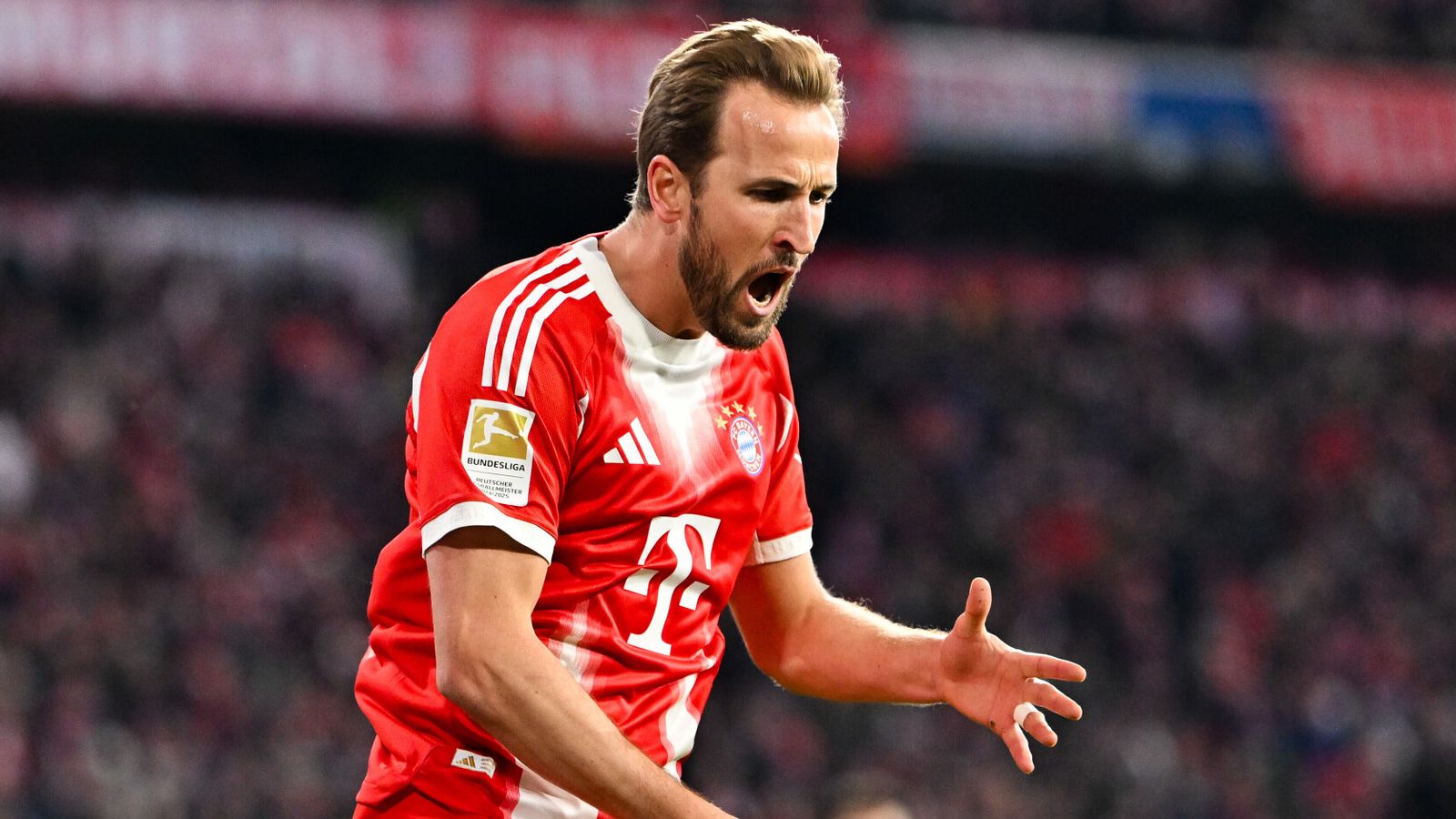
When Kane arrived in the summer of 2023, he wasn't just replacing Lewandowski's goal production. He was carrying the psychological weight of an entire club that had lost its identity. The English striker didn't just adapt to the Bundesliga; he absolutely demolished it, scoring a mind-boggling 36 goals in his debut league campaign.
"Harry Kane is the best transfer we've ever made."
Of course, the Twitter trolls and the rival fans will immediately point to the silverware cabinet. Yes, it is a hilarious historical irony that in Kane's first season in Germany, Bayern Munich walked away with exactly zero trophies. The legendary German giants, accustomed to domestic dominance, watched Bayer Leverkusen lift the league title without losing a single match.
It was a sporting disaster, and it led to the messy departure of Thomas Tuchel. But anyone with a working set of eyeballs knows that blaming Kane for that trophy-less season is absolute madness. He did his job, and he did it brilliantly.
Kane scored goals at an historic rate, provided elite playmaking from the number nine position, and acted as a model professional in a dressing room that was actively eating itself alive. While Thomas Tuchel was busy picking fights with the board and Dayot Upamecano was handing out defensive charity in the Champions League knockout stages, Kane was busy finding the back of the net. He was the only adult in the room during a turbulent year.
A Culture Shock for the Catalan Dreamers
The rumor that Barcelona could somehow lure Kane to Spain is so laughable it belongs in a stand-up routine. Under Joan Laporta, Barcelona has attempted to build a dream world where prestige alone can substitute for actual capital. They assume that because they have sunny beaches and the ghost of Lionel Messi's legacy, players will gladly accept deferred wages and chaotic registration sagas.
But Harry Kane did not leave Tottenham Hotspur just to join another circus. He chose Munich for the stability of a world-class institution. He wanted a club run by legendary players, not politicians desperate for votes.
The cultural gap between Bayern's sober, meritocratic German management and Barcelona's chaotic Spanish soap opera is wider than the Atlantic. To suggest Kane would swap the quiet, professional luxury of Munich for the administrative nightmare of Barcelona is an insult to his intelligence. It's a fantasy cooked up by agents and desperate sporting directors.
Uli Hoeneß and the Art of the Bavarian Broadside
To be fair, we must acknowledge that Uli Hoeneß is not exactly a saintly figure of quiet diplomacy. This is a man who spent time in prison for tax evasion. He is a man who regularly calls into live sports talk shows to scream at pundits who drag his team.
He even nearly derailed Bayern's Champions League run in 2024 by publicly bashing Thomas Tuchel's youth development record just days before a semi-final clash with Real Madrid. He is loud, he is volatile, and he is often the biggest source of drama in Munich. But that is exactly why we love him.
In a modern football world that is increasingly sanitized by corporate public relations consultants and media-trained robots, Hoeneß is a glorious throwback. He speaks like a guy who has had four beers at the local pub and is ready to fight anyone who disrespects his family. When he looks at Barcelona's interest in Kane, he doesn't see a prestigious sporting rival.
He sees a broke pretender trying to buy a luxury yacht on a layaway plan. By saying it out loud, he has reminded everyone that in the real world, cash is still king. The Catalan dreamers can keep printing their rumors, but the German giants are holding the keys to the vault.
With the Champions League final just four days away and the World Cup kicking off in less than three weeks, the football world is busy previewing tactics. But Hoeneß's verbal demolition of Barcelona is a fantastic reminder of the off-pitch drama that makes this sport so entertaining. It is a battle between a sober German giant and debt-addled Catalan dreamers, and Uli Hoeneß just landed a knockout blow.
Read Next
- Why Harry Kane's latest hat-trick officially buries the Tottenham curse
- Spurs face relegation panic while Harry Kane swims in silverware
- Top 10: Top Moments
- Stuttgart's cup defense is about to run into the Harry Kane buzzsaw
- 🏴 England World Cup 2026 — Three Lions Hub
- ⚽ La Liga 2025-26 — Title Race Hub