Wayne Rooney’s refereeing gripe misses the tactical point
Tactical naivety in the dugout
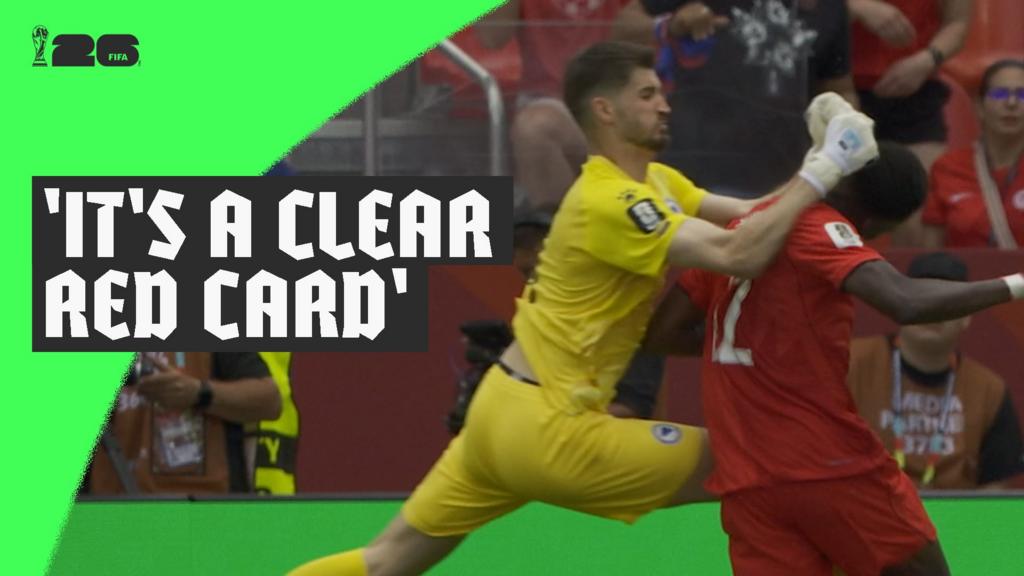
Wayne Rooney’s post-match assessment of the Canada versus Bosnia-Herzegovina friendly highlights a recurring frustration for those observing from the stands. When Nikola Vasilj challenged Tani Oluwaseyi, the roar from the technical area was instantaneous. Rooney argued for a red card, citing the severity of the contact. He wanted a game-altering decision for a tackle that arguably stood on the boundary of modern officiating standards.
Former assistant referee Darren Cann viewed the incident through a different lens. For Cann, the technical requirements for a red card—denial of an obvious goal-scoring opportunity or excessive force—simply were not met. Vasilj timed his challenge to disrupt the rhythm of the break, but the geometry of the play favored the keeper. The ball had enough distance from the striker that control remained ambiguous. Rooney’s argument relies on the outcome of the collision rather than the defensive mechanics that preceded it.
The obsession with the whistle
We see this pattern every weekend. Managers increasingly outsource their tactical accountability to the officiating team. It is a convenient deflection. By focusing on the 72nd minute flashpoint, the analysis shifts away from why Canada’s transition play allowed a goalkeeper to venture so far out of his comfort zone to begin with. The focus should be on the spacing of the midfield runners rather than the color of a card.
Modern officiating is scrutinized through ultra-slow motion, creating an illusion of malice where there is often just physics. When Rooney fixates on the physical impact on Tani Oluwaseyi, he ignores the tactical trade-off. Vasilj committed to a challenge that left his secondary defensive line exposed. A more astute technical assessment would critique the lack of a secondary attacking option for Canada as they approached the final third, as noted in the analysis of the match flow.
Reframing the discourse
Football coverage has moved toward an endless debate over rule interpretation. We spend more time discussing VAR protocols than the specific movements that lead to scoring chances. When a player like Oluwaseyi sustains a knock, the immediate reaction is to blame the referee. Yet, that knock was the result of a high-engagement defensive strategy from Bosnia-Herzegovina that Canada failed to anticipate with their movement.
We need to stop treating referees as the primary architects of a match result. If a game hinges on a single, debatable 50-50 challenge, the team involved has likely already failed in their primary objective of controlling the game state. Rooney’s insistence on the dismissal of Vasilj acts as a smoke screen for a performance that lacked the necessary cut-through against a condensed defensive block. The true tactical failure wasn’t a refereeing error; it was a lack of offensive variety in the final 20 minutes.
As Darren Cann perceptively argues, the law has specific thresholds. Not every heavy collision is a disciplinary offense. Coaches who recognize this distinction gain a mental edge. They understand that the game continues regardless of the referee's verdict. Fighting for a card suggests a lack of faith in the squad's ability to capitalize on the next phase of play. It is time for managers to put the notebook down and stop coaching to the whistle.
The Mixer: The Story of Premier League Tactics, from Route One to False Nines
The definitive deep-dive into how the Premier League was won.
Frequently Asked Questions
Why did Wayne Rooney argue for a red card in the Canada vs Bosnia match?
What is Darren Cann's perspective on the Nikola Vasilj tackle?
How does focusing on officiating impact tactical analysis?
What was the primary tactical issue for Canada during the match?
Why does the author argue that refereeing should not define match results?
More Coverage

Rooney sees the cracks forming in Gareth Southgate's England camp
3 hours agoBosnia-Herzegovina control midfield against Canada through tactical aerial pivots
7 hours agoCanada faces a defensive puzzle against Bosnia-Herzegovina
9 hours ago
England's World Cup preparation is already a disaster before kickoff
1 day, 9 hours ago
The World Cup's missing referee shows the human cost of administrative failure
2 days, 18 hours ago
England's wide dilemma heading into the 2026 World Cup
3 days, 9 hours agoMore Analysis
Rooney sees the cracks forming in Gareth Southgate's England camp
3 hours ago
World Cup highlights are missing and fans are losing their minds
3 hours ago
Mateus Fernandes snubbing Arsenal for United is absolute comedy
4 hours ago
Top 10: Defining Moments of the 2026 World Cup Kickoff
4 hours ago
Kevin Sinfield’s knighthood is the ultimate recognition of character
4 hours ago