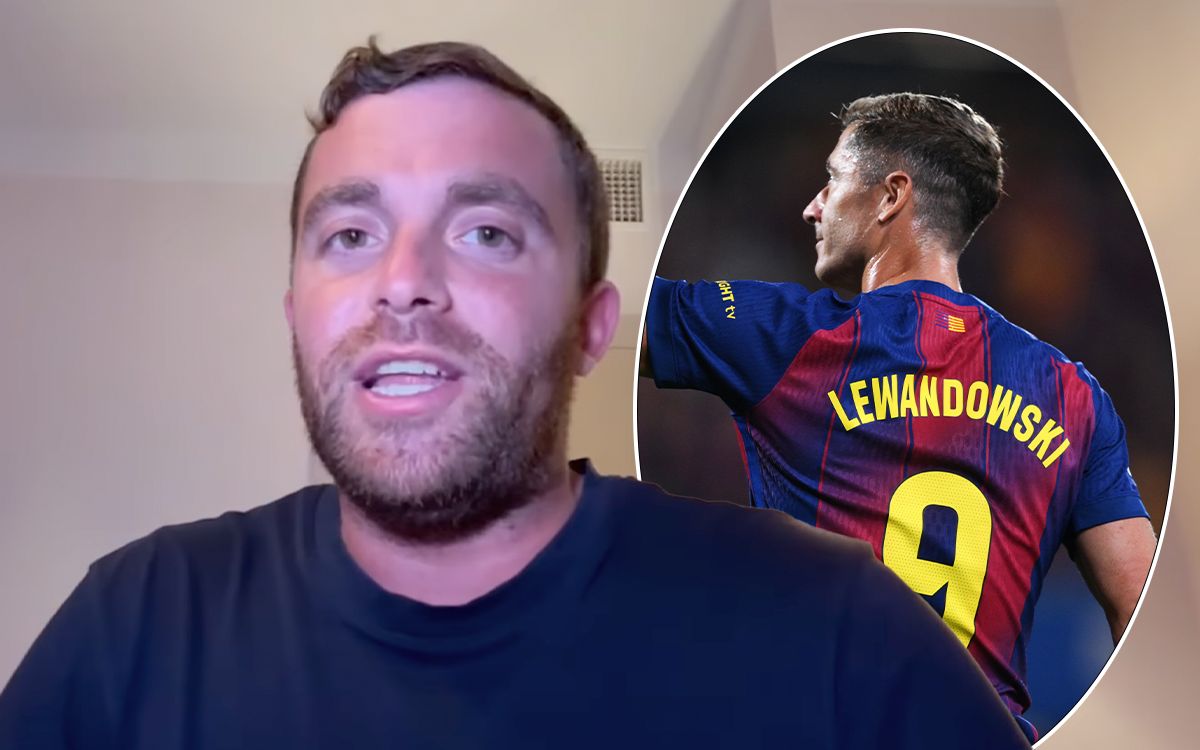
The Lewandowski Situation: Context and Timing
Robert Lewandowski is officially a free agent. His tenure at Barcelona has concluded following the expiration of his contract, and his representatives are canvassing the market for a final European destination. Among the clubs linked is Manchester United, with pundits labeling the potential acquisition a no-brainer given the current lack of clinical finishing at Old Trafford.
The striker profile remains elite, but the operational reality of this move is complex. Lewandowski enters the market on the verge of his 38th birthday. While his goal-scoring output at the Camp Nou remained respectable during the 2025/26 term, his involvement in link-up play slowed down significantly against high-pressing backlines. Manchester United are currently operating a rigid wage structure, and absorbing a massive salary for a player in the twilight of his physical peak carries inherent risks.
Tactical Fit and the Aging Profile
From a tactical standpoint, Lewandowski requires specific service. He thrives in controlled, possession-heavy systems where he can operate as a penalty-box specialist. Manchester United, by contrast, rely on transition speed and sustained intensity under their current regime. Integrating a forward who does not press from the front would demand a defensive compromise that might neuter the team's ability to win the ball high up the pitch.
There is also the matter of blocking development pathways. Rasmus Hojlund requires consistent minutes to refine his hold-up play and movement. Bringing in a player of Lewandowski's stature would immediately relegate the younger Dane to a secondary role. This contradicts the club's stated goal of building a core group capable of competing consistently over the next four seasons. Investing substantial funds into a stop-gap measure at this stage of the rebuild feels like a step backward.
The Critical Flaws: Physicality and Wages
Age is the primary concern here. Premier League intensity is unforgiving, and we have seen numerous legendary forwards struggle to adjust to the physicality once their recovery times began to lag. Lewandowski’s mobility issues were exploited occasionally in La Liga this season by more compact blocks. In a league where space is harder to come by, those gaps between his movement and his finishing will only become more apparent.
Financially, the deal is a minefield. While there is no transfer fee, the signing-on bonus and wage demands associated with a player of his calibre would likely consume a significant portion of the summer budget. This capital could be better allocated toward a progressive midfielder or an aggressive full-back. The opportunity cost of prioritising a short-term fix over long-term stability is arguably the biggest gamble the board could take this summer.
Market Landscape and Competing Clubs
Several sides in Serie A and the Saudi Pro League are reportedly tracking the situation. Interestingly, none of the current Champions League semi-finalists have made concrete overtures. This reticence from Europe's elite suggests a consensus that the Polish striker is no longer capable of leading the line for a team aiming for the biggest honours. Manchester United would be wise to treat this hesitation as a warning signal rather than a recruitment opportunity.
The upcoming 2026 World Cup serves as a distraction that often forces clubs into rash decisions. With the tournament kicking off on June 11, recruitment teams are under pressure to finalize squads before the blackout period. Moving for a high-profile free agent can provide a quick boost in fan morale, but it rarely solves fundamental tactical issues. The club must decide if they are recruiting for the 2026/27 campaign or for the headlines of a single window.
Final Assessment: Probability and Impact
This rumour belongs in Tier 3. While the connection is being pushed by various outlets, there is no verified indication that formal negotiations have reached the directorship level at Carrington. The urgency surrounding such a move appears driven more by his availability as a high-name free agent than by a specific strategic need identified by the coaching staff. It smells like a classic agency-driven placement designed to drum up interest.
The probability of this transfer reaching a 'here we go' moment is low. Manchester United’s leadership has spent the last two windows pivoting toward a more sustainable age profile in signings. Diverting from that path to secure a veteran who would demand a premier salary is inconsistent with the progress made in stabilizing the dressing room dynamic. If the deal did occur, the impact would be purely short-term, likely failing to address the structural deficiencies that defined their previous season. It would be a cosmetic solution for an issue requiring deep, tactical surgery.