The Source and The Signal
Source credibility: Tier 3. This is pundit speculation driving a tabloid headline, courtesy of the Mirror.
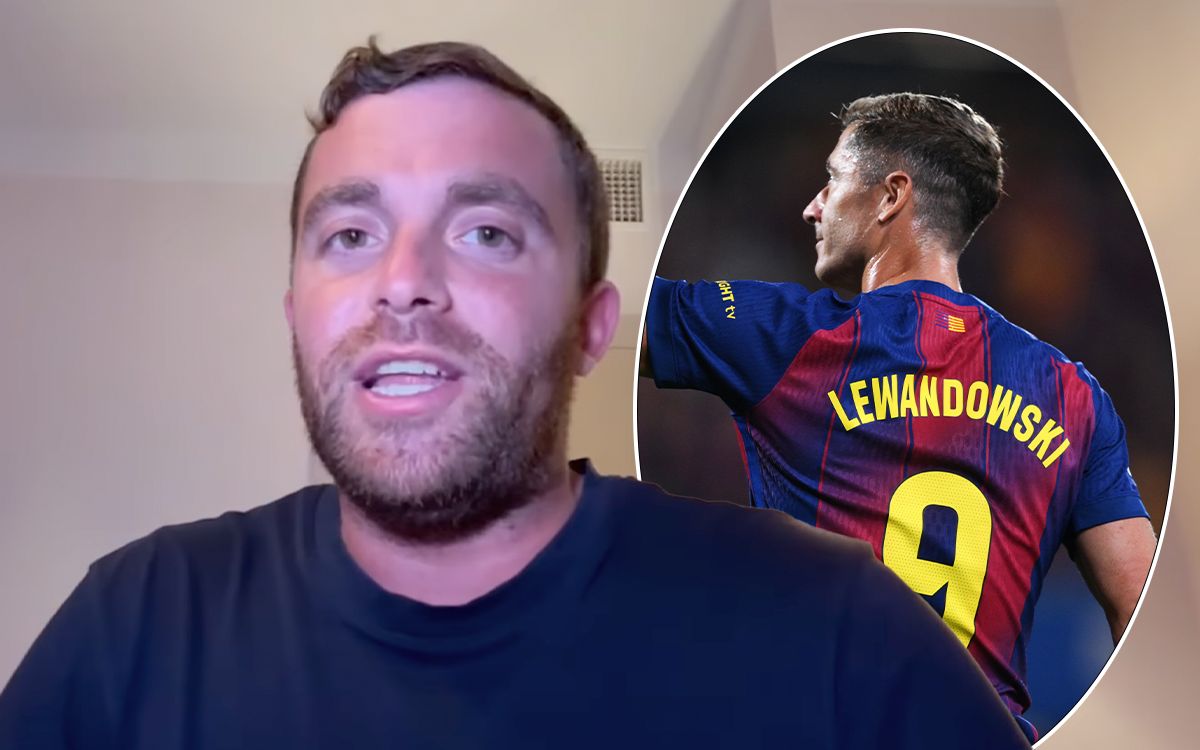
Rio Ferdinand has decided Manchester United need another veteran striker. Following a major announcement regarding Robert Lewandowski's future at Barcelona, the former United defender has publicly endorsed a move for the Polish international. Ferdinand's angle is specific. He views the veteran as the perfect foil and mentor for Benjamin Sesko.
It is a familiar script at Old Trafford. The club has a long, documented history of turning to aging superstars when attacking solutions dry up.
We have seen this movie before. Zlatan Ibrahimovic offered a brief, brilliant distraction. Edinson Cavani provided flashes of movement that shamed his younger teammates. Cristiano Ronaldo fractured the dressing room and completely derailed the tactical setup.
Now, the suggestion is Lewandowski. At 37 years old, his profile completely contradicts the youth-focused mandate supposedly established by the INEOS regime. But a major availability always tests the discipline of a football club.
The Barcelona Financial Trap
To understand why this rumour exists, you have to look at Catalonia. Barcelona are, as always, desperate to clear their wage bill.
The major announcement cited by the English press heavily implies that Lewandowski's contract has reached an untenable breaking point. When Joan Laporta signed him from Bayern Munich, the deal was heavily backloaded. The salary increased year on year. Barcelona bet on short-term success paying for long-term debt.
That bet failed. They now face a massive financial obligation to a striker whose physical output is declining. His departure is no longer a matter of if, but when and how much it will cost to sever ties.
Barcelona would likely demand a nominal transfer fee. They might even sanction a free transfer just to remove his salary from the La Liga spending cap limits. The true cost lies in the wages.
Any move to the Premier League would require a massive financial compromise. Even a reduced wage packet would likely see his camp demand over £300,000 per week.
United have spent the last two years desperately trying to clear those exact types of contracts off their books. Handing a massive deal to a 37-year-old would be a severe regression in their entire financial strategy.
The Tactical Reality vs. The Pundit Fantasy
Ferdinand argues that Lewandowski would be the ideal partner for Sesko. On paper, the logic holds a certain old-school appeal.
Sesko is a physical freak. He has elite straight-line speed, raw power, and an erratic finishing streak. He spent his formative years in the Red Bull system. That means he is programmed to press, run the channels, and create chaos. He does the heavy lifting.
Lewandowski is the antithesis of chaos. He is pure, distilled efficiency in the penalty area. His movement remains a masterclass in spatial awareness. He finds the blind side of the centre-back better than anyone of his generation.
If you pair them together, Ferdinand's theory suggests Sesko does the running while Lewandowski does the scoring. It sounds brilliant if you are managing a team a decade ago. Modern football does not work that way.
If United deploy Lewandowski as a lone nine, their high press instantly dies. He simply does not have the physical capacity to initiate a coordinated press against top-tier Premier League defenders. His pressing numbers have dropped sharply over the last eighteen months in Spain.
If they play two up top to accommodate both him and Sesko, they sacrifice a man in midfield. Against the likes of Arsenal or Manchester City, surrendering the center of the pitch is tactical suicide. You get overrun. You lose possession. The strikers never see the ball.
This is the fatal flaw in the entire argument. You cannot bolt a static, penalty-box poacher onto a team that is trying to play high-tempo, transition-heavy football.
We saw exactly how that played out with Ronaldo. The team scored fewer goals overall, even as the individual striker padded his stats. United would have to fundamentally alter their build-up play to service him.
The Mentor Myth
There is also the question of personality. Ferdinand sees a mentor for Sesko.
The reality is that elite goalscorers are inherently selfish. Lewandowski has rarely shown a desire to play a supporting role. At Bayern Munich, the entire attacking structure was built to funnel chances onto his right foot. At Barcelona, he demands the exact same service.
He expects to be the focal point of the attack. He expects to take the penalties. He expects the wingers to cut the ball back to him, not shoot.
If Sesko is truly the future of the Manchester United forward line, he needs minutes. He needs to make mistakes. He needs the tactical freedom to take risks. He does not need a legendary shadow looming over his every missed chance, waving his arms in frustration.
Even this season, his underlying numbers reflect a changing player. His expected goals per 90 remain elite, but his shot volume has decreased. He takes fewer touches in the penalty area than he did three years ago. He relies more on first-time finishes because he lacks the acceleration to beat a defender off the dribble.
United's wingers currently struggle to deliver consistent, high-quality cutbacks. Their crossing is erratic at best. Lewandowski thrives on precise delivery. Without it, he becomes an isolated, frustrated figure dropping too deep to demand the ball.
You are combining a striker who needs perfect service with a team that struggles to create high-probability chances. It is a recipe for immense frustration on both sides.
Probability and Expected Timeline
Let us assess the actual probability of this deal happening.
Right now, it sits firmly in the fantasy booking category. Probability: Low to Medium. The INEOS sporting structure has explicitly targeted players under the age of 25. They are trying to build a data-driven recruitment model.
No analytical model in world football recommends giving a massive contract to a striker approaching his late thirties. It breaks every rule of modern squad building.
But United are also a club prone to panic. They have structural weaknesses that data alone cannot immediately fix. If they struggle to secure primary targets, and the pressure mounts, the board might crack.
If this deal happens, it will not happen in June. It will drag out.
Barcelona will try to leak stories to the Spanish press to force United's hand. United will brief local media that they are looking at younger alternatives. The standoff will continue through July.
If United lose a couple of early Premier League games in August, desperation changes the math. A late August panic move is the only realistic timeline for this transfer.
The Market Competition
United will not be the only club monitoring the situation. A player of his pedigree becoming available always generates noise.
Chelsea have their own desperate need for a reliable finisher. Their squad is bloated, but they lack a ruthless edge in the penalty area. However, even their chaotic ownership might balk at the age profile and the ridiculous wage demands.
The Saudi Pro League remains the most realistic destination. The financial package they can offer will dwarf anything available in Europe. For a player entering the final stage of his career, a lucrative multi-year deal in the Middle East makes the most logical sense.
MLS is another option, though the salary cap rules make matching his current wages extremely complicated without designated player gymnastics.
Expected Impact
If Manchester United ignore the red flags and push forward, the expected impact is entirely predictable.
It would be a short-term sugar rush followed by a long-term headache. He would undoubtedly score goals. He is simply too intelligent in the box not to. He would convert the half-chances that currently go begging. You would get moments of absolute brilliance.
But the structural damage would be immense. He would disrupt the wage structure. He would limit Sesko's development. He would force the manager into rigid tactical compromises.
And eventually, United would have to replace him in exactly twelve months, starting the entire painful cycle over again.
Ferdinand is looking at the name on the back of the shirt. United need to look at the reality of their squad. They need a dynamic, pressing forward who can rotate with Sesko and stretch defenses.
They do not need a reunion tour for a striker whose best physical years were spent in Munich. The board must hold their nerve. Ignore the punditry. Trust the recruitment model, no matter how loud the noise gets.
Read Next
- Robert Lewandowski is leaving Barcelona and nobody knows what mission he finished
- Sam Kerr bows out of Chelsea exactly how she was supposed to
- Sam Kerr just gave Chelsea one last reminder of what they’re losing
- Michael Carrick is officially the safest, most uninspired hire for Man Utd
- ⚽ La Liga 2025-26 — Title Race Hub
- 🏆 Europa League Final 2026 — Full Coverage Hub