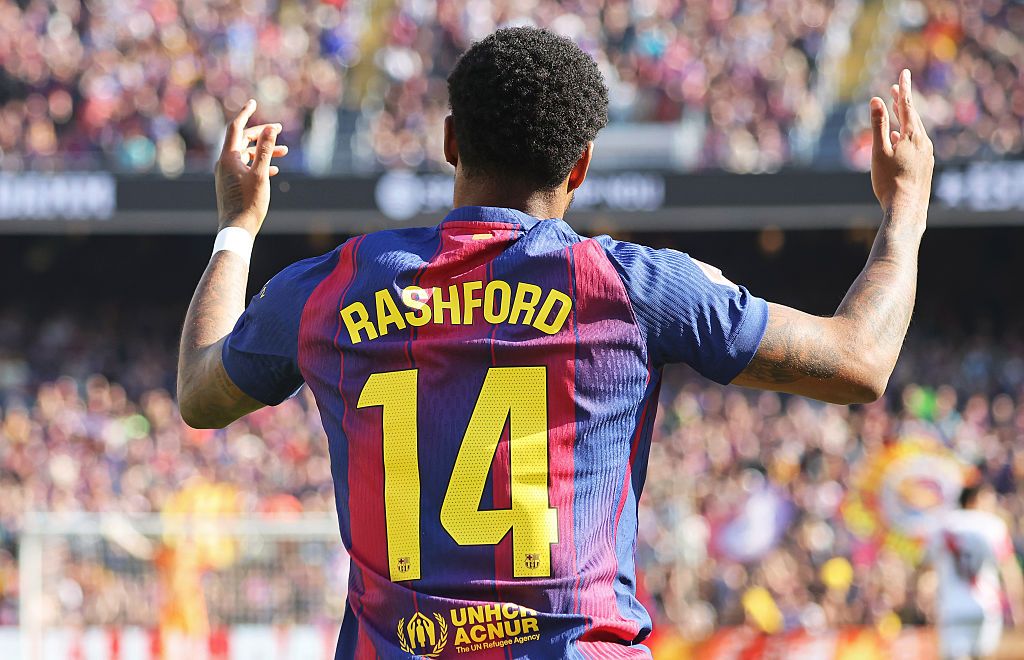
Why Marcus Rashford’s Barcelona loan turned into a tactical dead end

The statistical reality of a mismanaged migration
Marcus Rashford arrived at Barcelona with the weight of expectation centered on his ability to stretch defensive lines. Tactical systems at the Camp Nou demand constant verticality, yet the Englishman has struggled to reconcile his chaotic rhythm with Xavi’s structured possession game. The numbers surfacing from Spain reveal a player trapped in a stylistic purgatory.
As reported by the Mirror, Barcelona possesses an option to make the loan move permanent this summer. However, the club’s current directive suggests they have zero appetite to exercise that clause. When a club sits nine points clear at the top of LaLiga, they prioritize elite efficiency over project players who fail to track back with required discipline.
The five-man cull reflects a shifting philosophy
It is not just Rashford under the microscope; the Catalan giants are plotting a wider exodus to refresh the squad ahead of next season. While recent reports indicate five players are facing the exit, the specificity regarding Rashford points toward a failure to adapt to positional play principles. He was brought in to offer an outlet, but the team’s tactical cohesion has improved significantly in his absence from the starting eleven.
The criticism isn't about individual talent; it is about input-output ratios. Rashford lacks the suffocating press demanded in transition phases. Watching the tape, his recovery runs in the final third are lethargic, often leaving the fullback isolated against rapid counter-attacks. This is not the profile Barcelona requires to compete for a Champions League trophy next term.
A failed audition with long-term consequences
The situation turned south when Rashford failed to seize his opportunities during high-stakes league matches. Sources close to the locker room suggest he hasn't integrated into the core group, leading to friction during training sessions. As noted in the latest updates, this was a golden chance to reinvent his domestic trajectory, but his output has stagnated at a 0.24 expected goals contribution per ninety minutes.
Returning to Manchester United presents its own set of internal anxieties, primarily involving how he fits into a squad that has evolved since his departure. He is not just returning to a different training ground; he is returning to a team that has learned to function without his specific brand of individual volatility. The reliance on his pace has diminished as the current squad favors intricate interplay.
Tactically, Barcelona’s decision to cut him loose is an indictment of the scouting process that deemed him a logical successor to their outgoing wide options. He is a player who thrives on chaos in a system that demands complete, almost algorithmic, order. Without the benefit of a permanent deal, he remains an expensive square peg in a round, highly profitable, and technically superior hole.
The financial ramifications for Barcelona are managed because the loan leaves them with minimal long-term liability. They have successfully offloaded the risk, leaving Manchester United to deal with the inevitable questions regarding his motivation and tactical fit upon his return. For the player, this marks a career crossroads, as his window to prove elite-level consistency remains precariously open.
If we examine the shot maps from the last two months, Rashford’s attempts have largely come from low-probability areas outside the penalty box. This suggests a lack of understanding of the system's spacing, drifting wide instead of attacking the half-spaces where the real danger lies. You cannot blame the coach when your decision-making on the ball is consistently countered by organized defensive blocks.
Barcelona will win a second consecutive title, and they will do it by playing a style that no longer includes the volatile uncertainty of the Manchester United loanee. The reality is simple: he was meant to be the final piece of an attacking puzzle. Instead, he ended up being the piece they didn't know how to place before deciding it simply didn’t fit at all.
adidas Fussballliebe League Ball
Play like the pros with the official Euro 2024 takedown.
Frequently Asked Questions
Why does Barcelona want to end Marcus Rashford’s loan?
How has Marcus Rashford performed statistically at Barcelona?
Will Barcelona sign Marcus Rashford on a permanent deal?
What tactical issues caused Rashford’s struggles in Spain?
What is next for Marcus Rashford after his Barcelona loan?
More Coverage

Why England must fear Panama's disciplined low block
46 minutes ago
Anthony Gordon's Barca move masks lingering fitness concerns from Newcastle stint
an hour ago
Arsenal vs PSG: Why tactical rigidity will determine the European champion
an hour agoLincoln City just entered the weirdest experiment in League One history
3 hours ago
Ella Toone is the most realistic window into the modern footballer's life
4 hours ago
Arsenal’s title win has changed the math for London football
6 hours agoMore Analysis

Marcus Rashford at Barcelona is a gamble neither side can justify
3 days, 7 hours ago
Marcus Rashford to Barcelona makes zero tactical sense
1 week, 1 day ago
Rashford to Barcelona is falling apart before it even begins
1 month, 1 week ago
Marcus Rashford’s Barcelona experiment is creating a Manchester United headache
1 month, 4 weeks ago
Marcus Rashford’s Barcelona future hangs in the balance as loan nears end
1 month ago