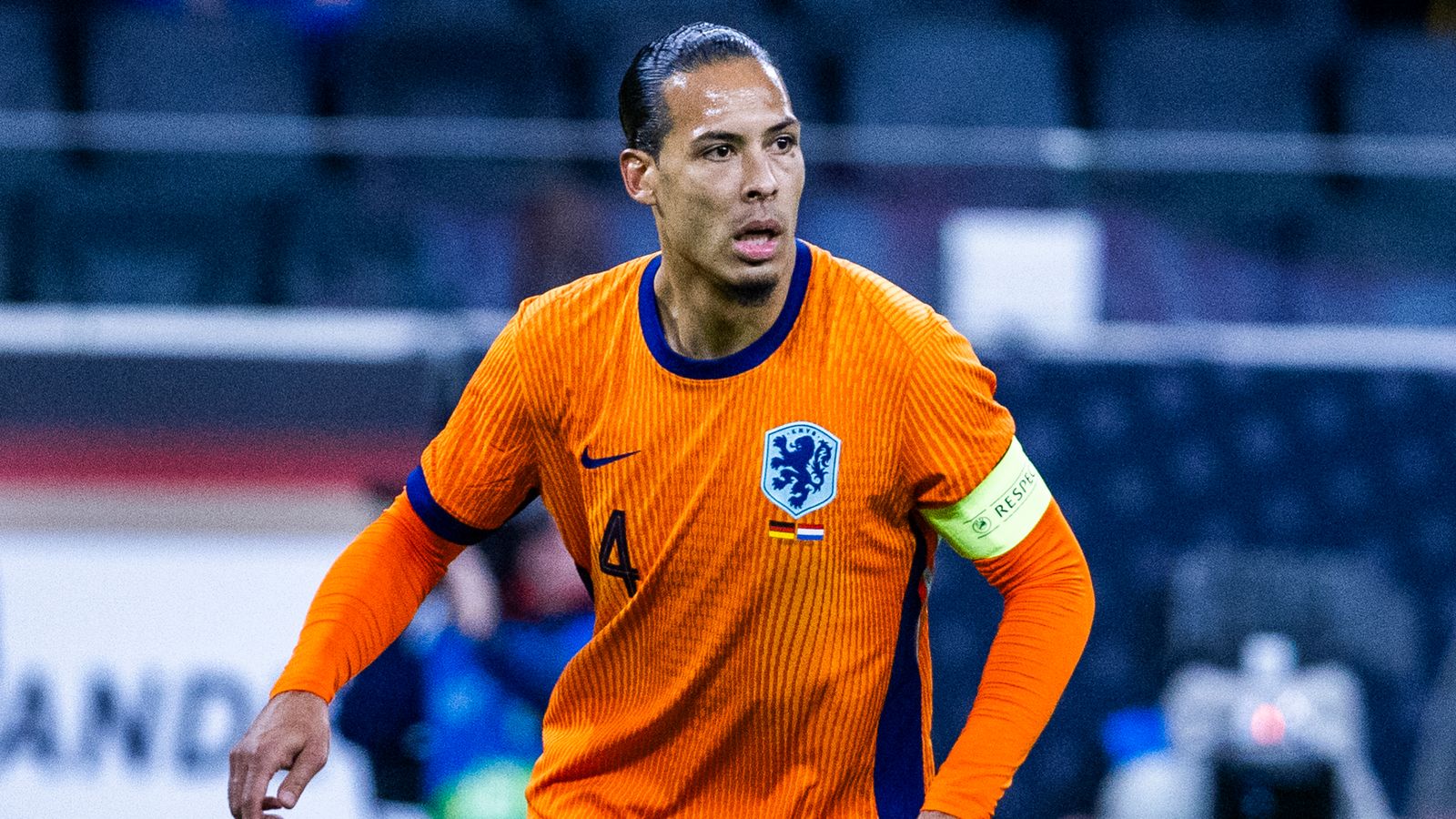
Joachim Klemen’s crystal ball is working overtime
Look, I get it. We all have that one friend who refuses to watch the actual games because they are too busy staring at an Excel spreadsheet. They calculate possession heat maps and expected goals until their eyes bleed, telling you why your team is statistically doomed. Usually, these people are insufferable. But when a guy like Joachim Klemen speaks, you put your beer down and listen.
This German mathematician has somehow cracked the code for three consecutive World Cups. He correctly forecasted Germany in 2014, France in 2018, and Argentina in 2022. That is not just luck; that is a level of predictive sorcery that makes Paul the Octopus look like a common appetizer. Now, as The Mirror reports, he has dropped his pick for the 2026 tournament. He is going with the Netherlands.
Predicting chaos in an era of pure randomness
Before we go handing the trophy to the Dutchmen, let’s look at why this is completely unhinged. Or maybe it’s genius. Klemen’s methodology isn't just about who has the best strikers or which goalkeeper is having a mid-life crisis. He crunches data involving socioeconomic factors, GDP, and population size, mixed with actual on-pitch performance metrics.
It sounds like the plot of a weird sports movie where the protagonist needs to pay off a gambling debt. The skepticism is warranted. Can you really quantify the sheer weirdness of international football via a spreadsheet? Last tournament featured Morocco making a historic run and Brazil collapsing under the weight of their own flair. Trying to predict a tournament where a single VAR decision can derail a squad is like trying to bet on a coin flip while playing in a hurricane.
The Dutch dilemma
If you have watched the Netherlands lately, you know the drill. They play some of the prettiest football on the planet, then inevitably forget how to defend during a penalty shootout. They are the perennial 'almost' team of Europe. If Klemen’s algorithm is right, we are looking at a changing of the guard.
The data suggests that the financial and institutional stability of major footballing nations plays a massive role in tournament longevity. Argentina, France, and Germany all had that 'machine' quality when they won. The Netherlands possesses a deep talent pool and a systemic approach to youth development that often flies under the radar compared to the giants of South America or Western Europe. Still, calling them the clear favorite feels like a stretch.
The flaws in the math
Here is my gripe: football is played by humans who are prone to bad nights, ego clashes, and grass that is cut a millimeter too long. Mathematical models often fail to account for the 'managerial meltdown' factor. What happens if a star player suddenly gets a massive ego, or a tactical switch fails in the group stage?
Klemen’s track record is 3 for 3, which is a stat that would get him signed to a multi-year deal by a hedge fund immediately. I’m not saying he’s wrong. I’m saying that if I put my money on the Netherlands and they get knocked out in the Round of 16, I’m hunting down a German math department for answers. Enjoy your brackets, nerds. I’ll keep my eyes on the actual turf.