We are exactly 24 days away from the biggest circus in the history of American soccer. The 2026 World Cup kicks off on June 11. The entire country is already losing its collective mind.
Every casual fan who hasn't watched a minute of soccer since the debacle in Qatar is suddenly an expert on the high press. The expectations are completely divorced from reality. People in my mentions are talking about a semi-final run like it's a birthright just because we are playing on home soil. It's absolute madness.
Let's inject some actual, harsh reality into this conversation. The hype train is currently hurtling toward a brick wall of international tournament football.
The Managerial Shift
The USMNT group stage matches are going to be absolute meat grinders. Forget the glossy commercials. Forget the carefully curated social media hype videos. This is the World Cup. It's ugly, it's tense, and it usually comes down to who makes the fewest catastrophic mistakes in the defensive third. It is not a coronation.
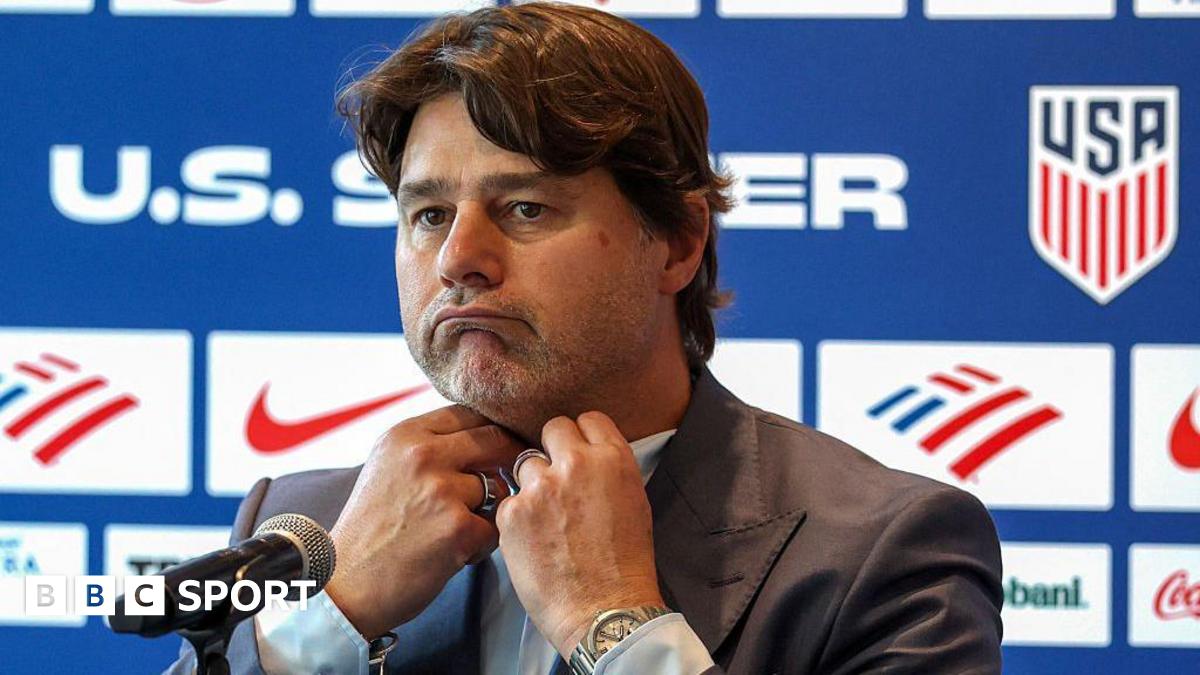
Mauricio Pochettino was brought in for exactly this reason. US Soccer panicked after the Copa America disaster and finally threw the bag at a manager with actual top-level European pedigree.
He has completely overhauled the tactical setup. The rigid, dogmatic possession-for-the-sake-of-possession era is dead and buried. Good riddance.
Pochettino has them playing a much more direct, aggressive style. He demands verticality. But wanting to press high and actually executing it against top-tier, cynical opposition are two very different things. The Argentine manager has spent the last eighteen months trying to drill a ruthless winning mentality into a squad that has historically been too naive on the big stage.
Key Battle Zones
Let's break down the key areas on the pitch where the US will either win their group or crash out in humiliating fashion.
The Defensive Minefield
This is where things get genuinely terrifying. You build tournament-winning teams from the back, and the US backline is currently made of duct tape and hope.
Antonee Robinson is nailed on at left-back. He is an absolute machine. The man never stops running, his crossing has marginally improved, and he covers immense ground. On the right, Sergino Dest's return to full fitness has been a massive boost. When Dest is locked in, he offers an attacking outlet that very few fullbacks in the world can match. But defensively, he still switches off at the far post. Teams will target him relentlessly.
The center-back pairing gives me nightmares.
Chris Richards has the athletic profile. He has the recovery speed. He plays in the Premier League. But he still makes one glaring mental error every three games. A sloppy pass out of the back, a missed assignment on a set piece. You cannot do that at a World Cup. You will get severely punished.
Who partners him? Tim Ream is pushing 40. His reading of the game is flawless, his left foot is a wand, but his legs are gone. If a team with pace isolates Ream in a high line, it's game over. Cameron Carter-Vickers is a physical monster, an absolute unit who bullies strikers in the Scottish Premiership, but his distribution under pressure is highly suspect when facing elite pressing forwards. Pochettino has tried to hide these defensive frailties by keeping possession and pressing high. But eventually, you have to defend your own box. That is the biggest vulnerability of this squad.
The Midfield Engine Room
Everything hinges on the midfield trio. Specifically, it hinges on Tyler Adams' hamstrings.
When Adams is fully fit, he is a destroyer of worlds. He covers grass like a man possessed. He breaks up counter-attacks before they even materialize. He does the ugly work that allows everyone else to shine. But his injury record over the last three years is a massive red flag. If he goes down, the entire tactical shape collapses. There is no like-for-like replacement in the player pool. Johnny Cardoso has had flashes of brilliance in La Liga, but he lacks Adams' sheer destructive speed. If Adams is out, the US midfield gets entirely too soft.
Weston McKennie is the wild card. We all know his game. Absolute, unadulterated chaos.
Sometimes it's brilliant, match-winning chaos. He'll burst into the box late and score a trademark header. He'll win a crunching tackle to lift the crowd. Other times, his positioning is completely erratic, leaving massive gaps in the center of the park. Pochettino has tried to channel that energy, but McKennie is fundamentally a maverick. You have to live with the bad to get the good.
Yunus Musah is the designated ball-carrier. His ability to take the ball on the half-turn and glide past the first line of pressing is elite. He looks like a $100 million player between the boxes. But his final ball is still shockingly poor for a player of his caliber. He gets to the edge of the box and suddenly his brain short-circuits. He needs to produce actual goal contributions, not just pretty dribbling stats.
The Attack and the Pulisic Dependency
Christian Pulisic is 27 years old. He is in the absolute prime of his career.
His time at AC Milan resurrected him. He's no longer the fragile kid trying to prove himself at Chelsea while dealing with a merry-go-round of managers. He is the undisputed alpha of this team. He demands the ball. He takes the penalties. The problem is that the USMNT still relies on him entirely too much for their creative spark.
If an opponent double-teams Pulisic and kicks him off the park, who steps up?
Timothy Weah provides the raw pace on the right wing. His straight-line speed terrifies defenders, but his final decision-making can be frustratingly inconsistent. He needs to be a secondary scoring threat, not just a pure outlet.
Gio Reyna is the obvious answer to the creativity problem. He has the highest technical ceiling of anyone in the pool. His weight of pass is sublime. But his work rate off the ball still drives managers insane. He has bounced around club loans looking for minutes, and that lack of consistent high-level football shows in his stamina. Pochettino has benched him more than once for failing to track back. Reyna has to decide if he wants to be a luxury player or a core piece of a World Cup team. You cannot carry passengers in a modern pressing system.
Up front, Folarin Balogun has to be clinical. International football does not give you five clear-cut chances a game against good teams. You get one. Maybe two.
Balogun's movement is excellent. He constantly stretches the backline and makes intelligent runs. But his finishing for the national team has been streaky at best. He cannot afford to be snatching at shots when the pressure is on. The margin for error is absolute zero. Josh Sargent is waiting on the bench, and his relentless pressing makes him a favorite of Pochettino. Balogun has to deliver early.
The Weight of the Shirt
Do not underestimate the pressure of playing a World Cup at home.
It broke Brazil in 2014. It is a suffocating, crushing weight. Every single touch, every missed pass, every tactical substitution is analyzed by millions. The noise in the stadiums will be deafening. When they step onto the pitch at SoFi Stadium, they are playing in a billion-dollar palace where anything less than total dominance feels like a failure. Playing in Seattle at Lumen Field means dealing with a massive, ravenous crowd that demands relentless energy. The travel schedule, despite staying domestic, is brutal.
Some players shrink under that blinding light. Others become legends.
The 1994 team had zero expectations and shocked the world. They were a group of college players and journeymen who scrapped their way out of the group. This 2026 team has a massive burden. They are the heavily marketed "Golden Generation." They have the pedigree. They play in the Champions League. There are no excuses left.
The group stage is about survival. It's not about playing beautiful, expansive football to appease the pundits. It's about grinding out results by any means necessary.
The Verdict
So, do they win the group?
Yes. I think they do. But it's going to be excruciating to watch.
Pochettino is pragmatic enough to adapt when his Plan A isn't working. The home crowds will drag them across the finish line in at least one tight, ugly game. Pulisic will produce a moment of magic when they desperately need it. Matt Turner, despite his club struggles, always seems to turn into a brick wall in a US shirt and will likely bail them out with massive reaction saves.
But anyone expecting a dominant, sweeping march through the first three games is lying to themselves. Expect the following:
- A street fight in the midfield against cynical opposition.
- Leaking incredibly soft goals due to defensive lapses.
- Struggling to break down deep, compact low blocks.
They will advance. The talent level is simply too high not to. But the real test begins in the knockout rounds, where the talent disparity against the European heavyweights becomes impossible to ignore. Until then, buckle up. The next month is going to be the most stressful period in American soccer history.
Read Next
- Mexico's World Cup opener at the Azteca is a disaster waiting to happen
- Mexico at the Azteca is going to be a beautiful tactical disaster
- Chelsea signing Kevin De Bruyne would be the ultimate nostalgia trap
- Milan survive Genoa, but the vibes at San Siro are still a mess
- 🏆 World Cup 2026 — Full Coverage Hub
- 🇺🇸 USMNT World Cup 2026 — Team USA Coverage Hub
- ⚽ MLS 2026 Season Hub — World Cup Year Guide