
Why Wrexham missing out on the Premier League is exactly what they need
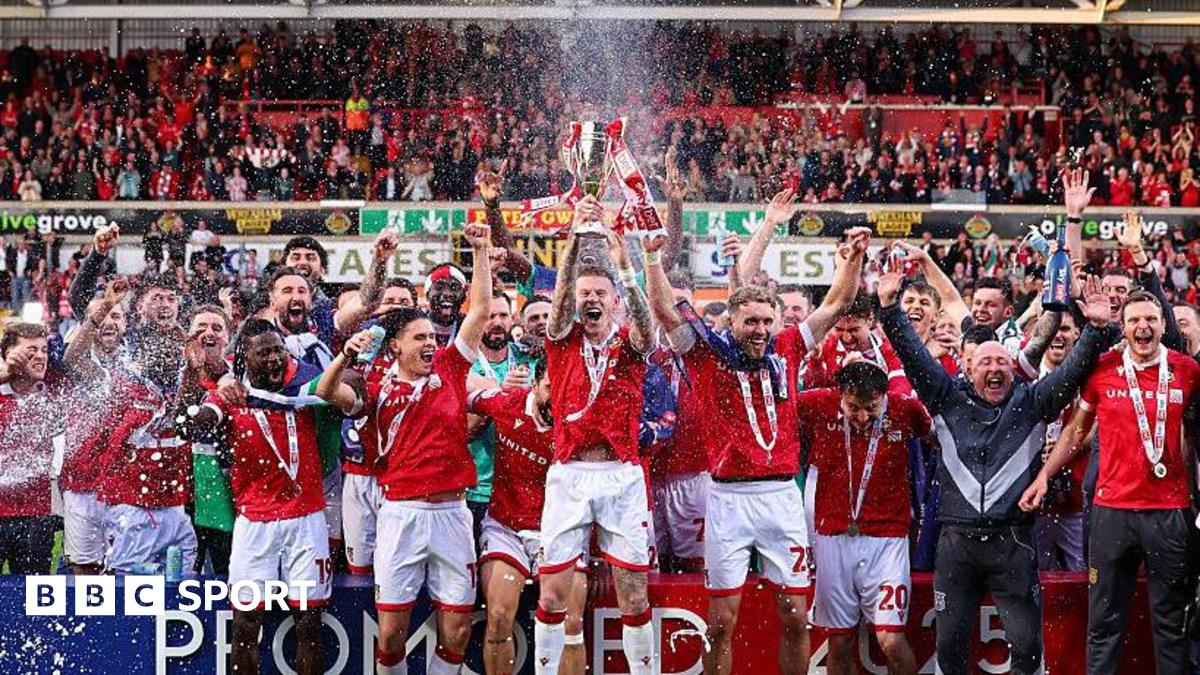
The Hollywood Script Hits a Brick Wall
The narrative was supposed to be linear. National League champions, League Two conquerors, League One standouts, and straight into the promised land of the Premier League. It is the sort of frictionless ascent that television producers dream about.
But as we sit here in mid-April 2026, the reality of the English second tier is finally biting hard. Wrexham are learning that the Championship is an entirely different beast.
BBC Sport recently examined whether it actually matters if Wrexham fail to secure promotion to the Premier League at the first time of asking. The short answer is no. The longer, far more uncomfortable answer is that going up right now could be a disastrous step for the long-term health of the club.
The sheer physical and technical gap between the top half of the Championship and the lower leagues is vast. For three years, Wrexham have been able to outspend, outmuscle, and simply overpower their opposition. They have possessed the deepest squad and the biggest budget in their respective divisions.
That financial superiority vanishes the moment you step into a league containing parachute payments, state-backed ownership models, and aggressively modern scouting networks.
Tactical Rigidity Under Parkinson
We have to talk about Phil Parkinson. His pragmatic, relentless approach has been the bedrock of this entire project. But his tactical limitations are being violently exposed by the smarter managers in this division.
Parkinson’s preferred 5-3-2 system relies heavily on direct distribution from the back and aggressive wing-back play to create overloads in wide areas.
It works brilliantly when you are the dominant side. But against possession-heavy Championship teams, Wrexham routinely find themselves penned into a low block, chasing shadows for long stretches.
The midfield lacks a genuine controller. When they win the ball back deep in their own half, the default trigger is still a hopeful channel ball to Paul Mullin or Ollie Palmer. Opposing center-backs at this level are simply too quick and too aerially dominant for that to be a sustainable out-ball.
Look at their recent 2-0 defeat away at Sunderland. Regis Le Bris’s side routinely pulled Wrexham’s midfield three out of position by dropping a false nine into the half-spaces behind George Evans. Wrexham had no answer.
Parkinson stubbornly refused to alter his shape, watching from the touchline as his team registered just 32% possession and failed to manage a single shot on target in the second half.
The numbers back this up. Over the last two months, Wrexham’s expected goals (xG) generated from open play has plummeted. They are overly reliant on set-pieces and the occasional moment of individual brilliance.
You cannot sustain a Premier League promotion push when your midfield is completely bypassed by technically superior opposition. The pressing structure is frequently disjointed, with the front two engaging high while the midfield three drop deep, creating massive pockets of space between the lines.
This is where the tactical ceiling of the current coaching staff comes into sharp focus. Surviving in the Premier League requires an ability to manipulate the ball under severe pressure and beat high-intensity pressing traps.
Right now, Wrexham panic when pressed. Their center-backs look uncomfortable when asked to play through the thirds, opting instead for low-percentage clearances that immediately hand possession back to the opposition.
The Squad Overhaul Dilemma
Then there is the personnel problem. The loyalty shown to the players who dragged this club out of the National League is admirable, but football is ruthlessly unsentimental. A squad built for League One warfare cannot survive the technical demands of the top flight.
Mullin is an undisputed club legend. His goalscoring exploits will be sung about on the terraces for a century. But asking him to lead the line against Arsenal or Manchester City every week is a fundamentally flawed proposition.
The pace, the tactical awareness, and the sheer athleticism required in the Premier League would demand an almost entirely new starting eleven.
Elliot Lee has been the creative heartbeat of this side, buzzing between the lines and providing decisive goals. But the Championship is already testing his physical limits over a gruelling 46-game calendar.
In the Premier League, the time he currently gets to turn and pick a pass will evaporate. He will be closed down by elite defensive midfielders within milliseconds.
Goalkeeper Arthur Okonkwo has been a revelation since making his move permanent, and at 24, he is one of the few players in the current squad with a genuine top-flight ceiling. His shot-stopping is excellent, but even he has struggled with the increased demands of sweeping behind a high defensive line against faster Championship wingers.
Look at the recent history of promoted clubs. Sheffield United and Burnley both attempted to bridge the gap with wildly different strategies, and both suffered miserable, immediate relegations.
If Wrexham go up this May, they will be forced into a frantic, overpriced summer trolley dash. They would be buying players not because they fit a long-term tactical vision, but out of sheer desperation to put eleven top-flight players on the pitch.
A second season in the Championship allows for organic evolution. It gives the recruitment team time to cycle out the aging heroes and identify hungry, undervalued talent from the continent.
They need to shift from a model of buying finished lower-league products to unearthing high-ceiling assets who can grow with the club.
PSR and the Financial Chasm
The financial realities of modern football offer another stark warning. Ryan Reynolds and Rob McElhenney have generated absurd commercial revenues for a club of this size. The Disney+ documentary, the global sponsorships, the pre-season tours in the United States — it is a brilliant business model.
But the Premier League’s Profitability and Sustainability Rules (PSR) are unforgiving.
If Wrexham are promoted, their wage bill will need to quadruple just to reach the minimum competitive floor of the division. While their commercial income is staggering compared to their current peers, their actual matchday and domestic broadcasting revenues remain microscopic compared to established Premier League teams.
A hasty promotion forces a club to hand out massive, long-term contracts to mid-tier players. If you get relegated the following season, those contracts do not magically disappear.
You are left carrying a bloated wage bill in the Championship, desperately trying to offload players who are content to sit on their lucrative Premier League deals.
Spending another year in the second tier prevents this financial trap. It allows Wrexham to build a sustainable wage structure that can actually support top-flight status when the time is right.
Player trading is the lifeblood of a sustainable modern football club. Currently, Wrexham operate almost exclusively as buyers. To survive in the Premier League, you must be able to sell well.
You need to develop players whose value appreciates. A year of consolidation allows them to implement a sporting director model, bringing in analytical recruitment specialists who can identify the next Viktor Gyökeres or Joao Pedro before their market value explodes.
Operating in the Championship offers a far more forgiving environment to test and refine this scouting network.
Building the Foundations Off the Pitch
You cannot simply buy a Premier League team; you have to build a Premier League club. The physical foundations of Wrexham are still catching up to their rapid on-pitch success.
The Racecourse Ground is an iconic, intimidating venue, but it is not yet ready to host the global circus of the top flight.
The continued expansion of the stadium, including the full integration of the new Kop end, requires time and significant capital. Rushing into the Premier League brings intense logistical demands, enhanced broadcasting requirements, and rigorous stadium safety upgrades.
A season of consolidation takes the spotlight off the immediate matchday pressures and allows the back-office staff to modernize the club's operations in relative peace.
Furthermore, look at the medical and sports science departments. The step up in athletic intensity from League One to the Championship has already resulted in a spike in muscular injuries for the squad.
The Premier League demands an entirely different level of physical preparation and recovery. Upgrading the medical facilities, hiring specialized performance staff, and building out a data analytics department takes time.
These are the unseen marginal gains that keep clubs like Brentford and Brighton afloat in the top division.
The same applies to the academy. To establish themselves as a sustainable force, Wrexham need to start producing their own talent.
A Category One or Two academy status takes years of investment and restructuring. Staying in the Championship provides the breathing room to build out these vital departments without the existential dread of a relegation dogfight dictating every financial decision.
Embracing the Pause
Football fans are conditioned to demand constant, upward momentum. When you have experienced three years of relentless winning, the idea of failing to achieve a goal feels like a crisis.
But it is not. This stalled promotion push is a necessary reality check. It is the moment the club transitions from a fairy tale into a serious sporting institution.
The documentary producers might want the drama of a Wembley playoff final or an automatic promotion sealed on the final day. But the football department should be quietly relieved if they fall short.
The fans have waited decades for this revival; they can wait one more year for the final step.
Consolidation is not a dirty word. It is the smart, calculated choice for a club that is currently outperforming its structural capacity.
When Wrexham finally do arrive in the Premier League, they need to do so equipped to stay there. Right now, they are simply not ready. And admitting that is the first step toward genuine, lasting success.
Read Next
- Bournemouth might actually be crazy enough to hire Frank Lampard
- Marvin Ducksch has traded Birmingham City's survival for an Easter Monday disaster
- Lisandro Martinez just torched Manchester United’s season over a hair pull
- Andoni Iraola’s exit leaves Bournemouth facing a high-stakes identity crisis
- 🏟 EFL Championship 2025-26 — Promotion Race & Play-Off Final Hub
Expected Goals: The Story of How Data Conquered Football and Changed the Game Forever by Rory Smith
A fascinating deep dive into how stats replaced gut feelings in the beautiful ga
Frequently Asked Questions
Why is Wrexham struggling in the Championship?
What are Phil Parkinson's tactical weaknesses at Wrexham?
Why might avoiding Premier League promotion be good for Wrexham?
How do Championship teams exploit Wrexham's playing style?
Why is Wrexham's offensive production dropping?
More Coverage

Raheem Sterling's arrest is a disaster for his career timeline
an hour ago
Kieran Trippier is the exact veteran Wolves need right now
an hour ago
Adam Wharton emerges as top summer target for Arsenal's midfield evolution
an hour ago
Manchester United’s Summer Obsession: Why Inconsistency Defines the Strategy
an hour ago
Liverpool chasing Yan Diomande in high-stakes €150m transfer scramble
an hour ago
Manchester United are chasing ghosts with the Leao pursuit
3 hours agoMore Analysis

Wrexham's playoff push shows they belong in the Championship
1 month, 3 weeks ago
Wrexham's promotion dream hits a reality check in the Championship
3 weeks, 5 days ago
Wrexham's playoff heartbreak and the refereeing disaster that ended their run
3 weeks, 5 days ago
Why Wrexham is fumbling the final playoff hunt
3 weeks, 6 days ago
Wrexham and Ipswich face the brutal math of the Championship run-in
1 month ago